
Custom slip rings
A slip ring assembly designed around your signals, your speed and the space you have.
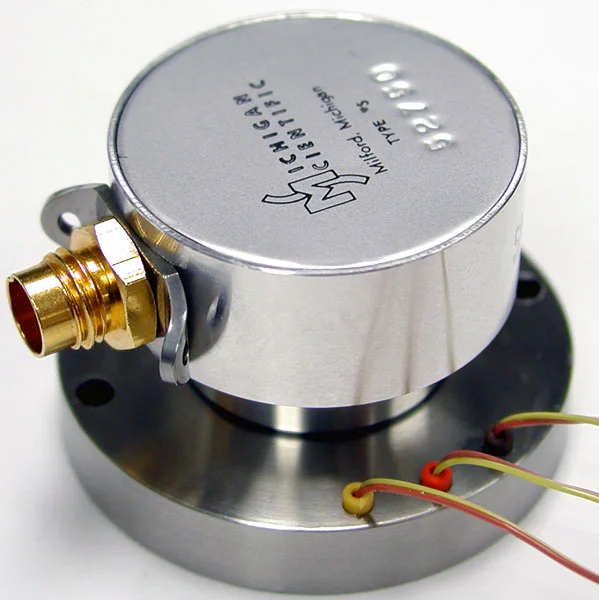
In brief
When no catalog slip ring fits, Michigan Scientific designs and builds the assembly to the requirements of the test rig, production equipment, vehicle or other rotating application. The design starts from the signals to carry, then the space, the mounting and the environment.
- Up to 60
- circuits
- 20 000 rpm
- maximum rotation speed
- −40 to 121 °C
- operating temperature
What the design starts from
The first input is the list of signals: sensors such as strain gages, thermocouples and accelerometers, data links such as USB, Ethernet or CAN, fieldbus, or power.
Then come the available space, the mounting (end of shaft, through the bore or on the wheel) and the environment: humidity, dust, temperature, vibration.
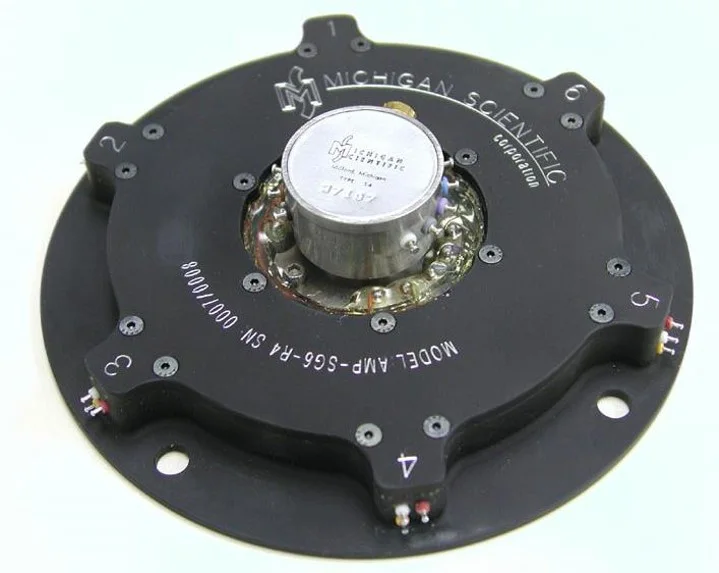
What can be built
| Circuits | 0, 4, 6, 8, 10, 20, 36, 45 or 60 |
|---|---|
| Rotation speed | Up to 20 000 rpm |
| Mounting | End of shaft or through bore |
| Signals | Sensors, and data links such as USB, Ethernet or CAN |
| Current per circuit | 500 mA max |
| Peak noise | 0.1 Ω max |
| Encoder | None, 60 ppr, 256 ppr or 512 ppr |
| Contacts | Solder terminals, rotor and stator |
| Weatherproofing | Optional |
| Operating temperature | −40 to 121 °C |
Options on the rotating side
- Spinning amplifier between the sensor and the slip ring
- Strain gage or thermocouple signal conditioning
- Encoder for shaft speed or angle
- Custom wiring: cable length and connectors
Where they are used
- Vehicles and test rigs
- Compressors
- Aircraft
- Railway equipment
- Tooling and production equipment