
Slip ring assemblies
Strain gages and temperature signals off a hub, a disc or a shaft, without losing them to noise.
Precious-metal brushes and rings carry each sensor wire from the rotating part to the stationary recorder, in analog form. A slip ring costs less than most wireless systems. Used with strain gages, thermocouples, ICP accelerometers and RTDs, at the end of the shaft or through the bore.
- 4 to 60
- circuits per assembly
- 12 000 rpm
- top speed, across the range
- 60 to 512 ppr
- built-in encoder options
- < 100 mΩ
- contact resistance (3σ)
5 series of slip rings, 4 to 60 circuits, up to 12 000 rpm
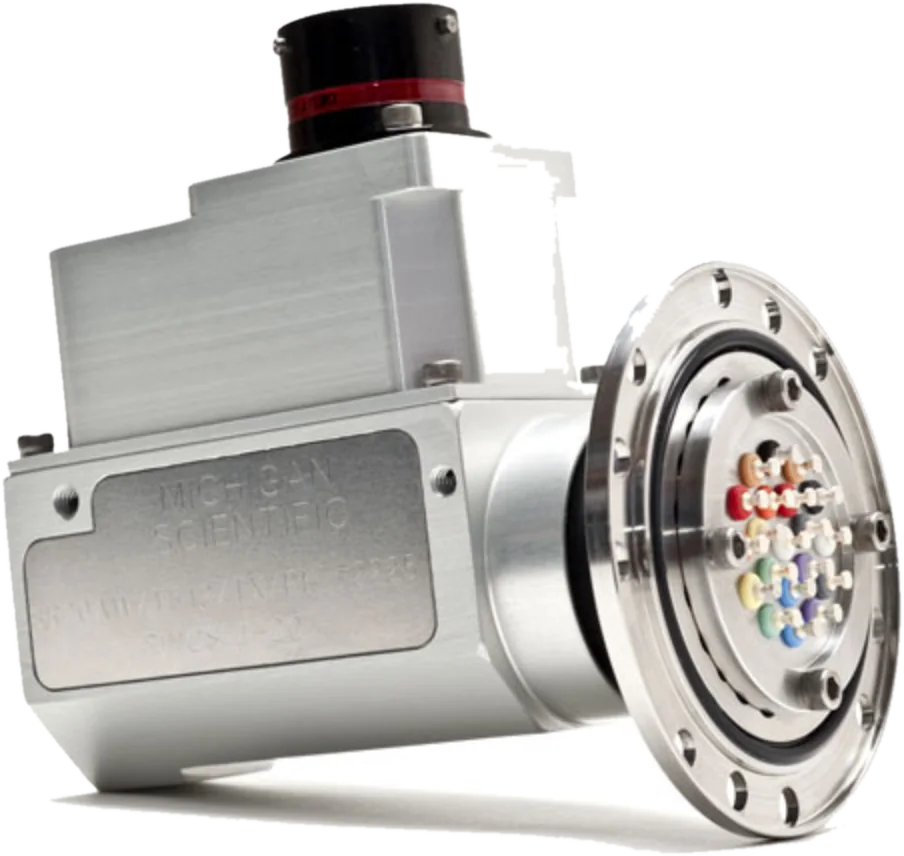
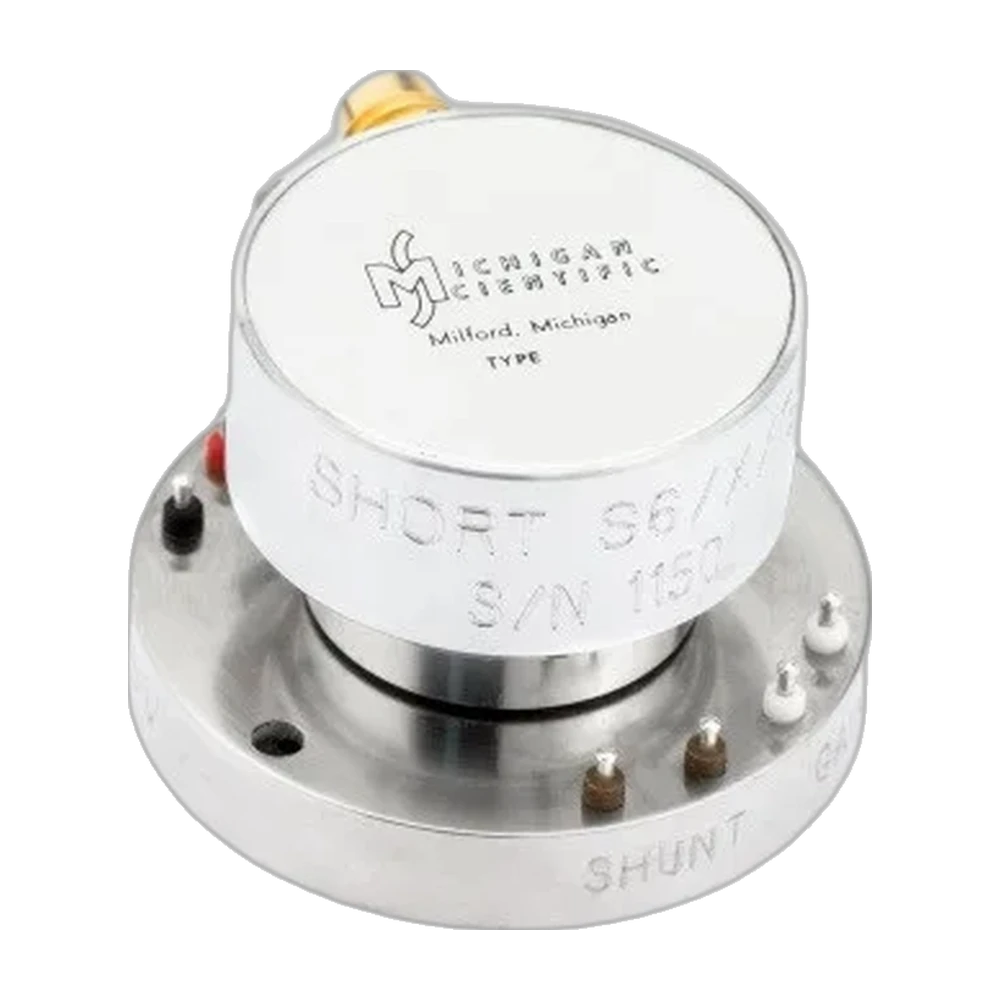
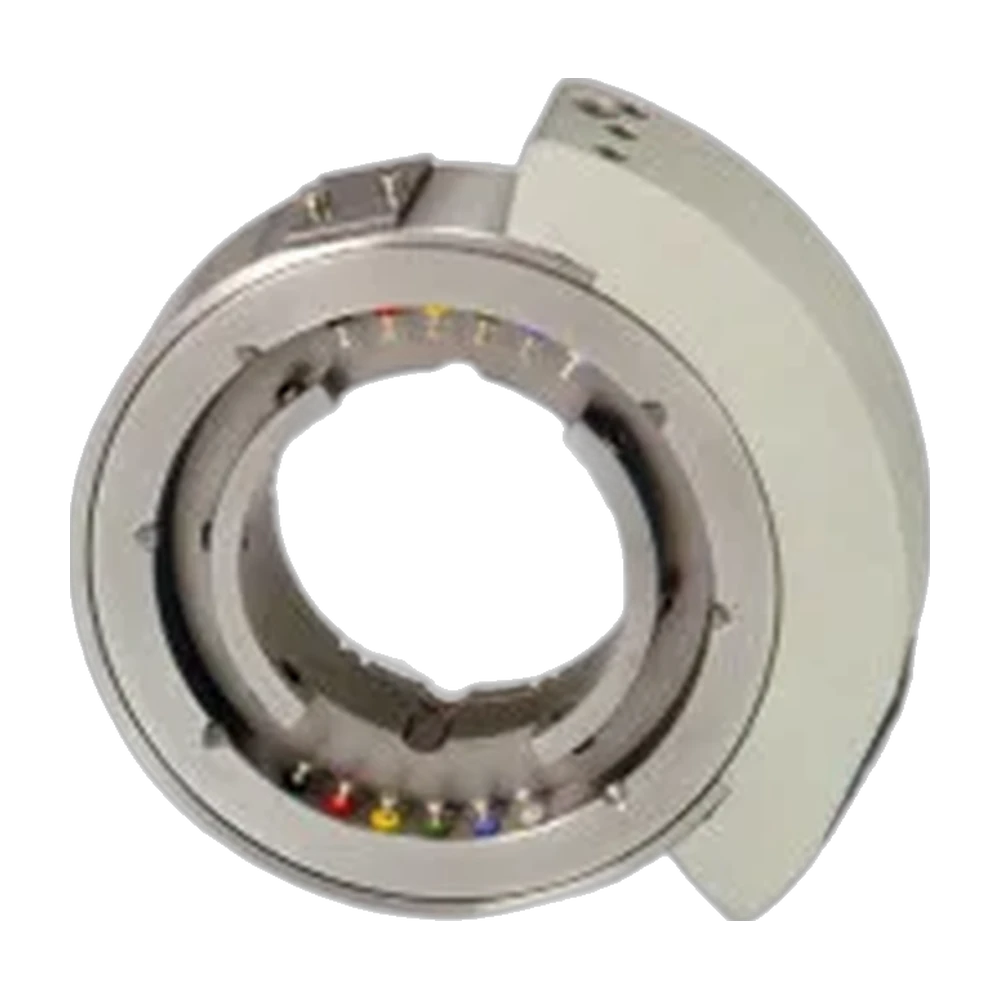
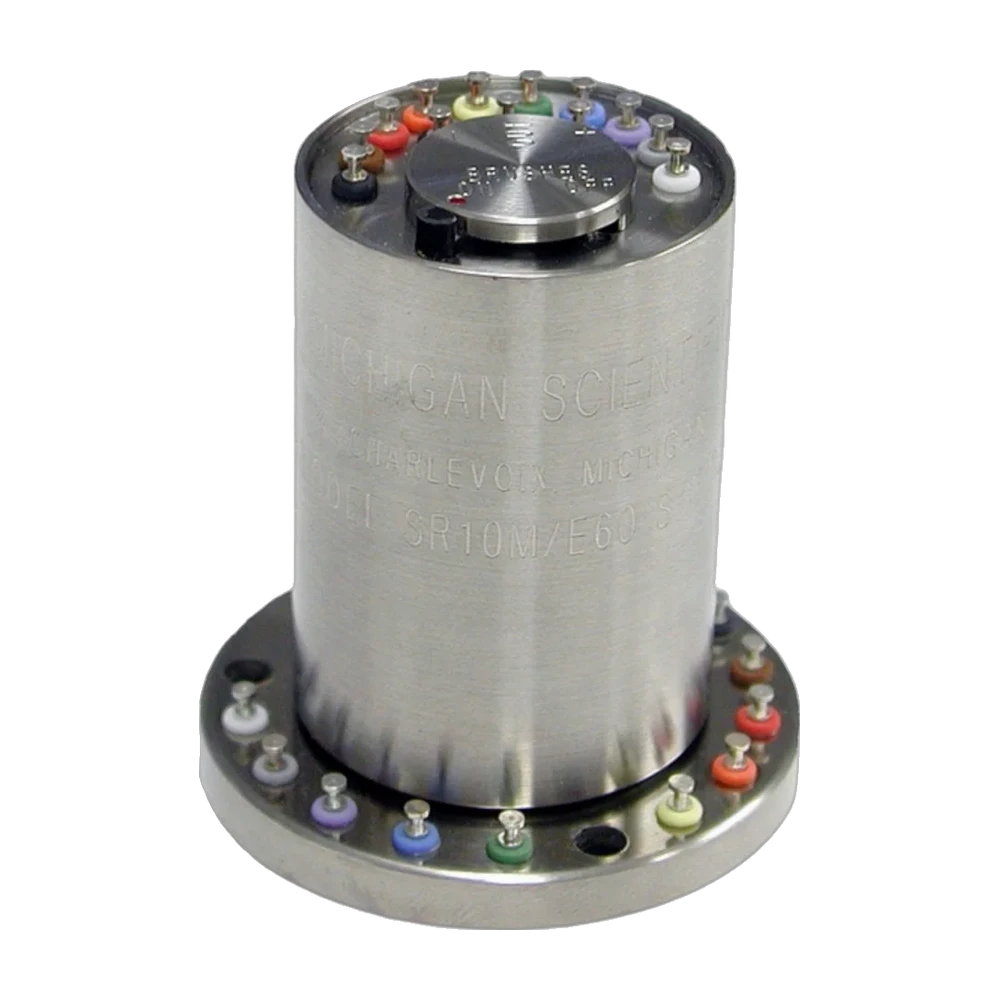
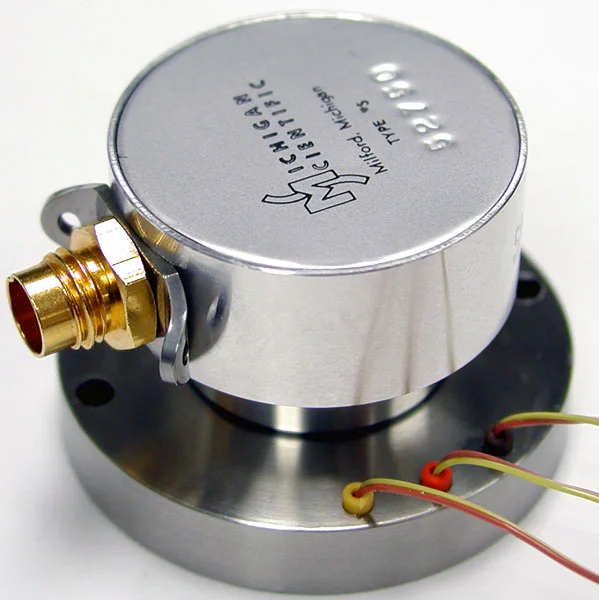
The S-Series mounts on a free shaft end, with 4 to 10 circuits up to 12 000 rpm. The Short S-Series does the same from 22.15 mm long. The SR Series carries up to 60 circuits, open or weatherproof. The SR/ERT Series adds an optical encoder of 256 to 512 ppr. The B-Series slides over a shaft with no free end, with bores from 30 to 81.3 mm.
-
- circuits
- 4 to 10
-
- circuits
- 4 to 10
-
- circuits
- 4 to 8
-
- circuits
- 4 to 60
-
- circuits
- 10 to 36

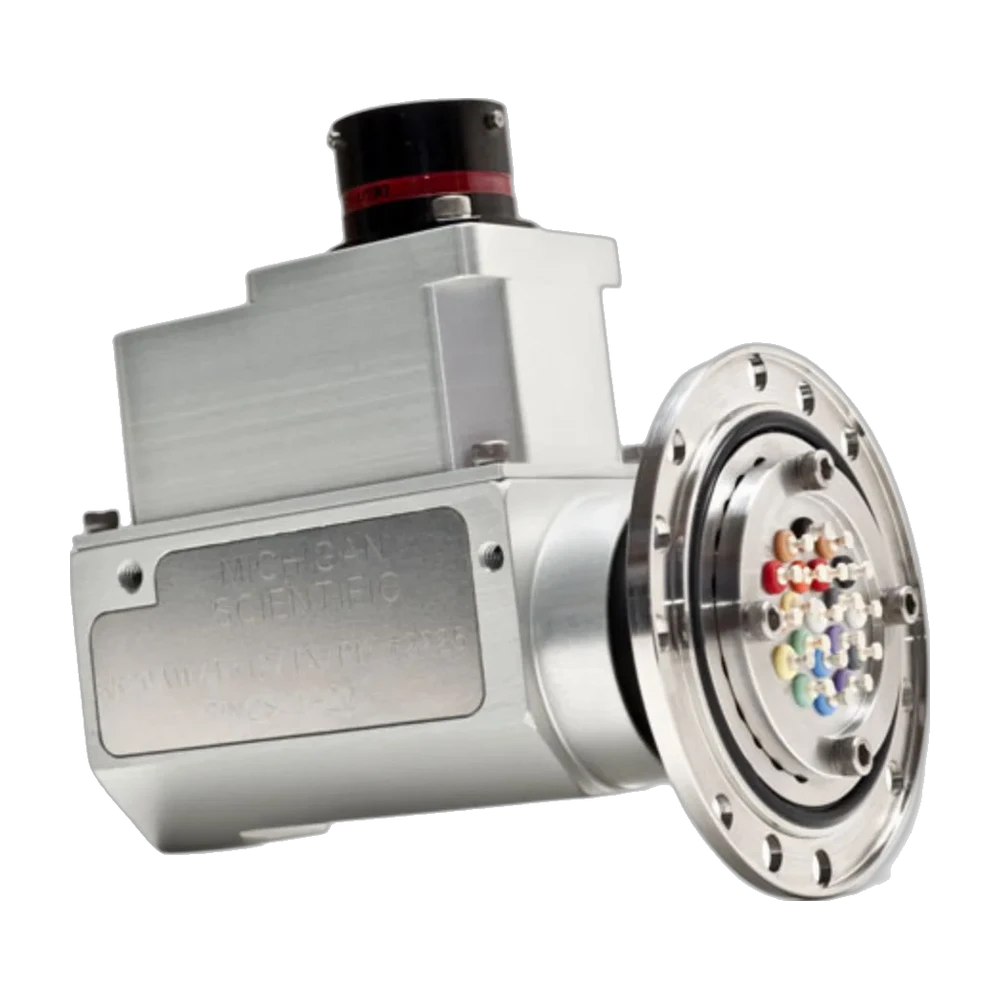
A sliding contact, quiet enough for microvolts.
A slip ring keeps each wire of a turning sensor connected to a recorder that does not turn. The rotor turns with the shaft, brushes ride on its rings, and the stator hands the signals to the data acquisition system.
- The rotor
- Turns with the shaft. Sensor wires land on solder terminals or a connector.
- The contact
- Precious-metal brushes and rings: 0.1 Ω maximum peak noise on the S-Series, no limit on bandwidth.
- What it can add
- An encoder (60 to 512 ppr, depending on the series) or, on the SR Series, a rotor amplifier.
Applications
-
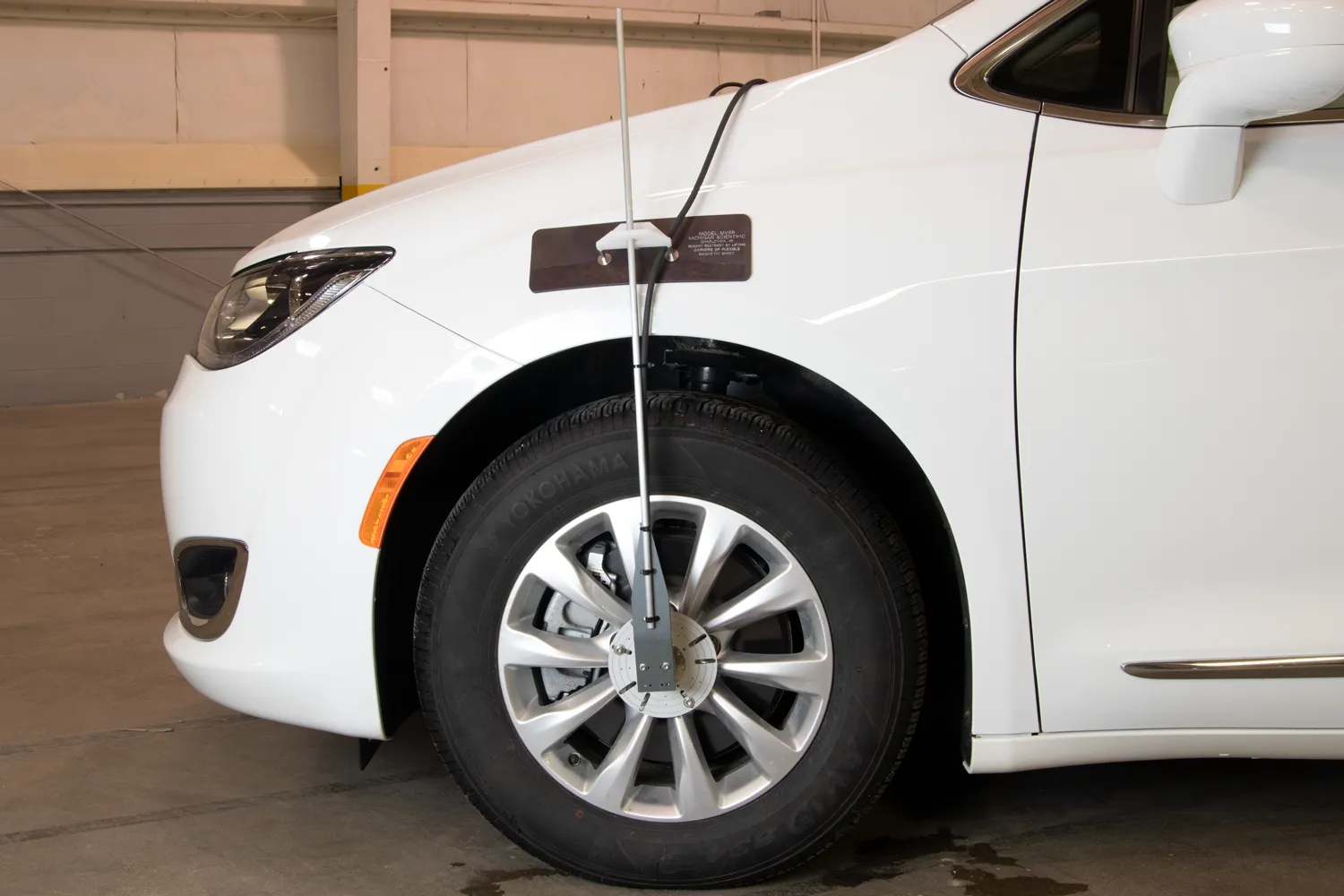
 Efficiency Vehicle efficiency and power mapping Torque and speed measured at each driveline stage, from engine to wheel, so each power loss has a location.
-
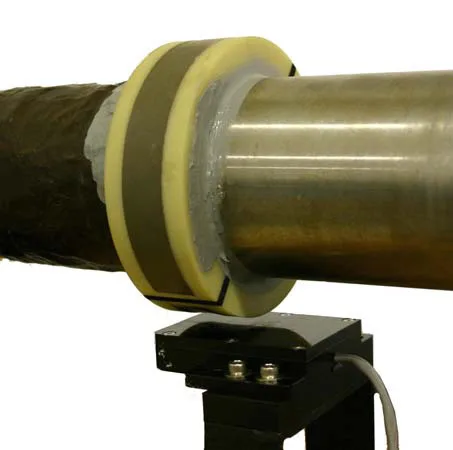 Turbines Wind turbine strain Strain on the blades and in the gearbox of a wind turbine, brought off the rotor by a slip ring or by telemetry.
-
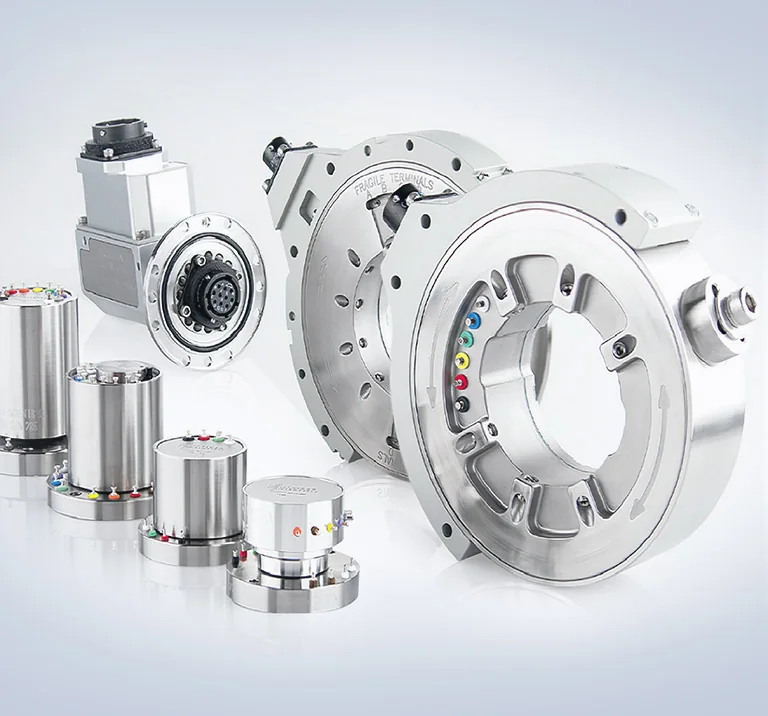 Electric Temperature in electric vehicles Temperatures on the rotating parts of an electric motor, brought out by a slip ring with amplifiers in its rotor.
-
 Temperature Temperature on rotating parts The temperature of a bearing, a compressor or a brake rotor, read while the part rotates under load.
Guides and technical notes
Each model page carries its datasheet, its drawing and a 3D viewer.
- S-SeriesStandard, end of shaft S4S6S8S10 4 to 10 circuits Series page
- Short S-SeriesCompact, end of shaft Short S4Short S6Short S8Short S10 4 to 10 circuits Series page
- B-SeriesThrough bore B4-2, B6-2, B8-2B4-3.2, B6-3.2B4-2W, B6-2WB6-3.2WB7-1.24WB7-T-1.2W 4 to 8 circuits Series page
- SR SeriesUp to 60 circuits SR-MSR-MWSR-AW/ASR20/75/WSR45A-AXHS and SR60A-AXHS 4 to 60 circuits Series page
- SR/ERT SeriesBuilt-in encoder SR-M/ERTSR-MW/ERTSR-A/ERTSR-AW/ERT 10 to 36 circuits Series page
What engineers ask first
Which slip rings have an encoder?
End of shaft: the /E60 versions of the SR Series (60 ppr) and the SR/ERT Series (256 to 512 ppr). Tubular: the /E60 versions of the B-Series (60 ppr). The encoder gives wheel angle from the same assembly, which the wheel force electronics need to resolve loads into vehicle axes.
Can a slip ring run outdoors on a vehicle?
Yes, with a weatherproof version. End of shaft: the SR Series (W versions, with a rubber boot or a metal cap on the stator), the SR/ERT Series and the SR20/75/W offer one. Tubular: the W versions of the B-Series, from the B4-2W to the BA-T-1.2W. The S-Series, Short S-Series and SR45A/SR60A have no weatherproof option.
Slip ring or telemetry?
A slip ring has no bandwidth limit and carries up to 60 circuits, but an end-of-shaft model needs a free shaft end. When the shaft cannot be modified, a clamp-on telemetry transmitter is the other route.
Can you build a slip ring to our shaft?
Yes. Michigan Scientific builds custom slip rings to a bore, length and circuit count; send the shaft drawing and the signal list.
Which slip ring for your shaft?
Shaft end or bore diameter, speed, circuits, indoor or outdoor. An application engineer answers with a reference and a price.
More details to give? Use the full contact form.