
Measuring the axial force in a tie rod during steering, on the production part
In brief
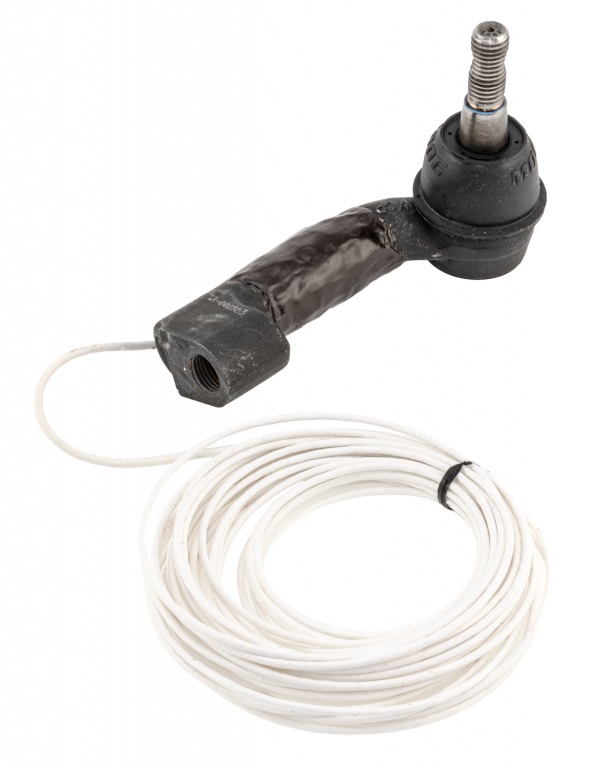
A tie rod end transducer is a tie rod end, the production part included, strain gaged to read the axial force in the tie rod in tension and in compression. It replaces the original end without moving the components around it and without taking more space under the vehicle. The transducer is temperature compensated, weatherproof and calibrated. Its force is read with the steering wheel torque and angle, or with the wheel forces, on the same run.
- Inner or outer
- tie rod end made into the transducer
- 6 to 8 weeks
- typical lead time for a gaged tie rod
- ISO/IEC 17025
- calibration of the finished transducer
Load path
The steering gear moves the tie rods, and each tie rod pushes or pulls the steering arm of its knuckle. The force in the tie rod is axial: tension on one side of the car, compression on the other, changing with the steering input and with what the wheel meets on the road.
The tie rod forces are an input to the dynamic vehicle models, the finite element analysis and the computer-aided engineering used to design the chassis and the suspension for durability and to study handling. Without a measurement they are estimated; measured, they build and verify the models.
Transducer
The transducer is made from a tie rod end, including the production part of the vehicle. Strain gages are positioned on it to measure the axial force in tension and in compression. Either end can be instrumented; the inner tie rod gives more strain output and is generally more accurate.
| Part | the inner or outer tie rod end, from nearly any tie rod, the production part included |
|---|---|
| Measured force | axial, in tension and in compression |
| Protection | temperature compensated, weatherproof coating |
| Fit | replaces the production end; no vehicle modification, no change of position of the other components |
| Calibration | ISO/IEC 17025, certificate and sensitivity delivered with the transducer |
| Lead time | typically 6 to 8 weeks |
Procedure
- 01
Choose the inner or the outer end
Either end can be instrumented. Michigan Scientific prefers the inner tie rod, which has more strain output.
Custom strain gage transducers - 02
Gage, compensate and seal
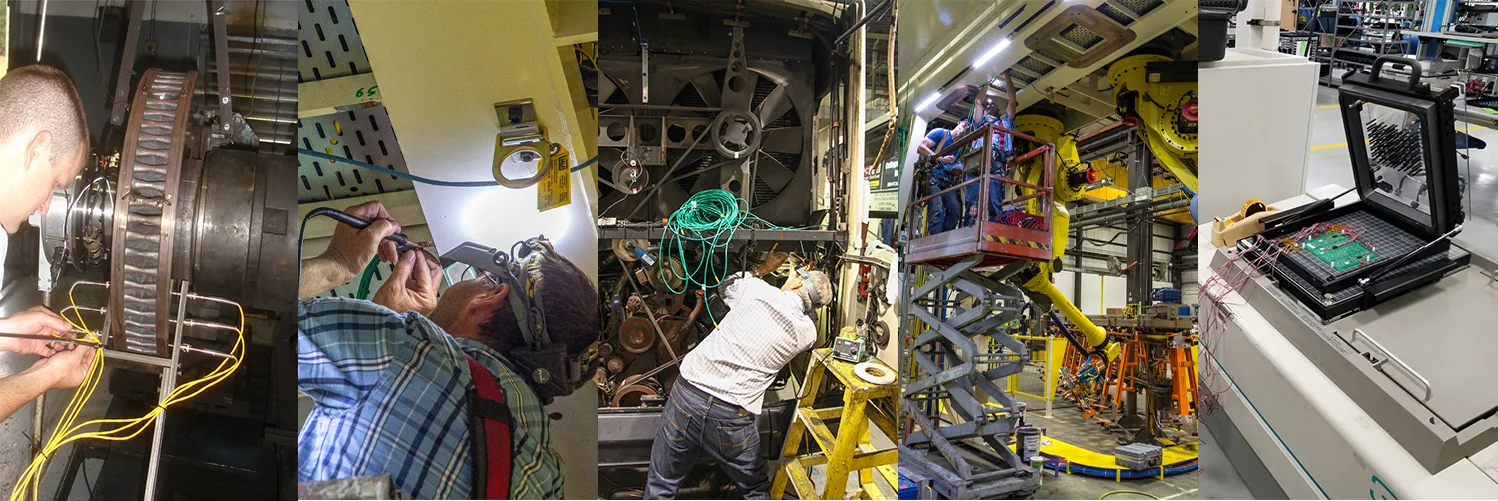
The transducer is strain gaged, temperature compensated and protected with a weatherproof coating, then calibrated.
- 03
Fit it like the production part
The transducer replaces the production tie rod end. No vehicle modification is required.
- 04
Route the lead wires
A safe path for the lead wires from the transducer to the data acquisition system is the only thing to prepare.
With the steering wheel or the wheel loads
With a steering wheel torque and angle transducer on the same run, the driver input is compared with the force in the tie rod, which locates inefficiencies in the steering gear. With a wheel force transducer, the tie rod forces are related to what the wheel sees, and unexpected forces in the tie rods on rough terrain, potholes or large bumps, are read against the wheel loads.
Result
The axial force in the tie rod, in tension and in compression, measured on the vehicle with no other component moved. The data replaces an estimate in the durability and handling models, read with the steering wheel torque and the wheel loads.
Frequent questions
Is the inner or the outer tie rod better for force measurement?
The inner tie rod. Either end can be strain gaged, but the inner tie rod has more strain output and is generally more accurate.
Does a tie rod end transducer require vehicle modification?
No. The transducer replaces the production tie rod end without moving the components around it. Only a safe path for the lead wires to the data acquisition system has to be prepared.
Can a tie rod force transducer be made from a production tie rod?
Yes. A tie rod end transducer can be made from nearly any tie rod, including the production part of the vehicle.
Does a tie rod end transducer measure both tension and compression?
Yes. Its strain gages are positioned to measure the axial force in tension and in compression. It is temperature compensated and protected with a weatherproof coating.
Similar applications
All applications-
 Suspension Suspension component loads How the wheel loads split between the suspension components and enter the chassis.
-
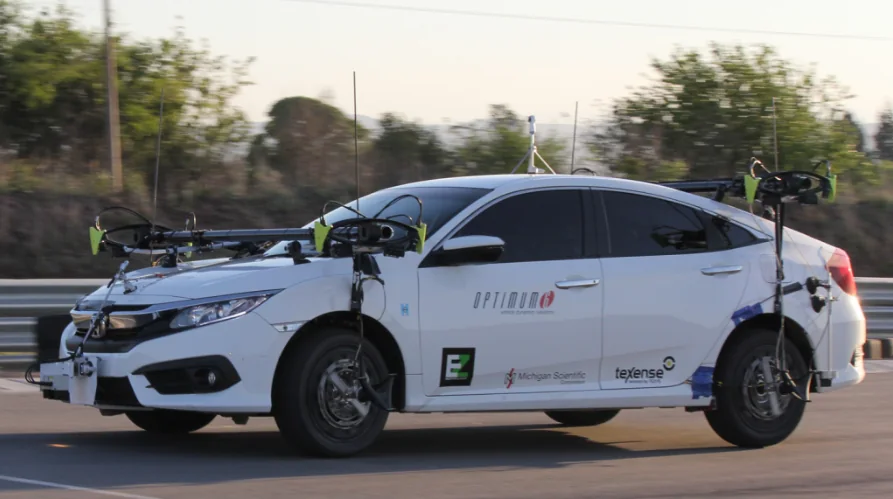 Dynamics Vehicle dynamics The forces and moments at each wheel while the vehicle brakes, turns and changes lane.
-
 Durability Wheel loads on the road Three forces and three moments at each wheel, recorded while the vehicle is driven.