
Service
Engineering and manufacturing
The transducers, the slip rings and the custom projects are designed, analysed and machined in house.
In brief
Michigan Scientific brings together design, analysis, software, electronics and machining. Automotive, aerospace, defense, heavy equipment and other sectors rely on this team for design, analysis, testing and consulting.
- ISO 9001:2015
- design, manufacture and calibration of transducers and load cells
- ISO/IEC 17025:2017
- accredited force and torque calibration
Engineering design
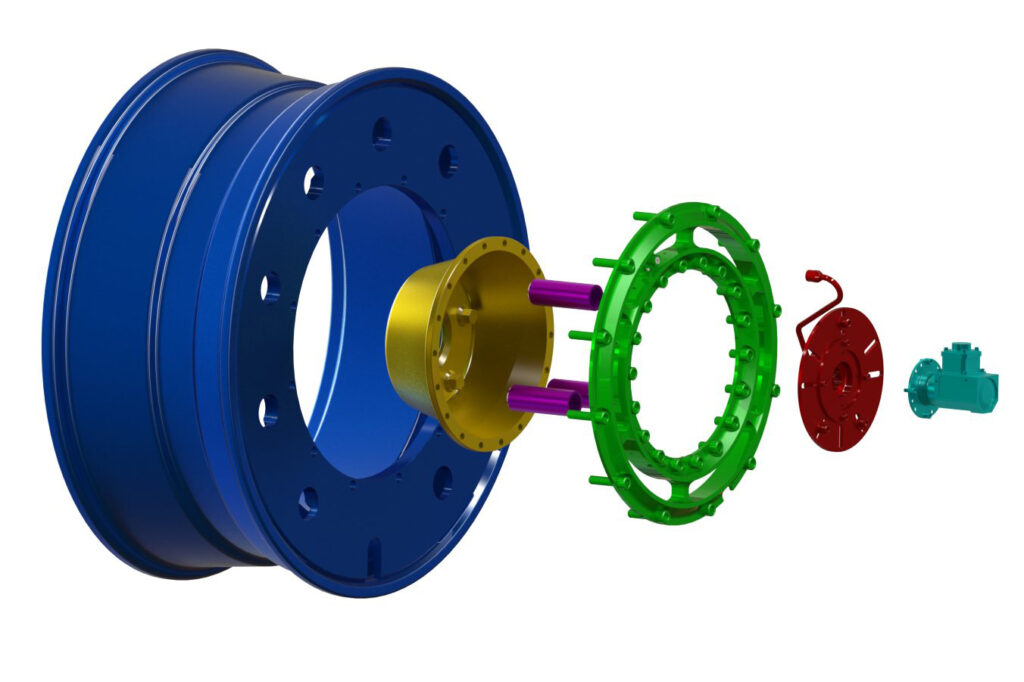
| Computer aided design | CAD workstations and software take a concept to machine drawings, with the engineering analyses that go with it. |
|---|---|
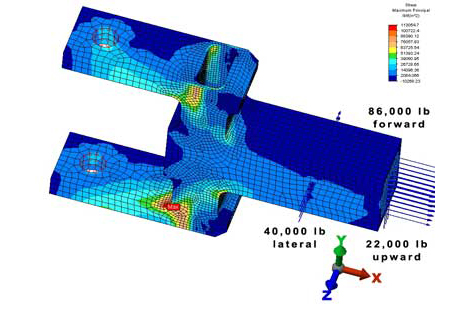
| Finite element analysis | FEA optimizes transducer designs for sensitivity and strength, and evaluates automotive components as possible load measuring transducers. |
| Software development | Custom software for data analysis, user interfaces and hardware interfaces. |
| Printed circuit design | Design and testing of complex multi-layer printed circuit boards. |
Analysis before metal is cut
A production part that is to become a transducer is first evaluated by finite element analysis: where it strains, how much, and whether it stays strong enough once gauged.
Manufacturing
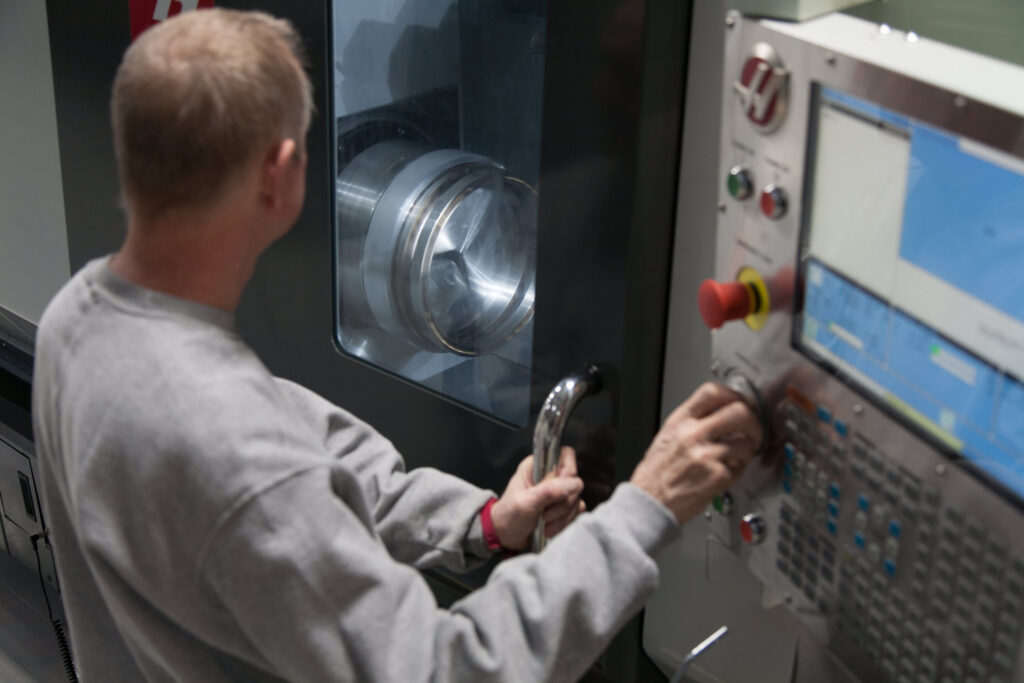
The machine facility is set up for the efficient and precise manufacture of transducers, slip rings, test fixtures, prototype assemblies and other components.
| CNC machining | Parts are made or modified by computer-controlled milling, turning and electric discharge machining (EDM). |
|---|---|
| Computer aided machining | The CNC programmer imports a 2D or 3D CAD file on a CAM workstation and specifies the machining operations. |
Calibration, under the same roof
The patented Transducer Calibration and Test machine (TCAT) applies three forces and three moments and calibrates each transducer through its own electronics. A large hydraulic machine applies forces and moments up to 445 kN (100 000 lb). All reference equipment is traceable to NIST.