
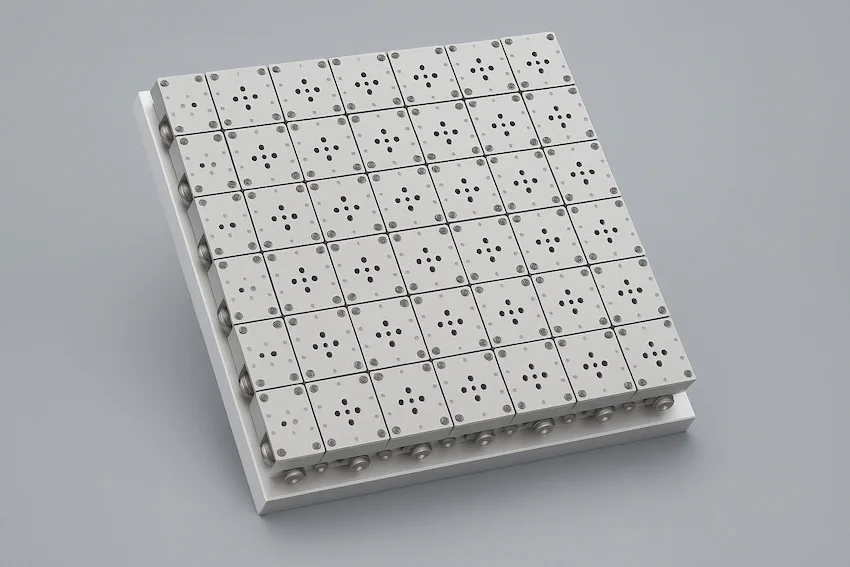
Crash and impact
Impact forces on the barrier and on the seat mountings, measured in three directions.
Crash and impact tests measure the force the vehicle applies to the barrier and the forces that reach its components. Each load cell reads three directions at once.
crash barrier load cells · three-axis load cells
What do you need to measure in a crash test?
Impact forces on the barrier and on the seat mountings. The application shows the load cells, their mounting and the signals recorded.
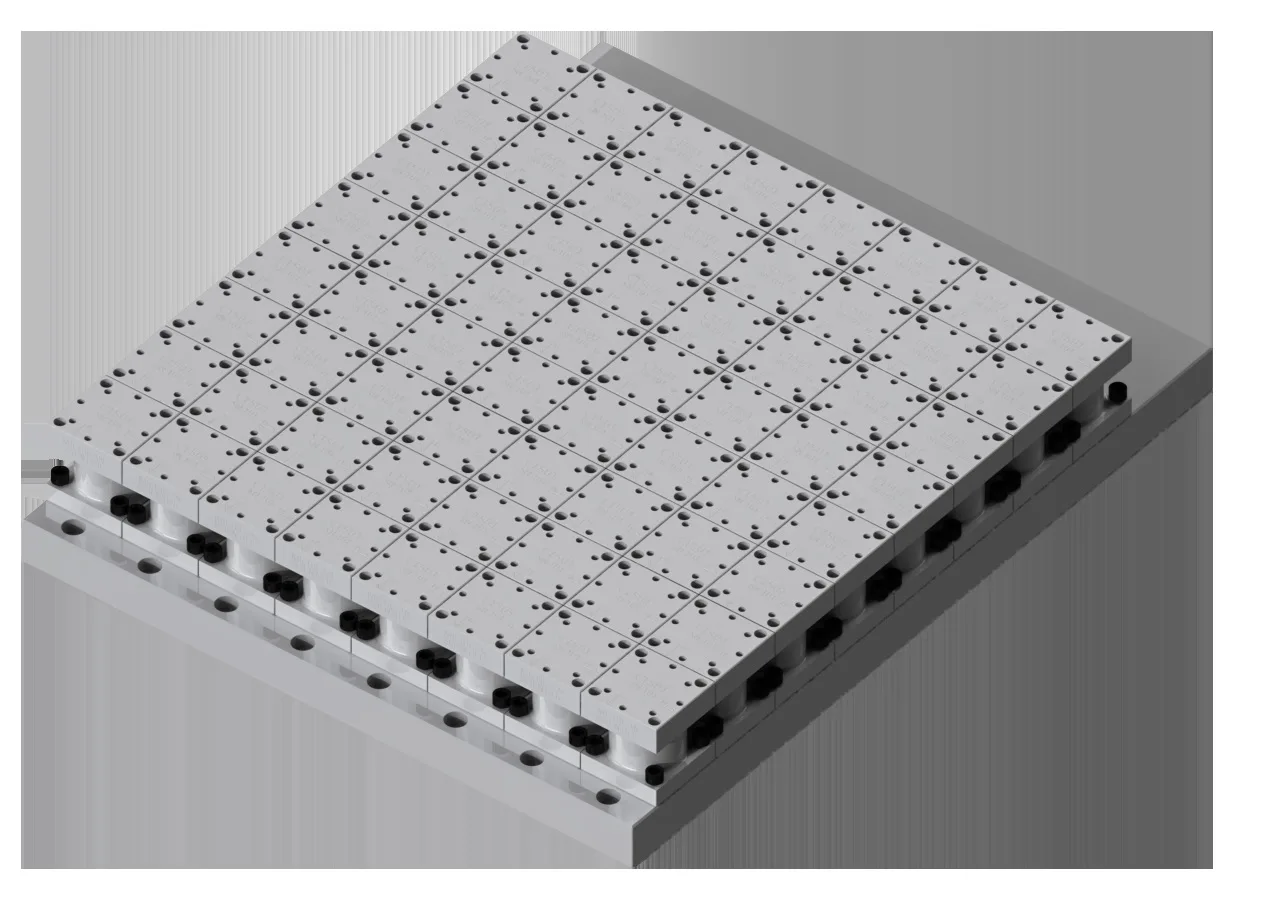
Crash and impact testing, in short
What is measured in crash and impact tests?
The force of the impact on the barrier and the forces passed to the parts of the vehicle, each in three directions. The barrier is a panel of three-axis load cells with a standard 124 × 124 mm face, assembled side by side; the seat mountings take four three-axis load cells.
The instruments behind these applications
The products these applications cite most. Each one can be rented or bought on its own.
-
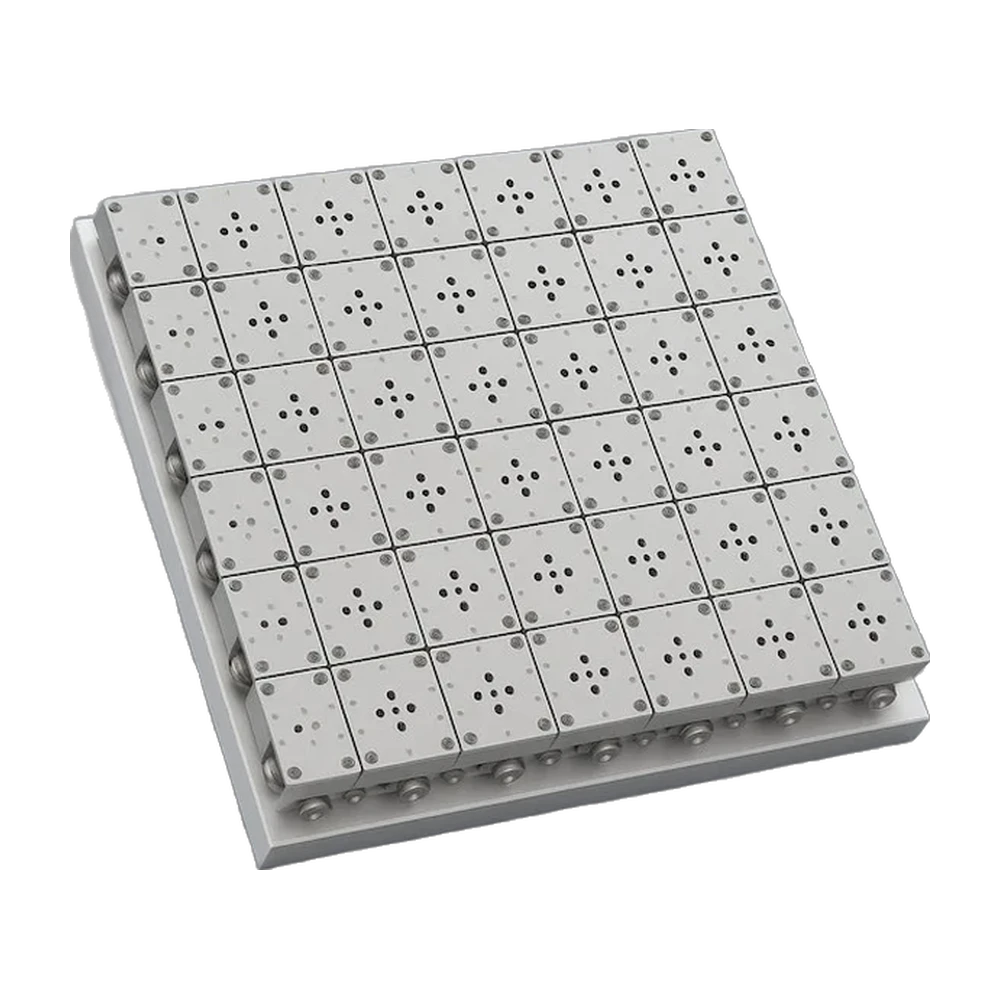 Product · 1 application CT500 Three-axis crash barrier cell, 500 kN on the impact axis Discover
-
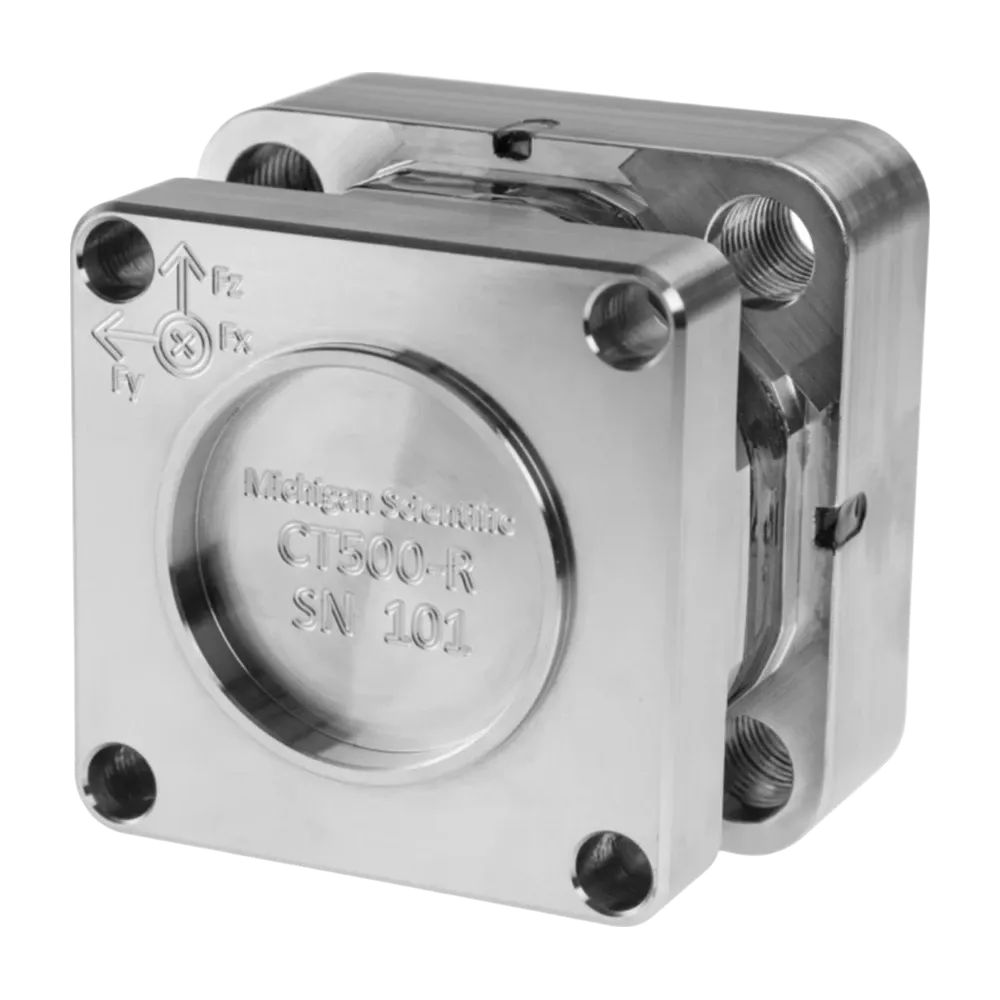 Product · 1 application CT500-R Corner cell with a 150 mm radius plate, 1, 3 or 5 axes Discover
-
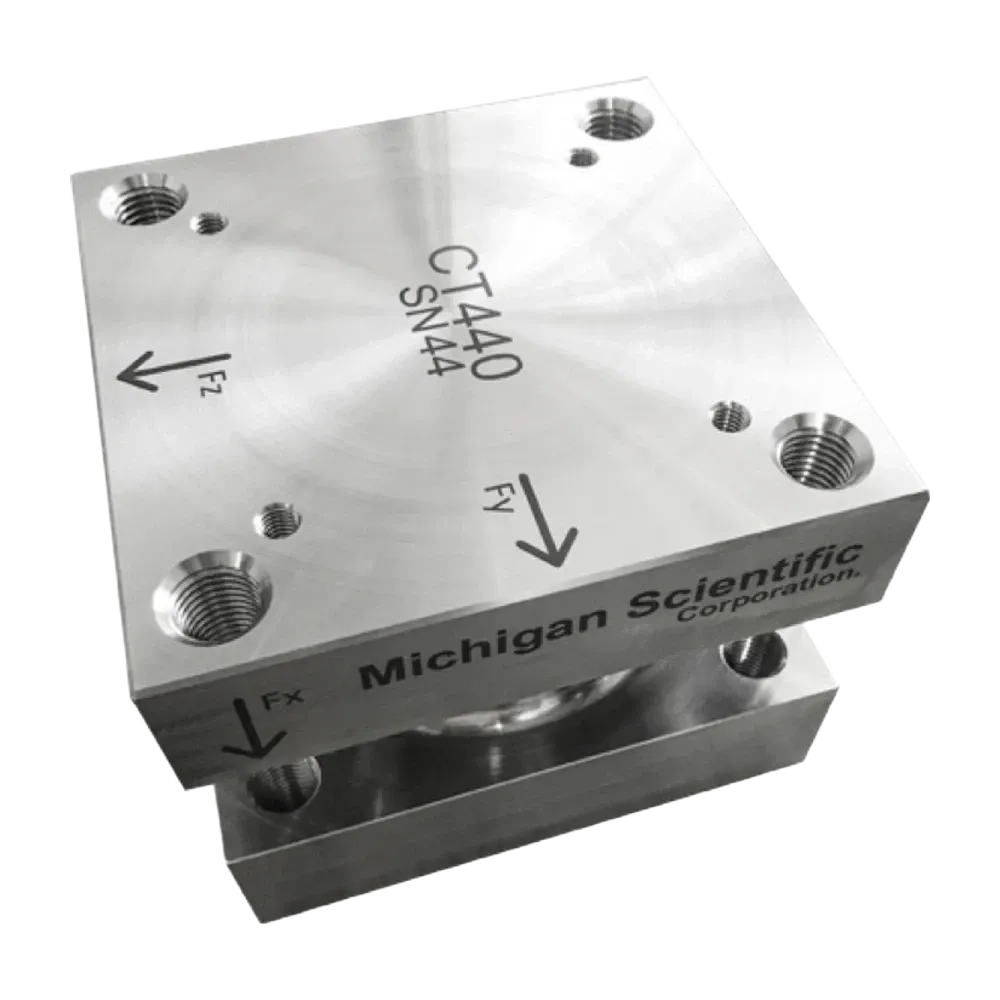 Product · 1 application CT440 Three-axis cell, 440 kN on the impact axis Discover
-
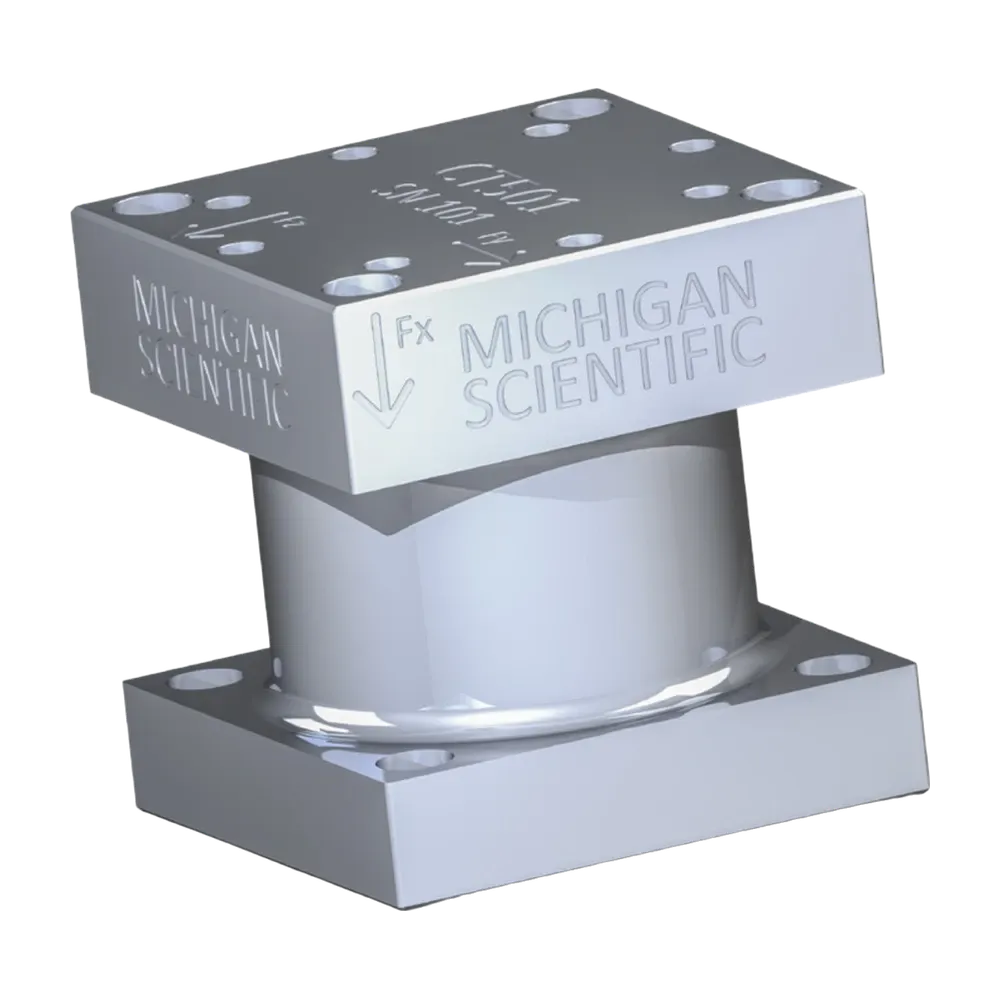 Product · 1 application CT501 Single-axis cell for the impact axis, 500 kN Discover
Crash and impact, frequent questions
What is the measuring range of a crash barrier load cell?
The CT500 measures ± 500 kN on the impact axis Fx and ± 125 kN on Fy and Fz; the CT440 measures ± 440 kN and ± 120 kN. The nominal load can be changed on request.
A test close to yours?
Tell us the vehicle, the quantity and the conditions. An engineer answers with a first measurement setup.
More details to give? Use the full contact form.