
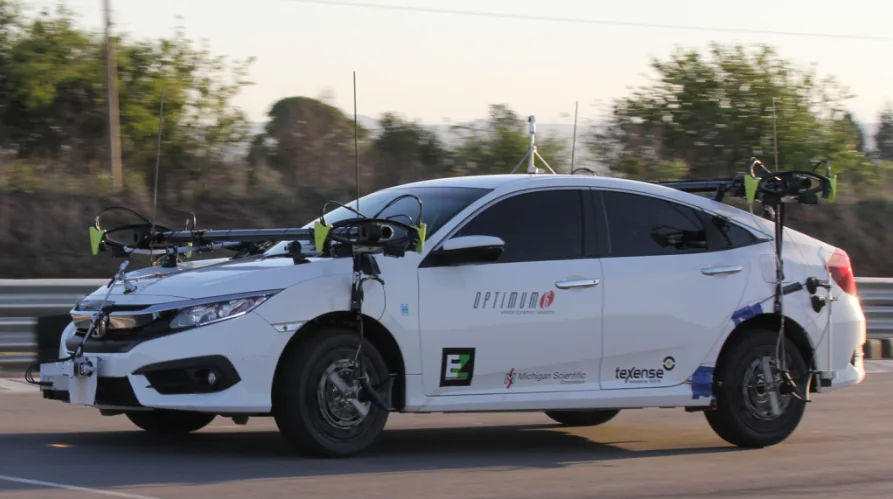
Type of test
Vehicle dynamics
Tire forces, side slip angle, steering torque and angle, and wheel speed, recorded during handling maneuvers.
Braking, cornering, lane change, low grip: the forces at each wheel and the motion of the vehicle are recorded together, on the track or on the road.
WFT · wheel instrumentation · custom transducers
What do you need to measure on the vehicle?
Handling questions, from tire forces to steering torque and wheel speed. Each application shows the setup on the car, the instruments and the signals you get.
- Dynamics Vehicle dynamics The forces and moments at each wheel while the vehicle brakes, turns and changes lane. Discover
-
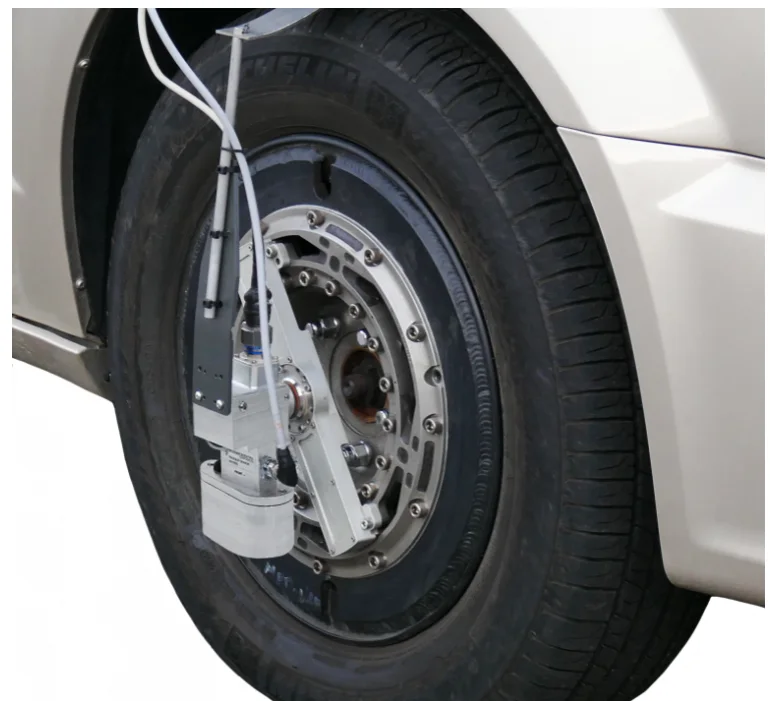 Dynamics Side slip angle Side slip angle read without contact by an optical sensor, on a wheel or on the vehicle body. Discover
 -
 Winter Winter testing Wheel forces and wheel speed measured on snow and ice, to see the moment a tire starts to slip. Discover
 -
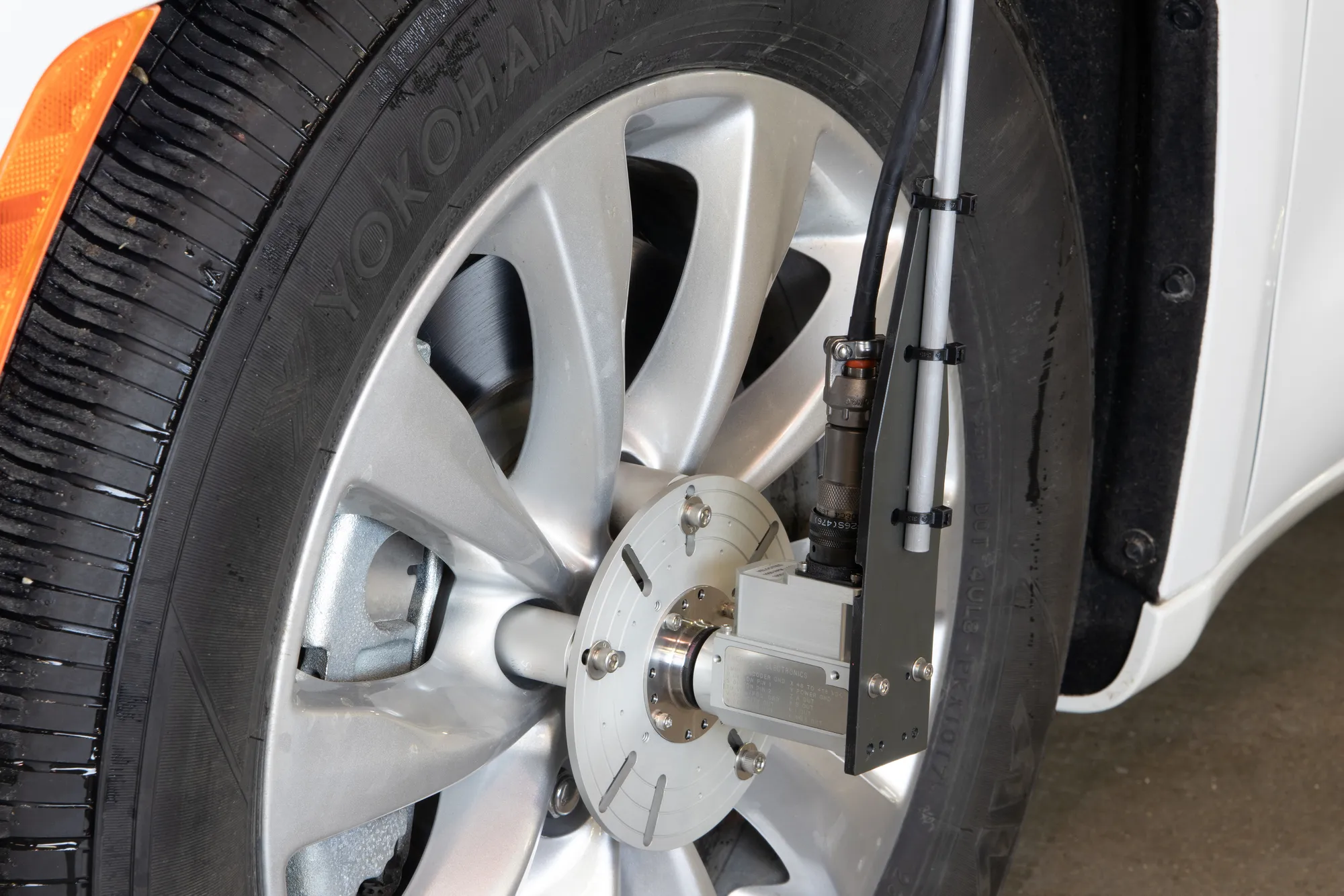 Speed Wheel speed and distance Wheel speed, vehicle speed and distance traveled, read from the rotation of the wheel itself. Discover
 -
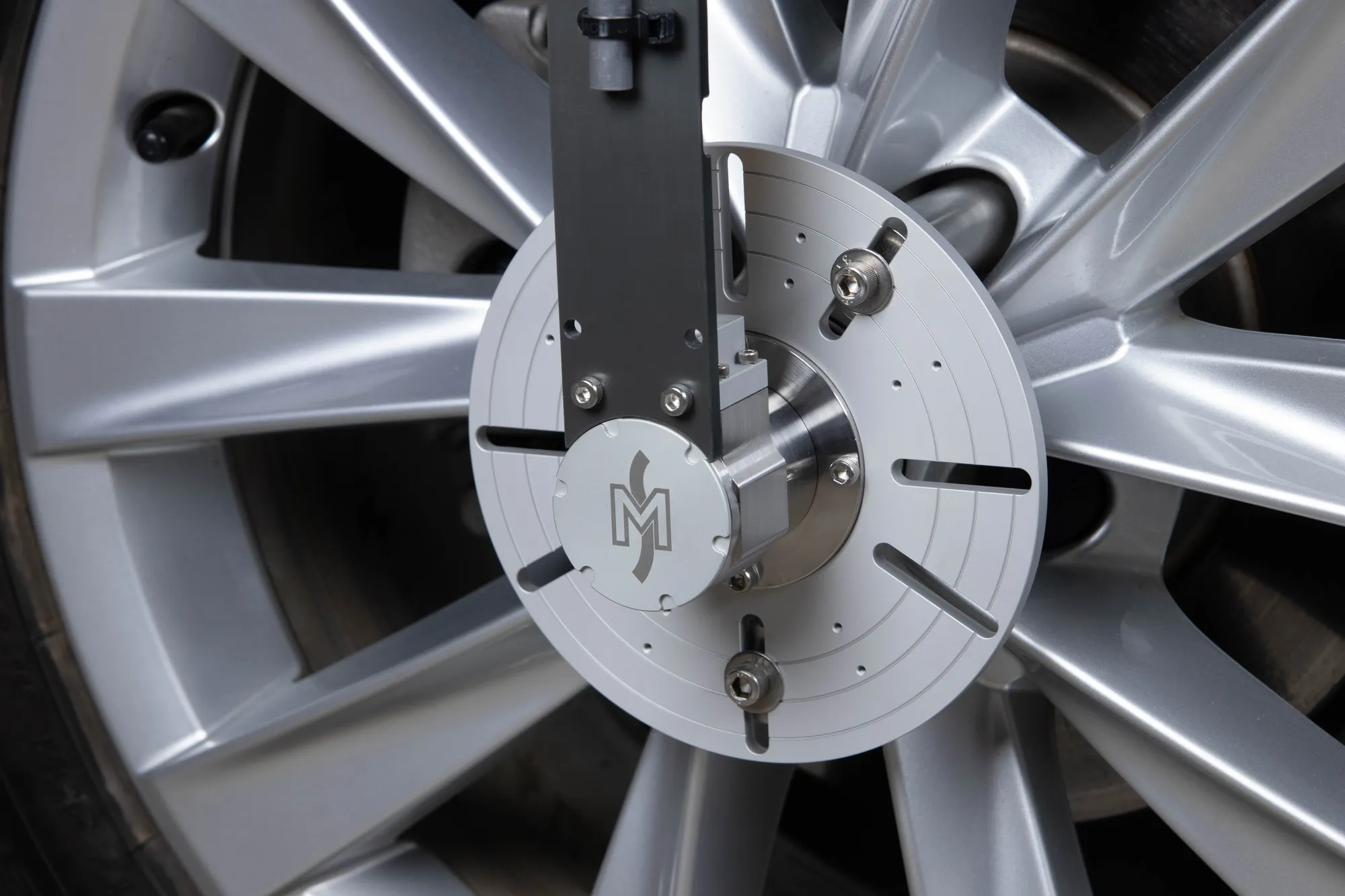 Speed Encoder pulses to analog voltage Encoder pulses converted in line to a speed voltage and an angle voltage, for recorders that cannot read pulses. Discover
 -
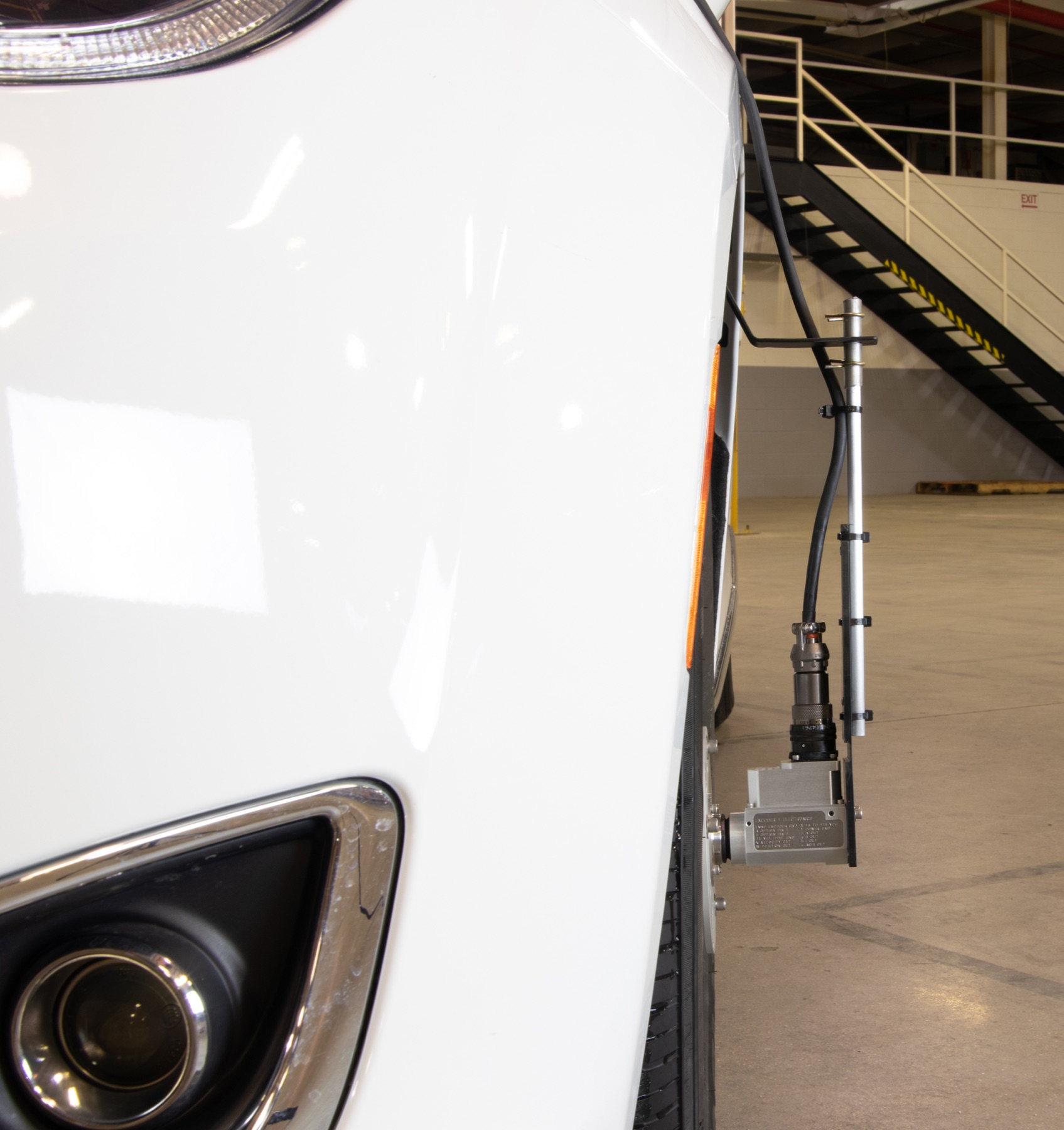 Speed Low-speed wheel rotation Distance and speed at near-zero speed and through a change of direction, without the error a loose stator restraint adds. Discover
 -
 ADAS Autonomous vehicle tracking Distance traveled, measured at the wheels, for dead reckoning and mobile mapping when GNSS is missing. Discover
 -
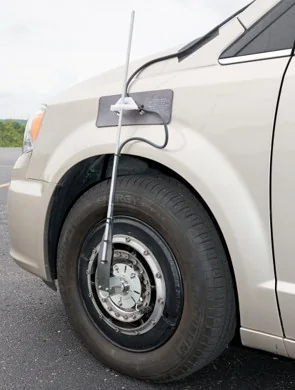 Electric In-wheel motor torque Drive and brake torque of each in-wheel motor, measured between the tire and the hub. Discover
 -
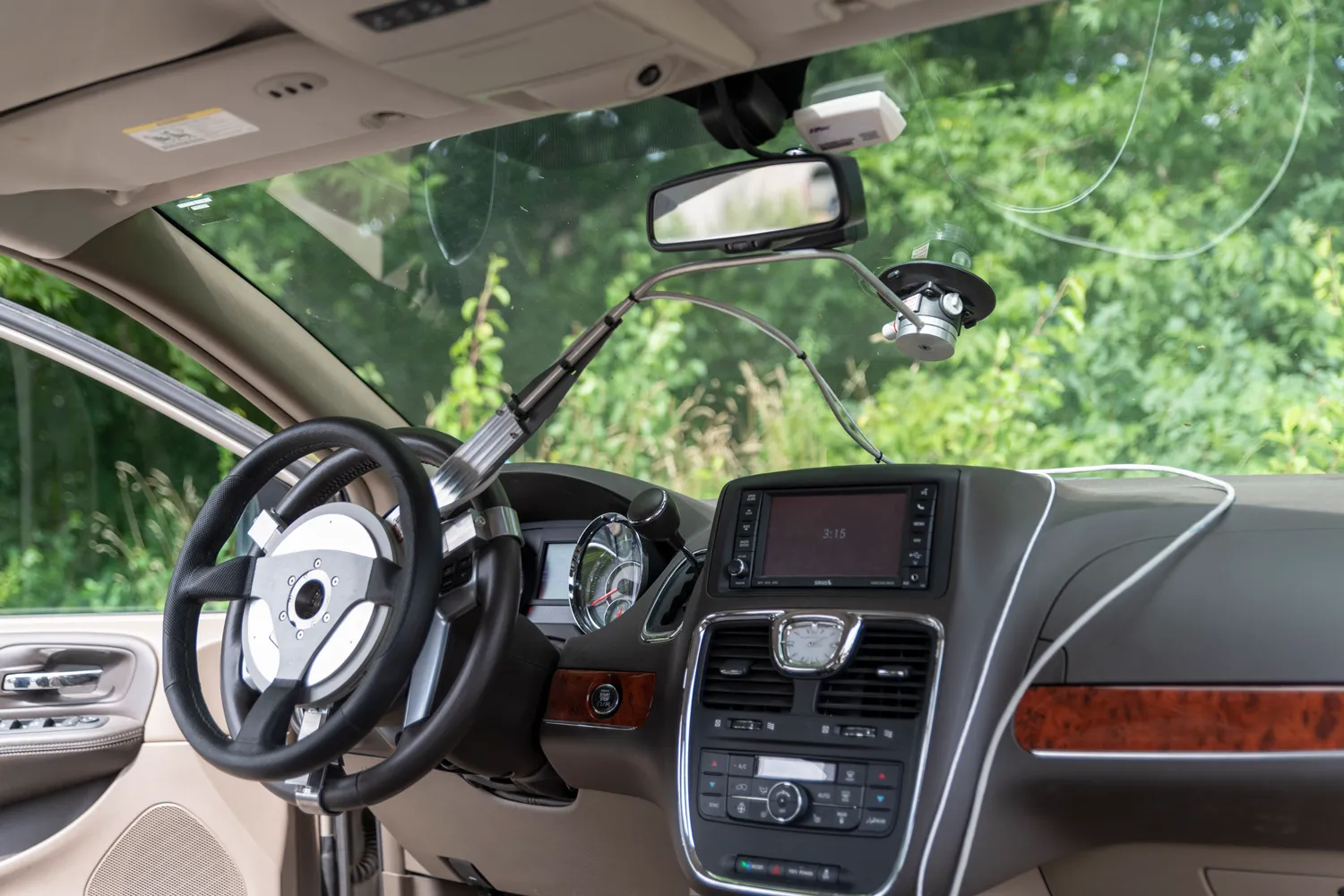 Steering Steering torque and angle The torque the driver applies and the angle of the wheel, measured at the steering wheel, on the road or in the laboratory. Discover
 -
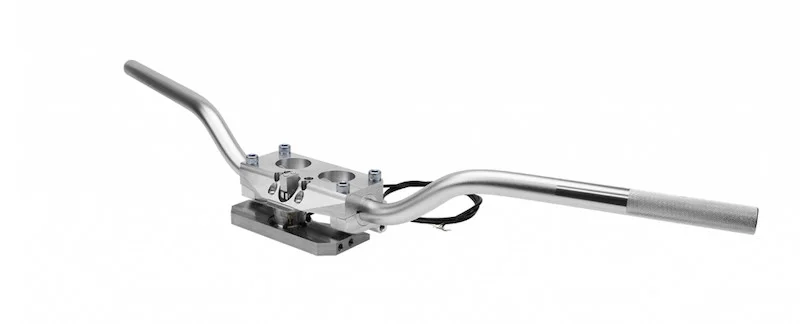 Steering Motorcycle handlebar torque Steering torque and steering angle at the handlebar of a motorcycle or an ATV, with the handlebars working as usual. Discover
 -
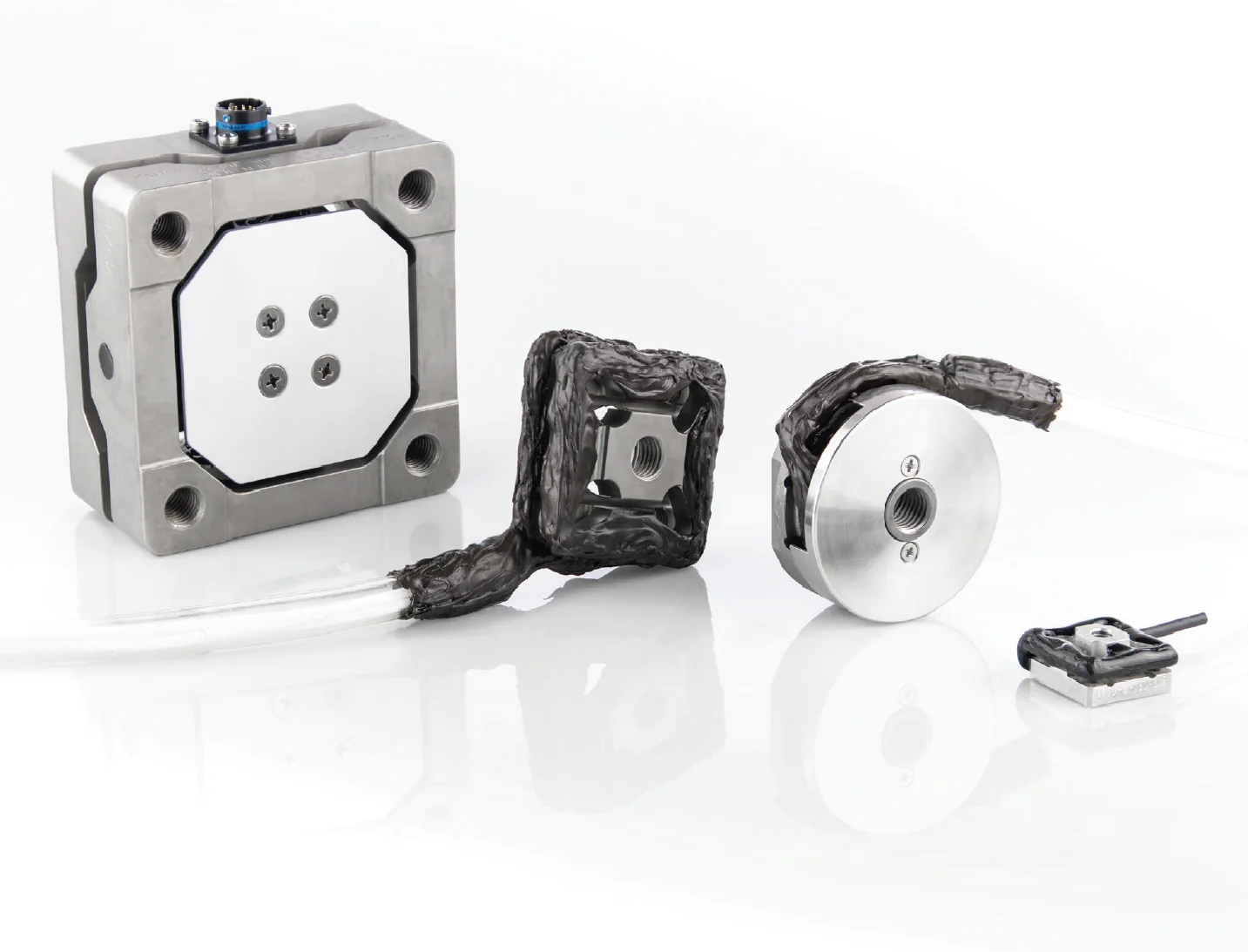 Tires Tire-road friction Tire and road surface forces measured in three directions on a traction fixture, to find the coefficient of friction. Discover
In short
Vehicle dynamics testing, in short
What is measured in a vehicle dynamics test?
A vehicle dynamics test measures the three forces and three moments at each wheel, the side slip angle, the steering torque and angle at the steering wheel, and the wheel speed and distance traveled.
Longitudinal forces serve acceleration and braking work, lateral forces serve cornering, handling and stability, and vertical forces tell about ride comfort and road contact.
How does wheel slip on snow and ice show in the data?
When a tire starts to slip on a low-friction surface, the wheel speed goes up while the force on the wheel goes down. The wheel force transducer records both signals together.
The same signature appears on ice, on snow and on sand. For winter tests, the telemetry version of the transducer sends the signals without a cable through the hub.
The instruments behind these applications
The products these applications cite most. Each one can be rented or bought on its own.
-
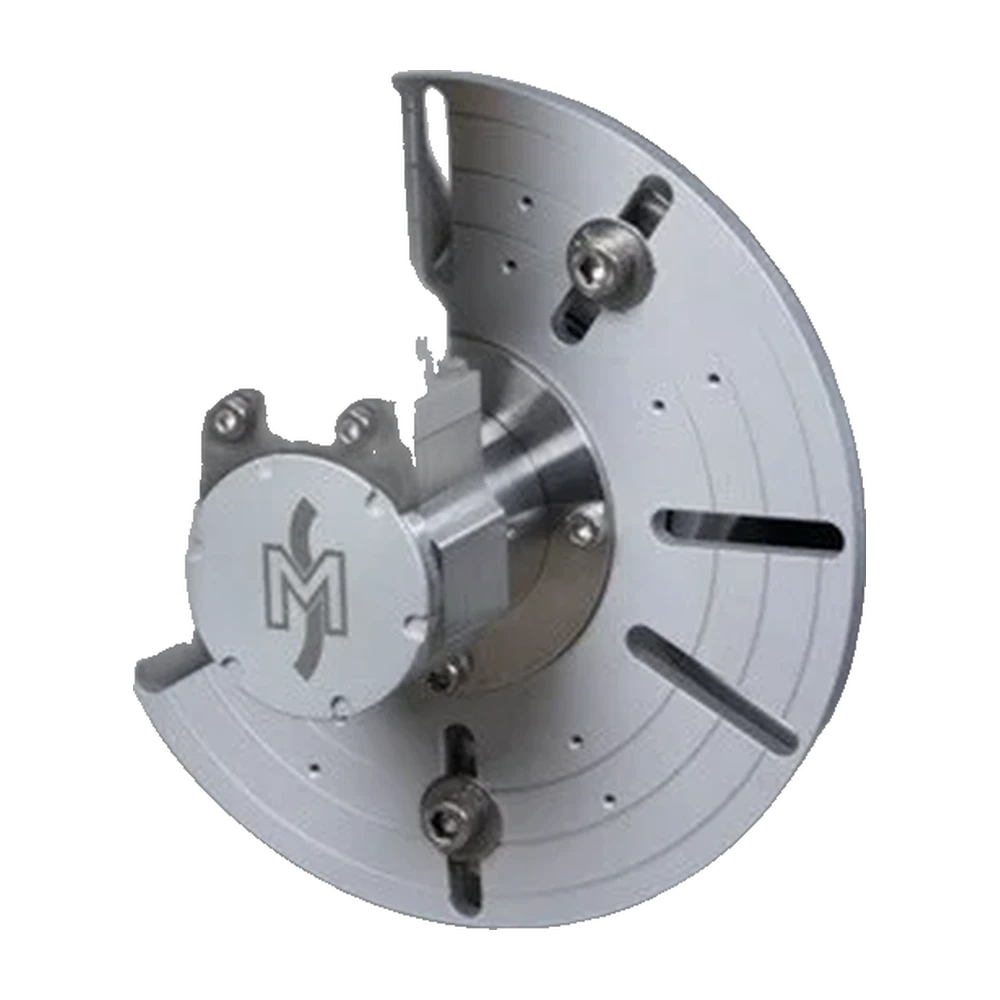 Product · 6 applications Wheel Pulse Transducer Wheel speed and distance, 50 to 5 000 pulses per revolution. Discover
 -
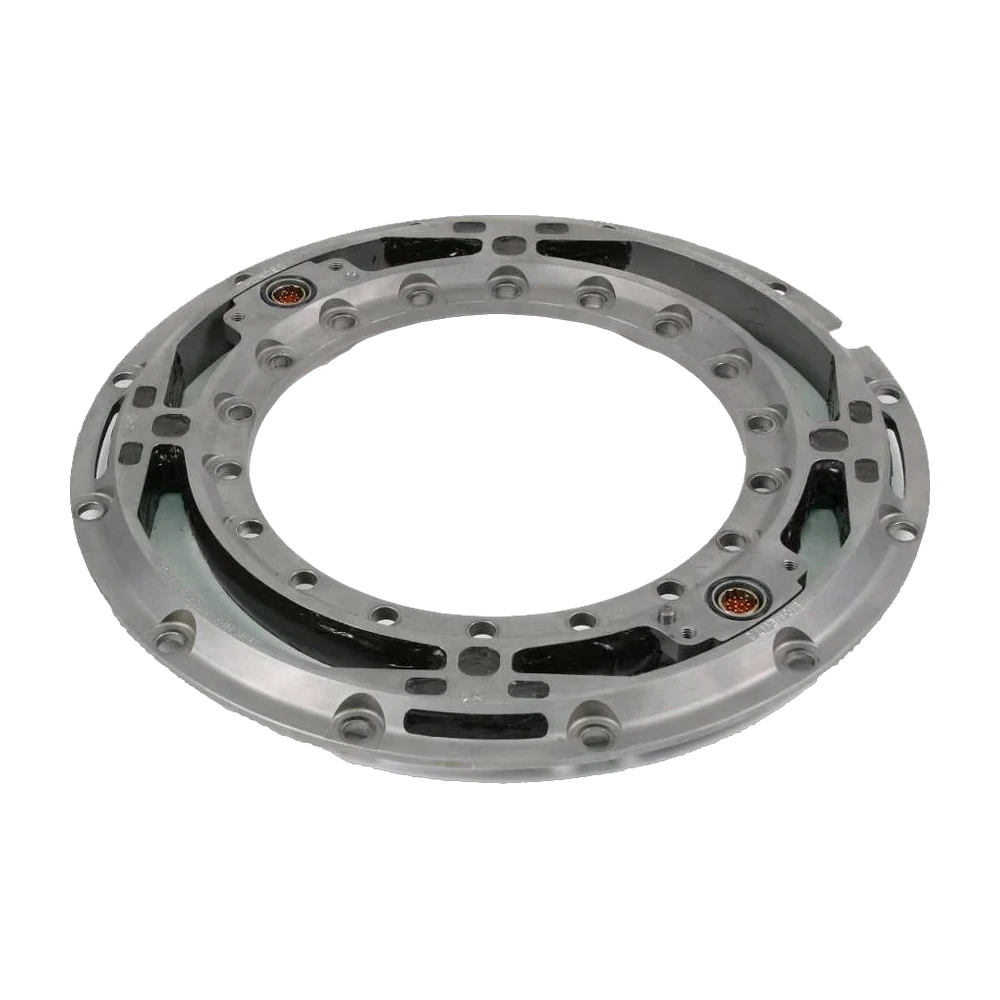 Product · 5 applications LW series Six load components per wheel, with wheel speed and angle. Discover
 -
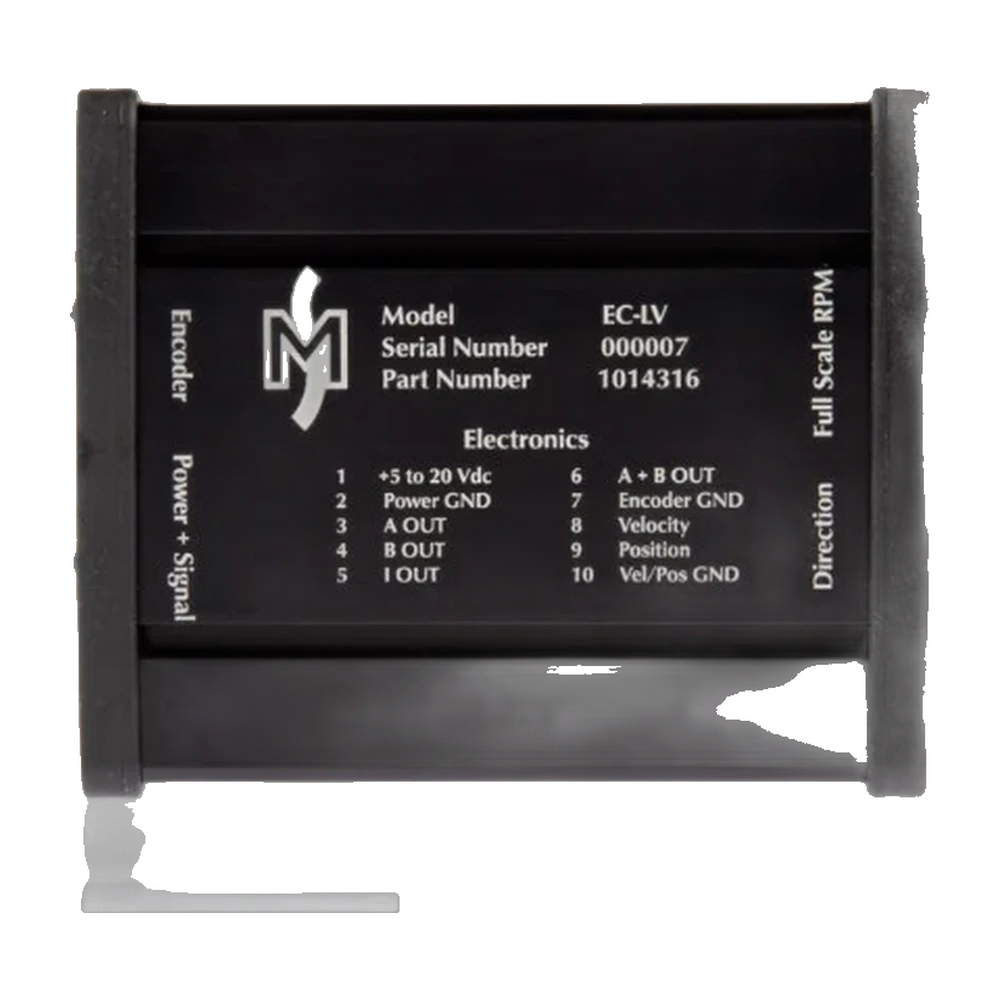 Product · 4 applications EC-LV Converts the pulses to speed and angle voltages, in line. Discover
 -
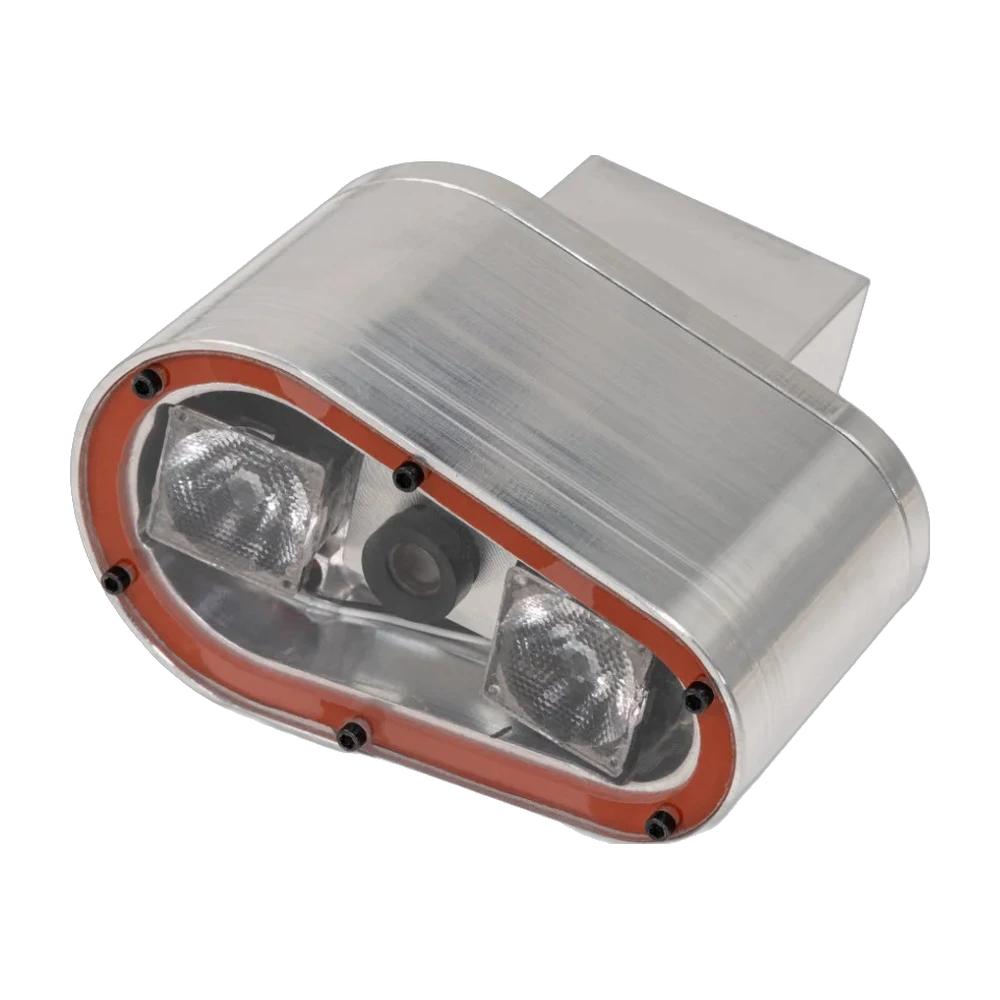 Product · 3 applications TrueSlip Optical side slip angle, on a wheel or on the body. Discover
Vehicle dynamics, frequent questions
Does a wheel force transducer work in rain and snow?
Yes. The transducers are made of stainless steel with weatherproof sealing and are temperature compensated. The LW12.8-50-TEL operates from −40 to 125 °C.
Can steering torque be measured without a slip ring?
Yes. The SW-TEL sends the steering torque by telemetry from a battery-powered package and needs no position restraint. It does not measure the steering angle.
Can wheel speed be recorded as an analog voltage?
Yes. The EC-LV conditioner converts the encoder pulses to two analog voltages, one for angular velocity and one for angular position. Full-scale velocity equals ± 10 V DC.
A test close to yours?
Tell us the vehicle, the quantity and the conditions. An engineer answers with a first measurement setup.
More details to give? Use the full contact form.