
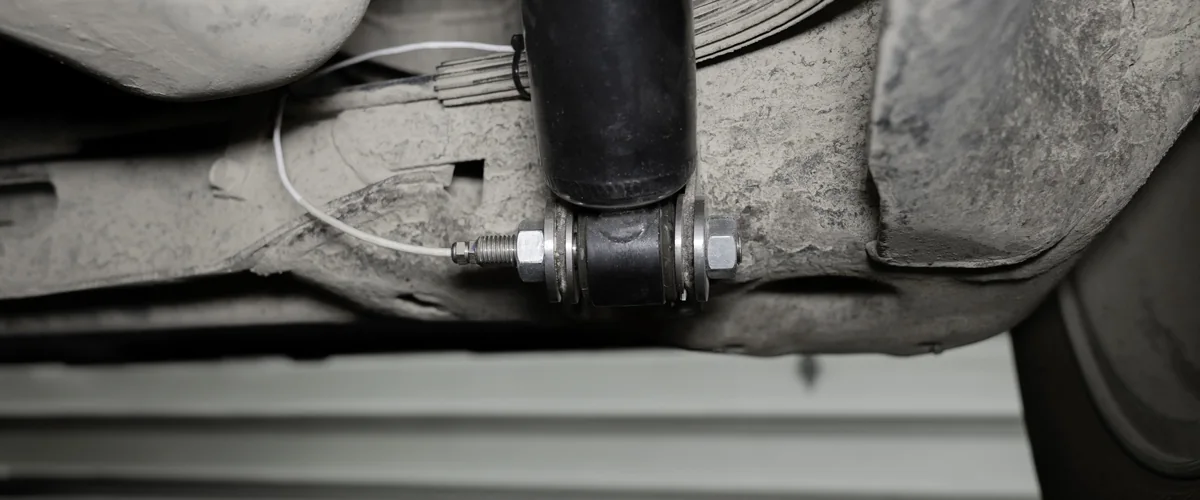
Type of test
Component testing
Forces on suspension links, mounts, seats, hitches and pedals, measured on the part itself in its production position.
The load is measured where it acts, in three directions when needed, with the part in its production position.
load cells · custom transducers
Which part do you need to load?
Links, mounts, seats, hitches and pedals. Each application shows how the production part is instrumented and what it measures.
-
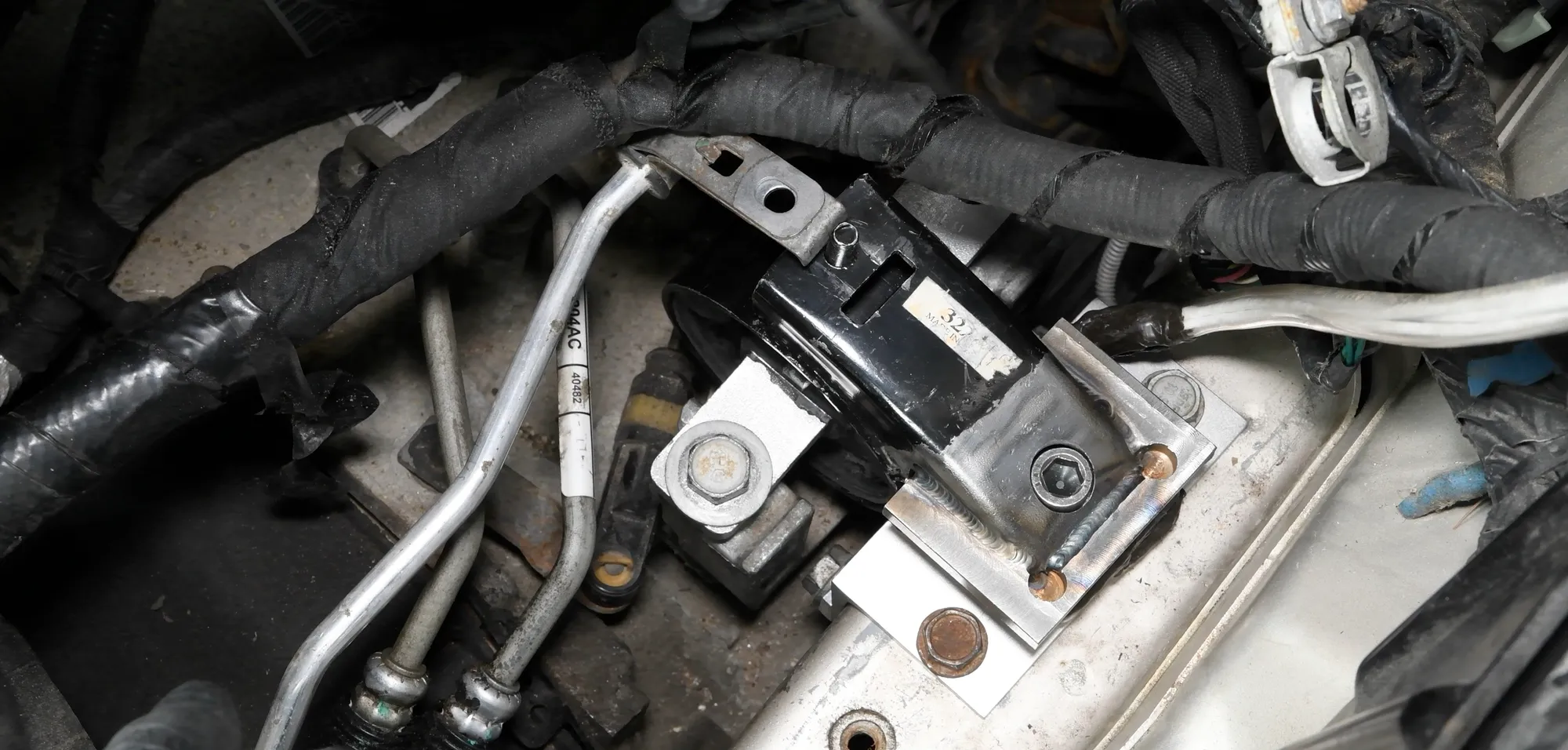 Component Engine mount loads The three forces each mount passes to the frame during start-up, acceleration and gear shifts. Discover
 -
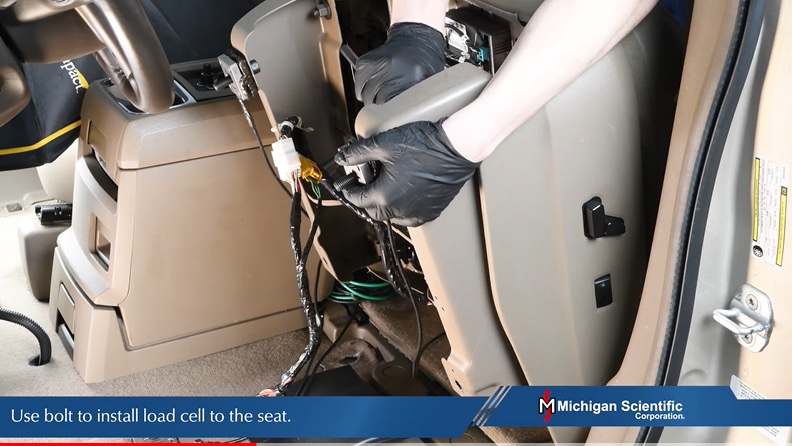 Component Seat forces The three forces each seat mounting takes while driving and in a crash, without changing the driving position. Discover
 -
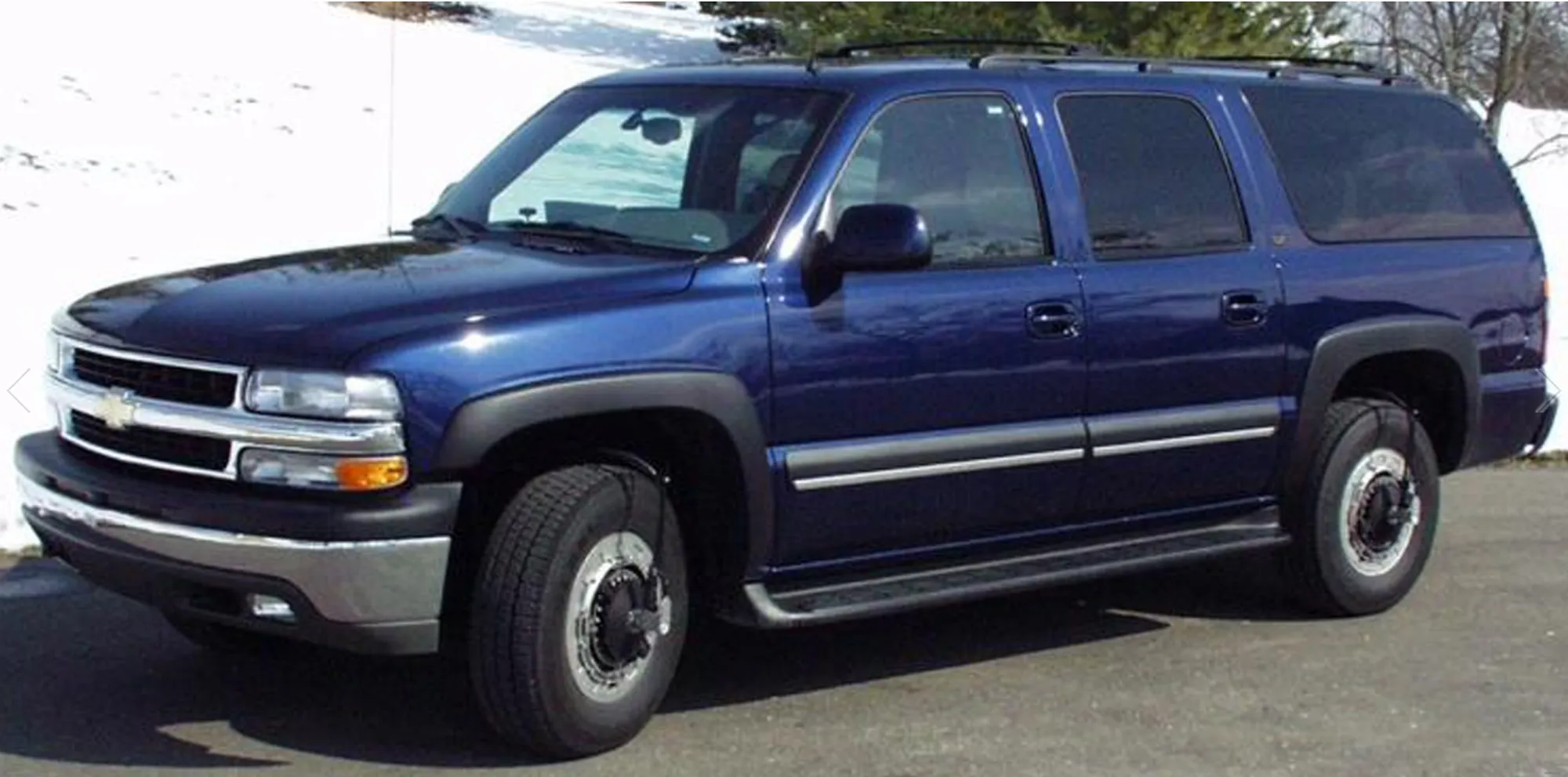 Suspension Suspension component loads How the wheel loads split between the suspension components and enter the chassis. Discover
 - Suspension MacPherson strut force The total load into a MacPherson strut, measured at its lower attachment or at its top mount. Discover
-
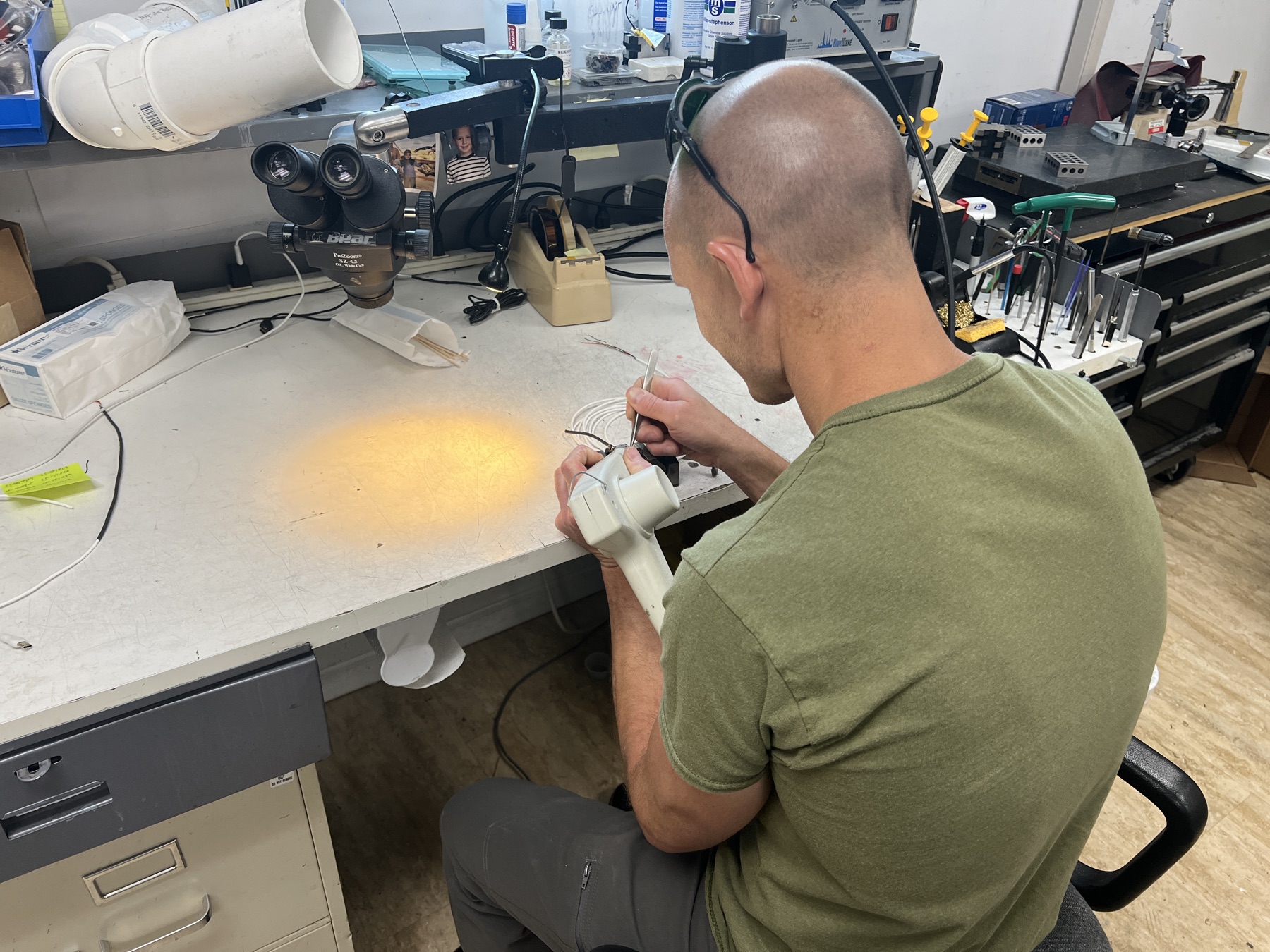 Suspension Ball joint force Vertical, lateral and longitudinal force in a ball joint, measured on the strain gaged production part. Discover
 -
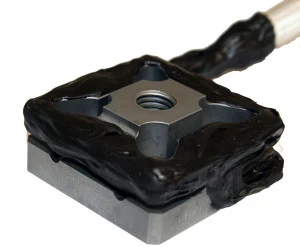 Component Robotics and prosthetics Forces in three directions, and moments, on a robot arm or a prosthetic foot, from a load cell small enough to fit in the assembly. Discover
 -
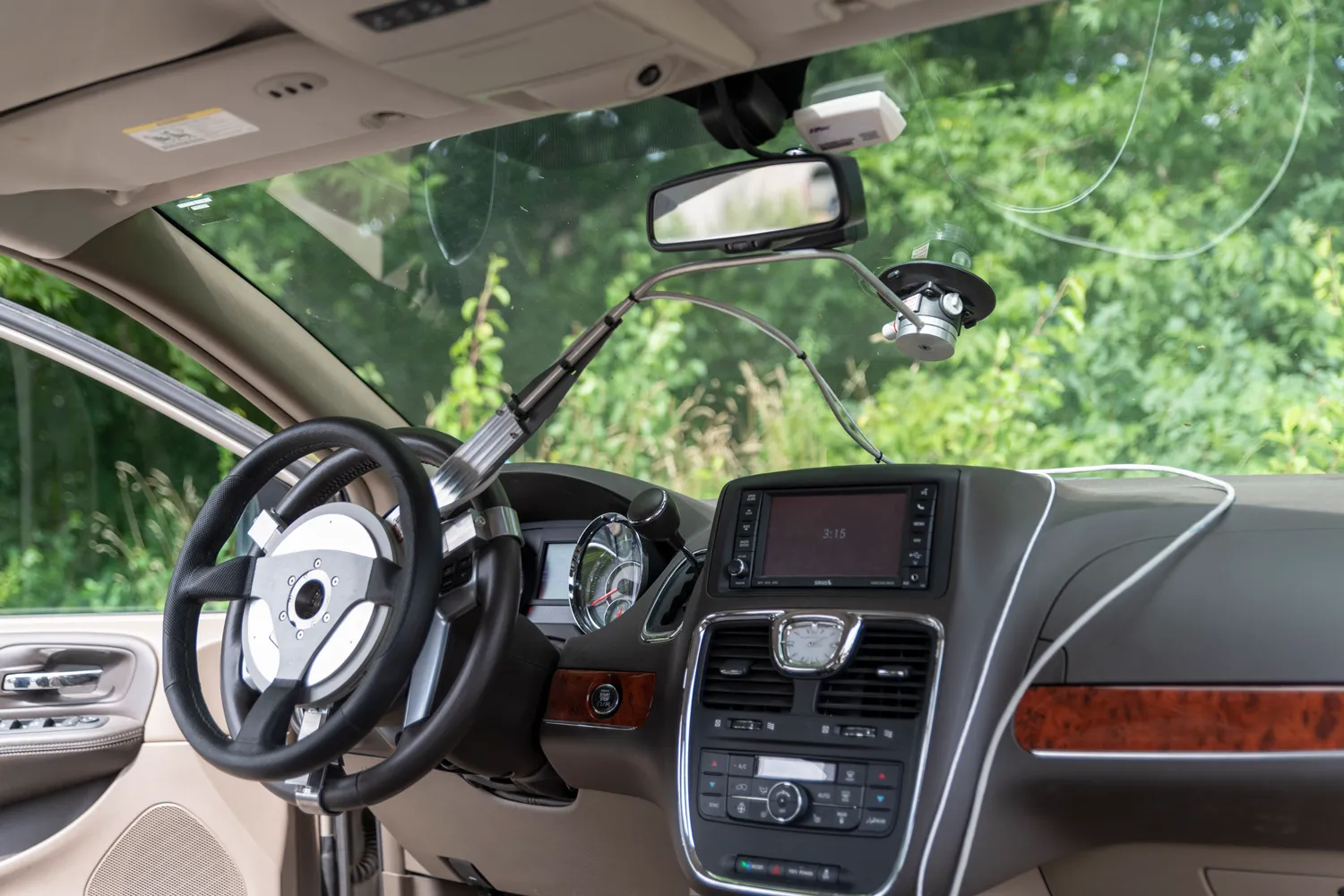 Steering Steering torque and angle The torque the driver applies and the angle of the wheel, measured at the steering wheel, on the road or in the laboratory. Discover
 -
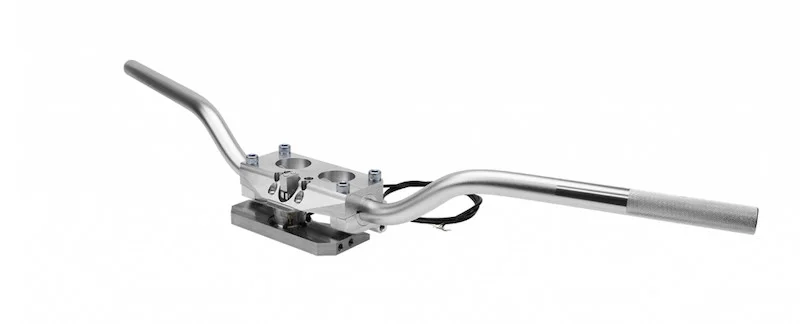 Steering Motorcycle handlebar torque Steering torque and steering angle at the handlebar of a motorcycle or an ATV, with the handlebars working as usual. Discover
 -
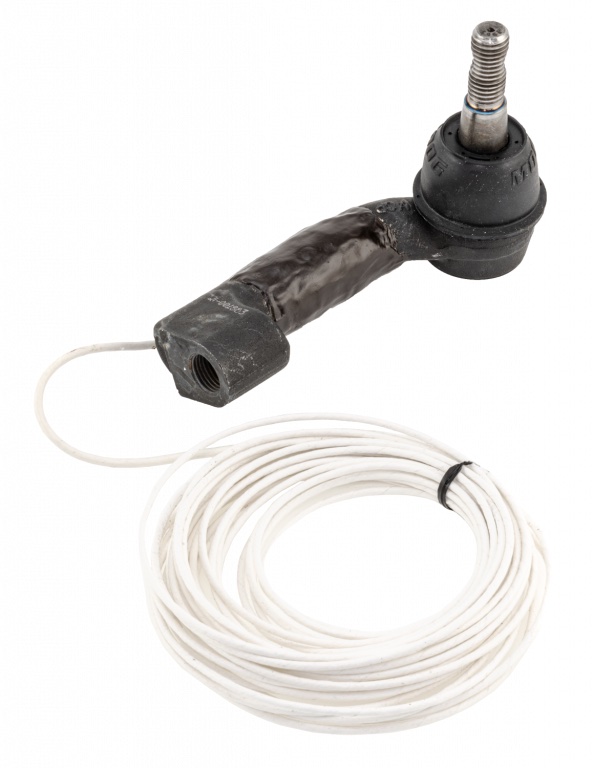 Steering Tie rod loads The tension and compression force in each tie rod while the vehicle is steered and driven. Discover
 -
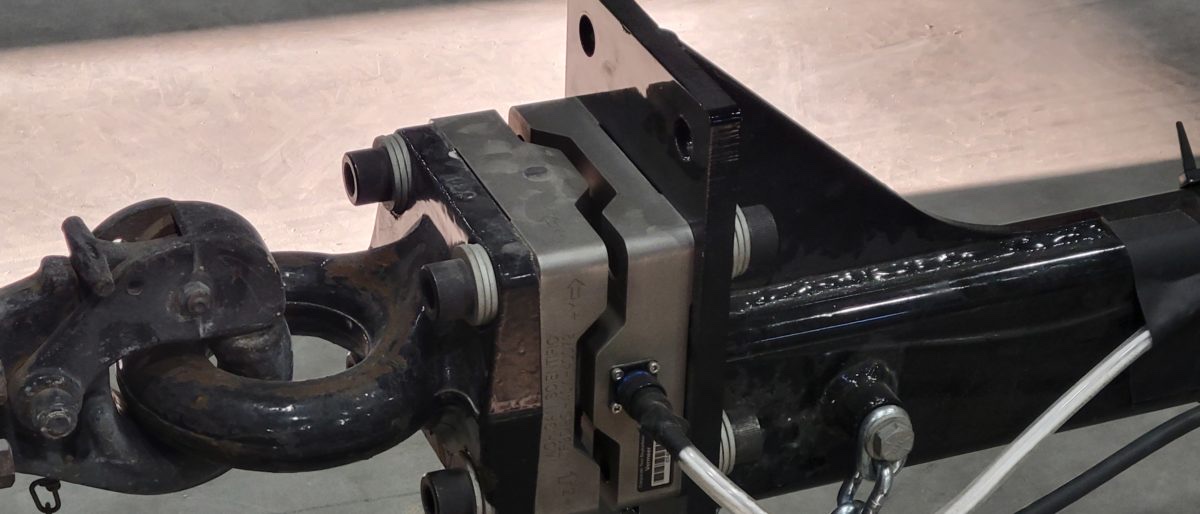 Towing Pintle hitch forces The three forces between towing vehicle and trailer, recorded in real towing situations. Discover
 -
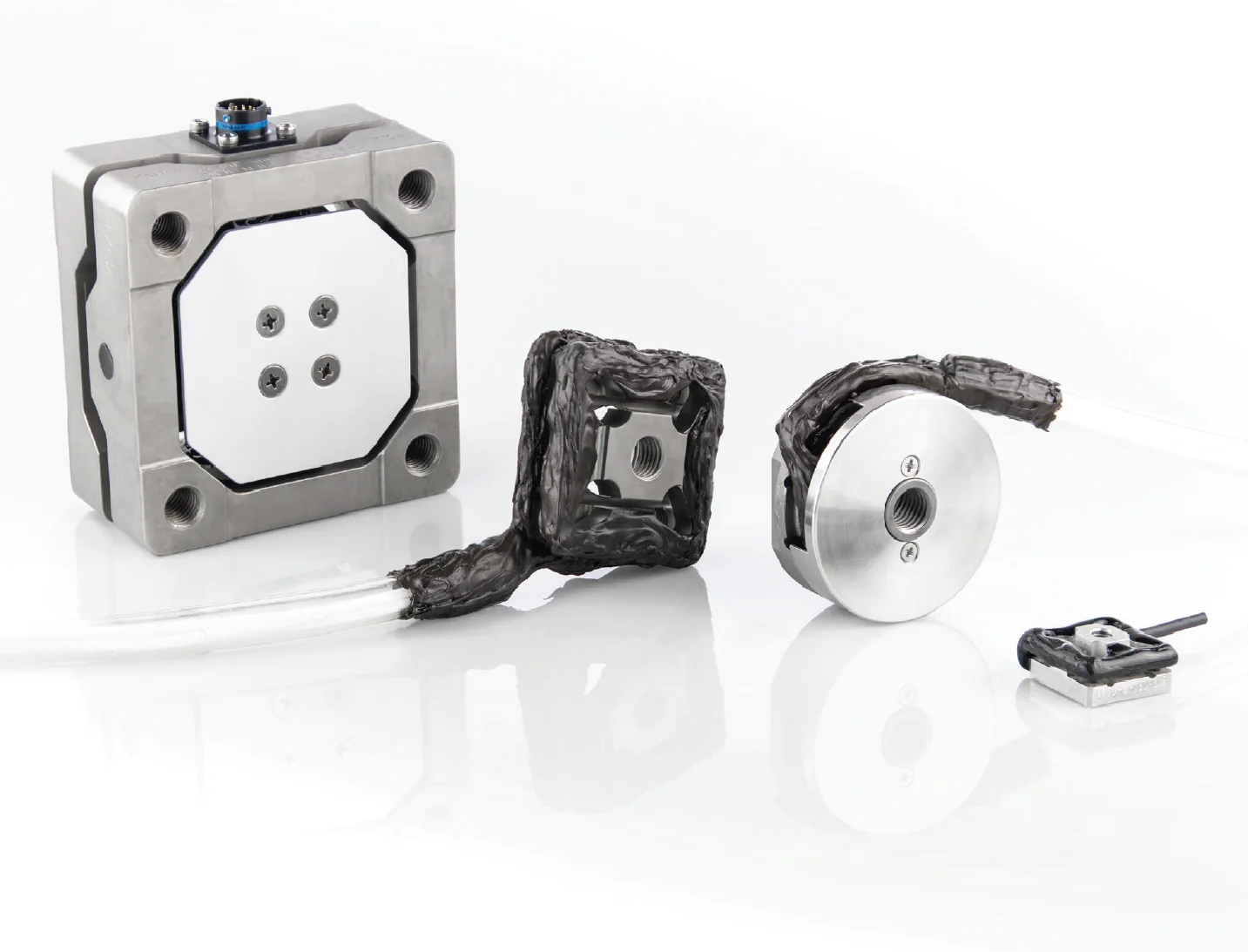 Lifting Crane load monitoring The force at each point of a crane's rope and rigging, so that no part is loaded beyond its capacity. Discover
 -
 Medical Medical equipment Small tension loads, multi-axis forces on prostheses and clean temperature signals, for medical and pharmaceutical equipment. Discover
 -
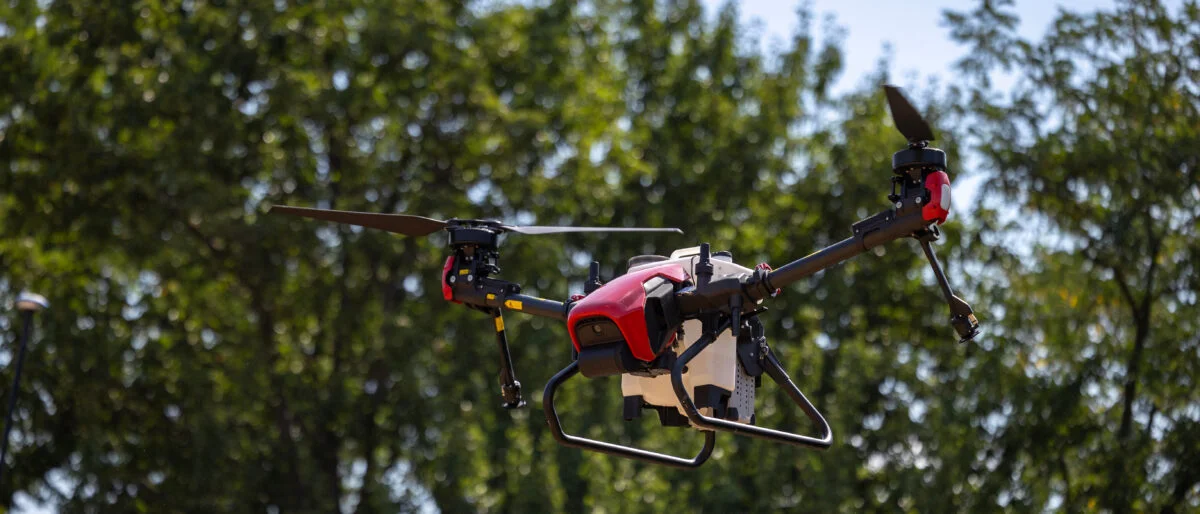 Component Drone payload and landing loads The forces in a drone's payload path, at the moment of release and at touchdown, measured without changing the geometry or adding mass. Discover
In short
Component testing, in short
What is measured in a component test?
A component test measures the force that one part carries: the axial force in a tie rod or a link, the forces at a ball joint, a damper, an engine mount, a seat mounting or a hitch.
Either the production part is strain gaged and calibrated, or a load cell takes the place of a joint. The position of the parts around it does not change.
What if no catalog load cell fits the part?
The part itself is strain gaged and calibrated. This is done on tie rods, links, ball joints, forks, shackles and springs, and on a sheave pin or a shackle of a crane.
Where the geometry does not allow gages, a semi-custom transducer takes the place of a joint, such as a shear pin that replaces a bolt.
The instruments behind these applications
The products these applications cite most. Each one can be rented or bought on its own.
-
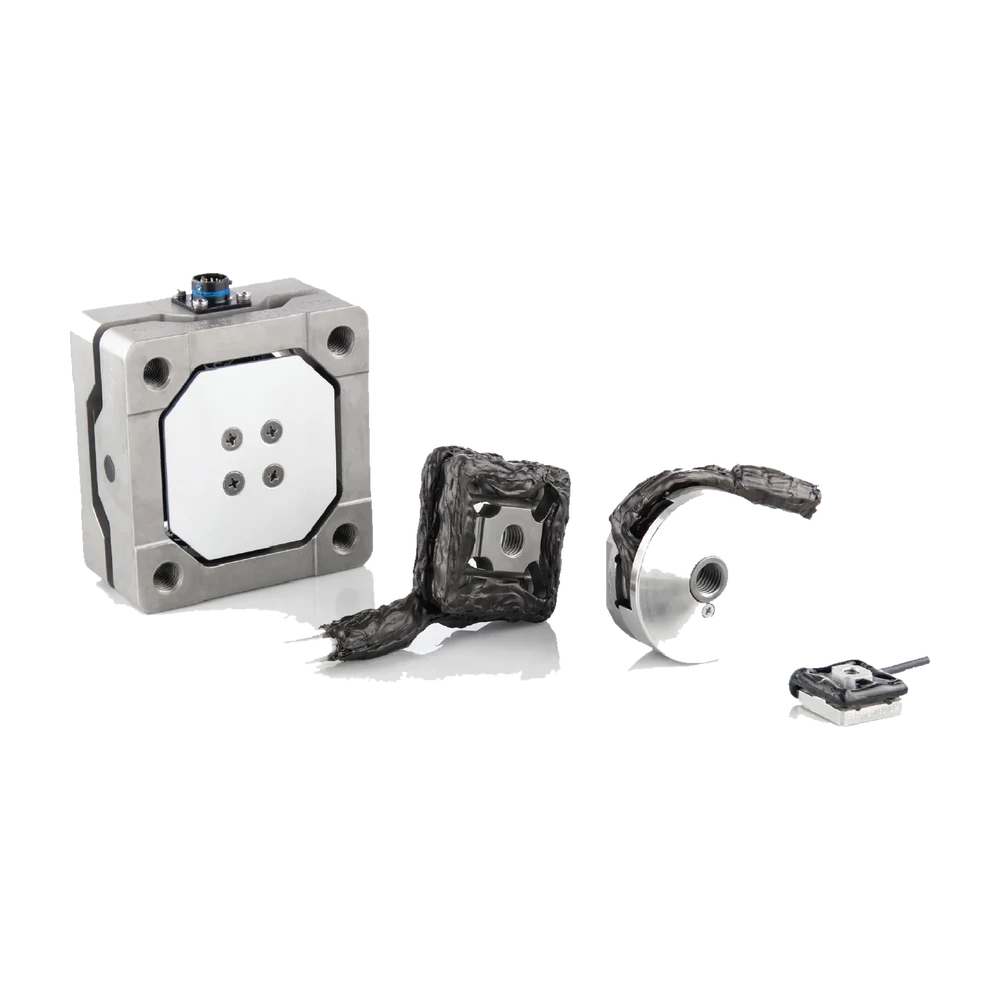 Product · 7 applications TR3D Three forces in one compact body, in the mount adapter. Discover
 -
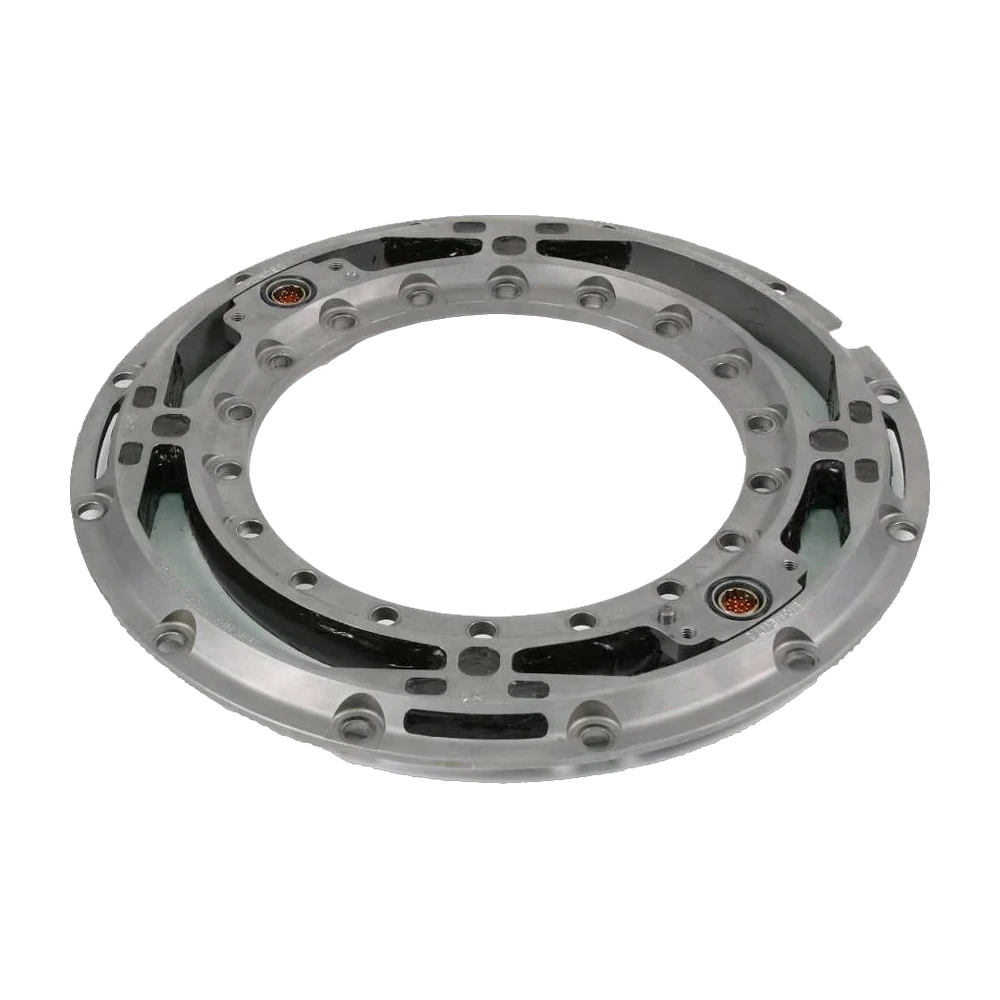 Product family · 4 applications Wheel force transducers Total forces and moments at the wheel. Discover
 -
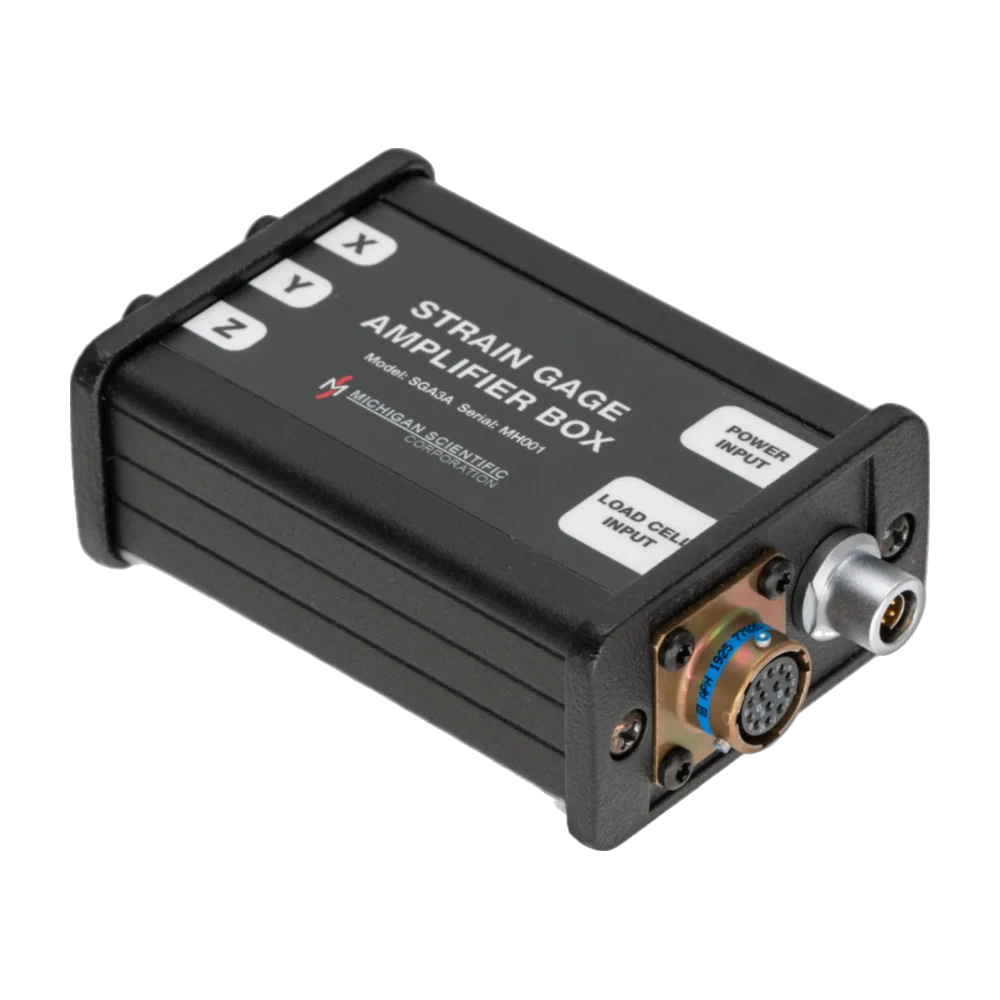 Product · 3 applications SGA3A Excites and amplifies the three bridges of one TR3D to ± 10 V DC, with remote shunt calibration. Discover
 -
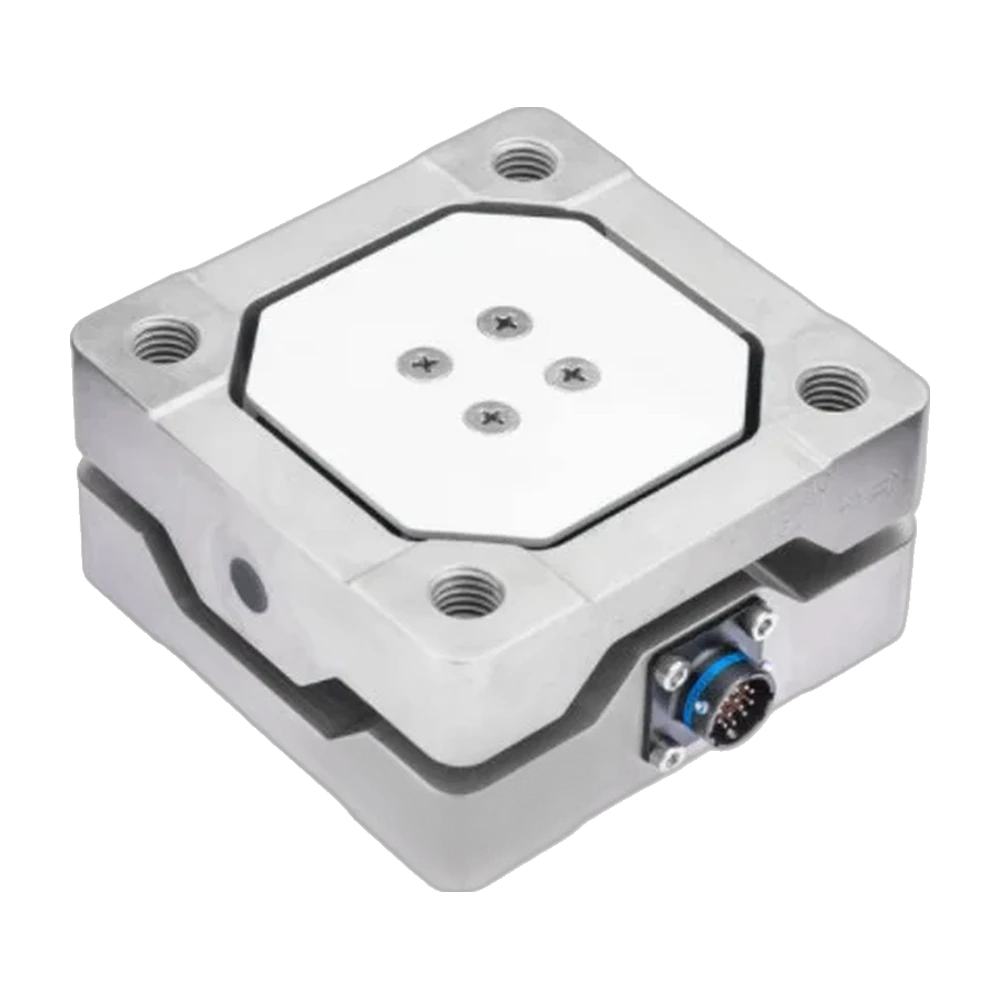 Product · 2 applications TR6D-C Six-axis load cell: three forces and three moments. Discover
Component testing, frequent questions
Is the inner or the outer tie rod strain gaged?
Either can be gaged. The inner tie rod is preferred, because it has more strain output and is generally more accurate.
Do strain gages on the tube of a MacPherson strut give the strut force?
No. The piston moves inside the damper and the fluid pressure loads the tube, so the result is not accurate. A clamp-on strut transducer or shear pins at the knuckle are used.
How small can a three-axis load cell be?
The TR3D-B-1K measures three forces up to 4.4 kN in a body of 25 × 25 × 13 mm.
A test close to yours?
Tell us the vehicle, the quantity and the conditions. An engineer answers with a first measurement setup.
More details to give? Use the full contact form.