
Application · Off-highway
Measuring road wheel, idler and sprocket loads on a tracked vehicle in the field
In brief
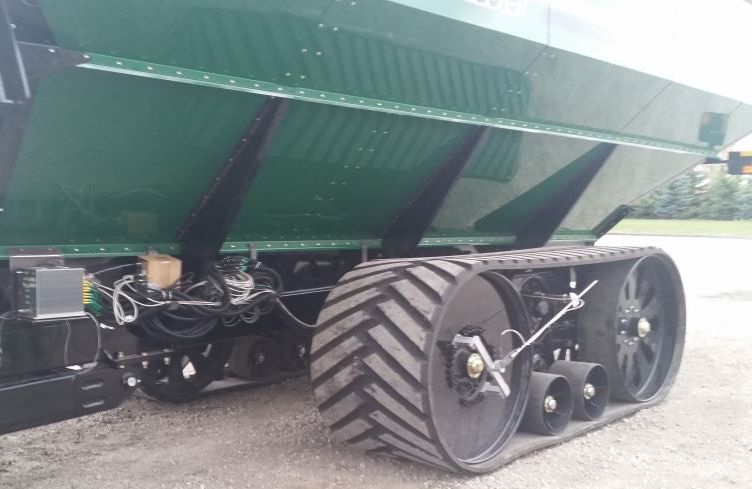
Simulation now covers the complete running system of a tracked vehicle, and its results have to be validated with physical tests. Wheel force transducers mount on the road wheels and on the idler, and measure three forces and three moments at each of them while the vehicle is driven. The drive sprocket is instrumented for torque with a custom transducer, and strain gages measure the stress in the torsion bars. The data shows how the load is shared between the wheels and what the ground sends into the hull.
- 6
- load components at each instrumented wheel
- 15.5 to 700 kN
- radial force capacity, LW series
A simulation is only useful once it is validated
Tracked vehicles are designed for higher speeds, heavier payloads and a longer life. Finite element models now include the whole tracked running system, with the movement and interaction of each component. They predict the force on each part during design and prototyping.
These predictions have to be checked against measured loads. Physical tests are run at several stages of design and prototyping, on the individual components and on the full system.
Vibration, weight and wear all start at the ground
The main force inputs travel from the ground to the hull through the track and the wheels. Track vibration sets the durability of the track components and the vibration energy passed to the vehicle, which wears the parts and reaches the crew.
Weight is the second concern. A lighter vehicle uses less fuel, wears its driveline and running gear less, and is easier to transport by road or by air. Military tracked vehicles also need more armor within the same dimensions and the same mobility. Knowing the real loads shows where weight can be removed.
The instruments see the same conditions: rough terrain, strong vibration, extreme temperatures and loads that change from one job to the next.
Transducers on the road wheels and the idler
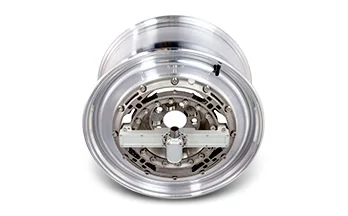
A wheel force transducer measures the vertical, longitudinal and lateral force on a wheel, and the three moments. On a tracked vehicle it can be installed on the road wheels and on the idler. The forces on the idler also give insight into track tension.
- 01
Adapters made for the vehicle
Michigan Scientific designs and manufactures the adapters for each tracked vehicle. Adapters designed by the customer can be reviewed.
Custom transducers and adapters - 02
Transducers on the road wheels and the idler
Each instrumented wheel gives three forces and three moments, with wheel speed.
LW series wheel force transducers - 03
Record in real time
The transducers connect to commercially available data acquisition systems. Forces and wheel speeds are monitored and analyzed in real time.
- 04
Read the load distribution
Tracked vehicles often run with varying loads, such as equipment or cargo. The measured forces show how the load is shared across the wheels.
Beyond the wheels: sprocket, torsion bars and teeth
Other parts of the track mechanism and the suspension can be instrumented. The wheel force technology can be adapted to the size and strength of the drive sprocket, to measure the torque that goes into the track. Custom force transducers based on the same technology can be made for the idler.
Torsion bars influence the speed, handling and durability of a tracked vehicle. Strain gages on the bars measure their stress. Gages can also be applied to the sprocket teeth: the contact force between a tooth and each track link shows how the sprocket torque is transmitted to the track.
| Road wheels | Three forces and three moments, wheel force transducer |
|---|---|
| Idler | Forces and track tension, wheel force transducer or custom transducer |
| Drive sprocket | Torque, custom transducer |
| Sprocket teeth | Contact force with the track links, strain gages |
| Torsion bars | Stress, strain gages |
What the measured loads are used for
The first use is to validate the model, component by component and for the full system. The second is durability: loads measured in the field show the weak components and where the design has to change to extend the life of the vehicle.
The data also records how the vehicle responds to steering, acceleration and braking. Engineers use it to adjust the suspension, the steering and the handling for the terrain the vehicle is built for.
What you get
Measured forces and moments at the road wheels and the idler, with sprocket torque and torsion bar stress where needed, recorded on the vehicle in the field. They are the reference against which the simulation of the running gear is checked.
Frequent questions
Can a wheel force transducer be mounted on a tracked vehicle?
Yes. It can be installed on the road wheels and on the idler. Michigan Scientific designs and manufactures the adapters for each tracked vehicle.
How is drive sprocket torque measured on a tracked vehicle?
With a custom transducer. The wheel force transducer technology is adapted to the size and strength of the drive sprocket to measure the torque that goes into the track.
How can track tension be assessed during a field test?
The forces measured on the idler give insight into track tension. They are measured with a wheel force transducer or a custom force transducer on the idler.
How is the stress in the torsion bars of a tracked vehicle measured?
With strain gages applied to the torsion bars. Strain gages can also be applied to the sprocket teeth to measure the contact force between a tooth and each track link.
Similar applications
All applications-
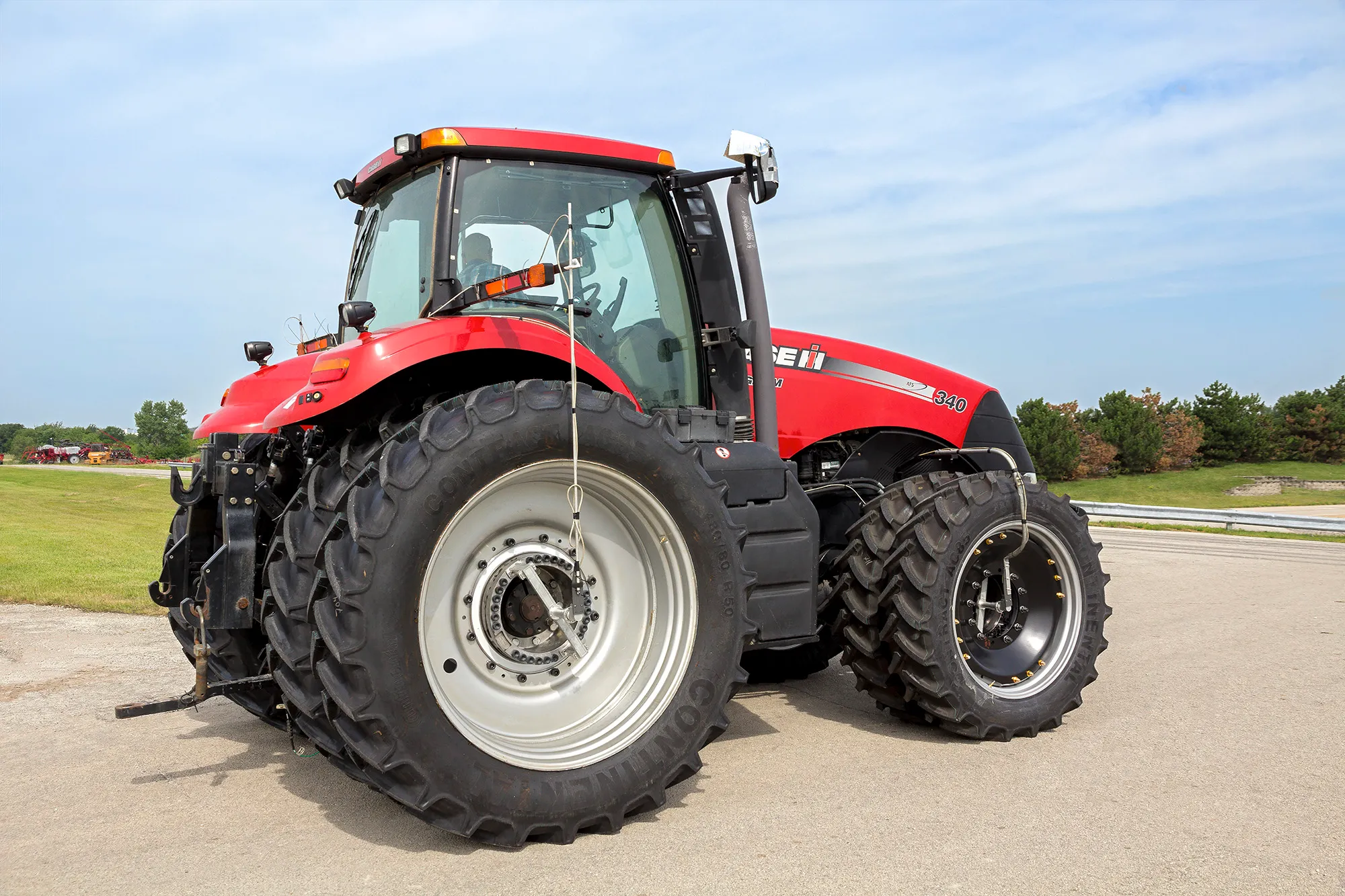 Agriculture Agricultural machinery Wheel loads, wheel torque, PTO power and forces on working parts, measured on the machine at work.
 -
 Durability Wheel loads on the road Three forces and three moments at each wheel, recorded while the vehicle is driven.
 -
 Durability Durability campaigns The load each wheel really sees on a pothole, an obstacle or a rough track, as recorded data.