
Application · Brakes
Measuring the force on the brake pedal, on the series pedal of the test vehicle
In brief
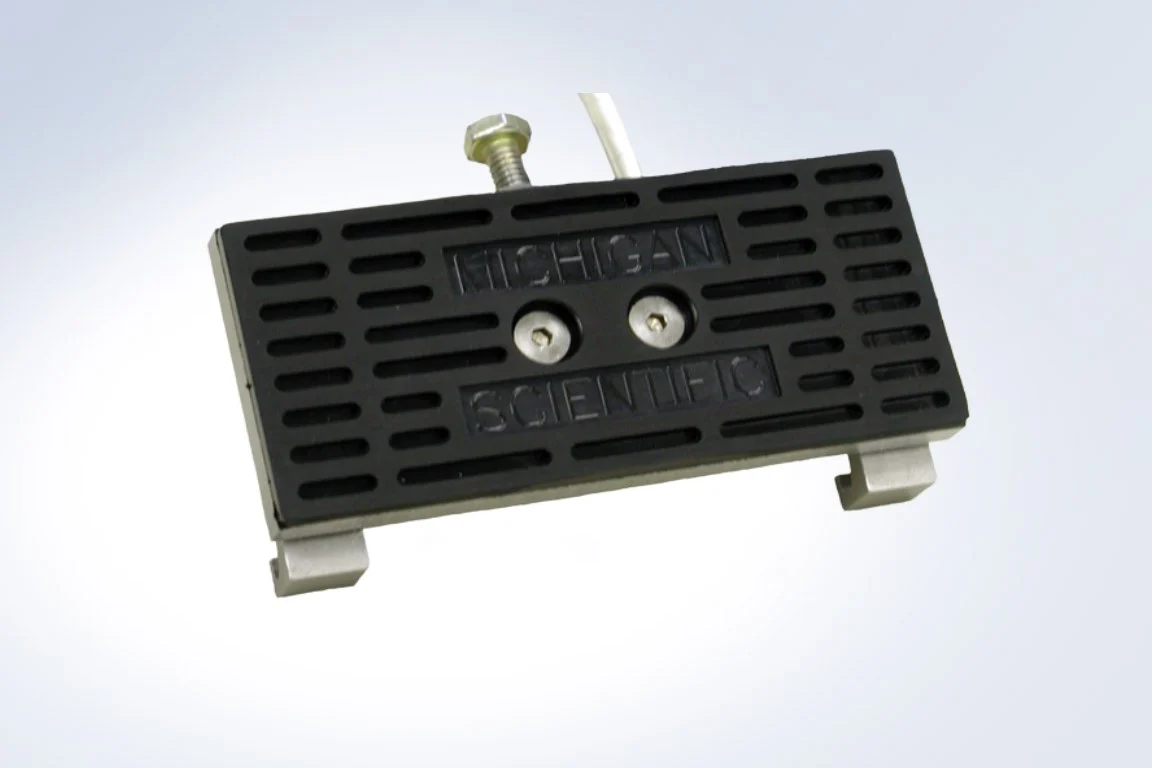
Brake pedal force is measured during a vehicle test with a strain gage transducer mounted on the series pedal, in place of the rubber pad. The BPFT transducers measure the compressive force from 0 to 2 200 N and read the same force wherever the foot presses. The transducer is close to the size of the pedal, so the pedal keeps its feel. The signal is recorded with the other channels of the brake test.
- 2 200 N
- capacity in compression
- 0.1 % FS
- hysteresis, BPFT2 and BPFT3
- −40 to 150 °C
- operating temperature, BPFT2
Why pedal force is recorded in a brake test
A brake test combines measurements on the rotating parts, such as the disc, the hub and the wheel, with a measurement in the cabin: the force on the pedal. It is the input the driver gives, recorded with what the brakes do in response.
The pedal force transducers are used for brake testing, validation and homologation, for the force feedback of driving robots and for the validation of off-road vehicles.
A foot does not press at the center of the pedal
The force on a pedal is not always applied at its center. A pedal force transducer has to read the same value for on-center and off-center loading. The BPFT transducers compensate transverse forces, so an off-center load gives the same reading as a centered one.
The transducer also has to leave the pedal as it is. Its size is close to the pedal itself, so the pedal keeps its feel during the test.
Fitting the transducer on the series pedal
The transducer goes on the original pedal of the vehicle. It ships with a mounting clamp and a calibration certificate.
- 01
Remove the rubber pad
The transducer takes the place of the rubber pad on the original pedal.
- 02
Clamp the transducer with a single bolt
The standard clamp fits pedal heights from 38.1 to 50 mm. An extended clamp fits pedal heights from 50.8 to 76.2 mm.
BPFT pedal force transducers - 03
Connect the bridge
The transducer is a strain gage bridge with a non-amplified output in mV/V: 350 Ω on the BPFT2 and BPFT3, 240 Ω on the BPFT. The BPFT2 has a 3.05 m cable and takes an excitation of 5 to 10 V DC. Signal conditioning is available as an option.
- 04
Record with the rest of the brake test
Pedal force is recorded with the brake temperatures, the brake torque and the wheel speed.
Brake testing
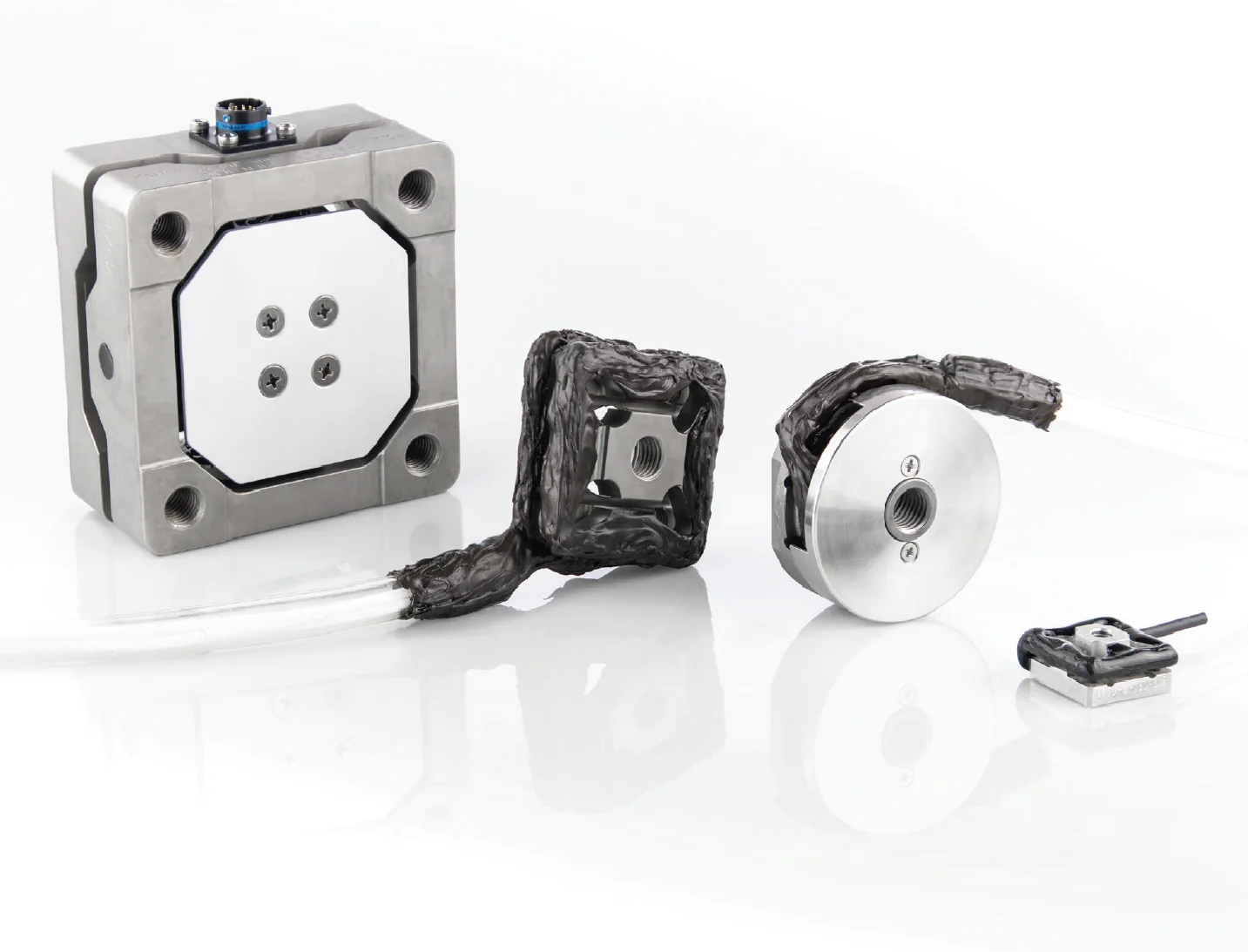
Three versions for different pedals
The three versions have the same capacity of 2 200 N. They differ in shape, in the pedals they fit and in full-scale output.
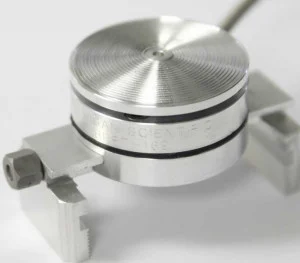
| BPFT | Compact body, 50 mm in diameter. Fits standard and parking brake pedals. Full-scale output 2.25 mV/V. |
|---|---|
| BPFT2 | Low profile, 113 × 50.8 mm. Mounts on any type of pedal. Full-scale output 2.75 mV/V. |
| BPFT3 | Low profile. Sized for the brake pedal of most manual transmission vehicles. Full-scale output 1.5 mV/V. |
What is recorded with the pedal force
Pedal force is one of five quantities of a brake test. The others are the temperature of the disc and the hub, the brake torque at the wheel, the forces between the tire and the road, and the wheel speed.
- Disc and hub temperature: thermocouples on the rotating parts, brought out by a slip ring or a telemetry wheel package.
- Brake torque: a wheel torque transducer in place of the wheel center.
- Wheel forces: a wheel force transducer, with the load transfer during the stop.
- Wheel speed and distance: a wheel pulse transducer, up to 5 000 pulses per revolution.
What you get
The force the driver applies to the pedal, from 0 to 2 200 N, measured on the series pedal and read the same wherever the foot presses. The same transducers measure clutch, accelerator and parking brake forces.
Frequent questions
Does a pedal force transducer change the feel of the brake pedal?
The pedal keeps its feel. The transducer mounts on the original pedal in place of the rubber pad, and its size is close to the pedal itself.
What force range does a brake pedal force transducer cover?
The BPFT, BPFT2 and BPFT3 measure the compressive force on the pedal from 0 to 2 200 N.
Can the same transducer measure clutch or accelerator pedal force?
Yes. The BPFT transducers measure the force applied to a brake, clutch or accelerator pedal. The compact BPFT also fits parking brake pedals.
Is the reading affected when the driver presses off center?
No. The transducer compensates transverse forces and reads the same force for on-center and off-center loading.
Similar applications
All applications-
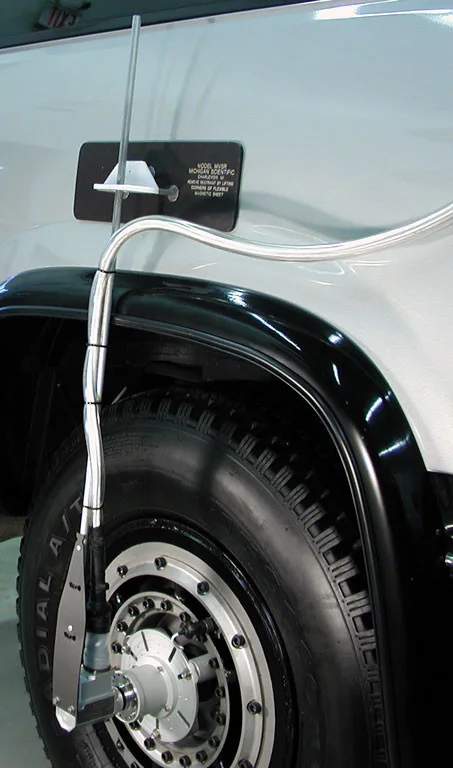 Temperature Brake disc temperature Disc and hub temperatures read on the turning wheel, through a wheel slip ring or a telemetry package.
 -
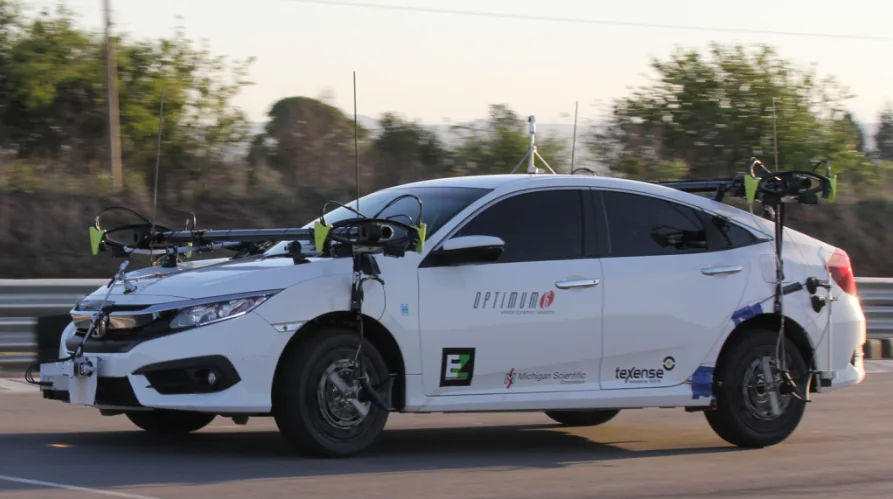 Dynamics Vehicle dynamics The forces and moments at each wheel while the vehicle brakes, turns and changes lane.
 -
 Tires Tire-road friction Tire and road surface forces measured in three directions on a traction fixture, to find the coefficient of friction.