
Application · Medical
Measuring force and temperature on medical and pharmaceutical equipment

In brief
In medical and pharmaceutical equipment, force and moment measurements have to be accurate, from small load changes to the weight of a patient. The load path through the transducer and its strain gauge elements is designed to minimize sensitivity to off-axis loading, known as crosstalk. Each load cell comes with a calibration certificate traceable to NIST.
- NIST
- traceability of the calibration certificate
- 1 to 6
- axes measured, single and multi-axis load cells
Small tension loads
Laboratory equipment such as dialysis machines sees small changes in load that must be detected accurately. The same goes for the fluid in an IV bag: a load cell is placed above the bag and measures the tension force of its weight.
On a larger scale, load cells verify the loads on patient lifts during their design. Placed above the lift, the load cell measures the vertical force Fz. Over repeated lift cycles, it monitors the load against the weight capacity and the endurance of the cables.
Forces and moments on prostheses and tools
For foot and leg prostheses, load cells measure the reactions between the body and the prosthetic component, or between the component and the ground. For a hand or an arm, the engineers have to consider grip strength, and load cells measure the reaction forces during development.
Grip force is also measured when laparoscopic tools are calibrated, so that no unnecessary force is put on delicate tissue.
Clean temperature signals
Thermocouples are used in implants, probes and external sensors. A thermocouple amplifier reduces the signal noise and increases the accuracy of the reading. The MicroTC is a miniature type K thermocouple connector with the amplifier inside, in a 3.9 g housing. It compensates the cold junction and gives a linear output of 5 mV/°C from −25 to 400 °C.
What you get
Force, moment and temperature signals on the equipment itself, from a laparoscopic tool to a patient lift. Each load cell comes with a calibration certificate traceable to NIST.
Frequent questions
How is the weight of an IV bag measured?
A load cell is placed above the bag and measures the tension force of its weight. The same principle is used to detect small load changes in laboratory equipment such as dialysis machines.
How are forces measured on a prosthetic foot or leg?
Load cells measure the reactions between the body and the prosthetic component, or between the component and the ground.
Why use a thermocouple amplifier in medical equipment?
A thermocouple amplifier reduces the signal noise and increases the accuracy of the temperature reading. The MicroTC combines a type K thermocouple connector and an amplifier with cold junction compensation in a 3.9 g unit.
Are the load cells delivered with a traceable calibration?
Yes. Each Michigan Scientific load cell comes with a calibration certificate traceable to NIST.
Similar applications
All applications-
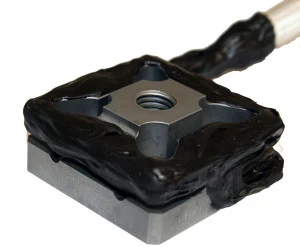 Component Robotics and prosthetics Forces in three directions, and moments, on a robot arm or a prosthetic foot, from a load cell small enough to fit in the assembly.
 -
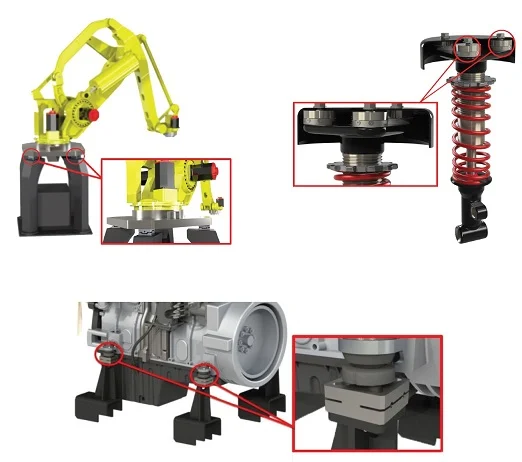 Rig Force and moment load platform Net forces and net moments on a system, calculated from four three-axis load cells.
 -
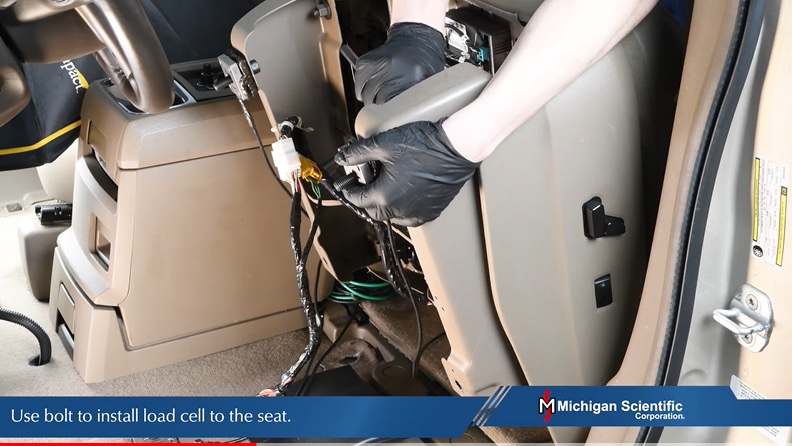 Component Seat forces The three forces each seat mounting takes while driving and in a crash, without changing the driving position.