
Application · Component
Measuring the loads a drone sees at release and at touchdown
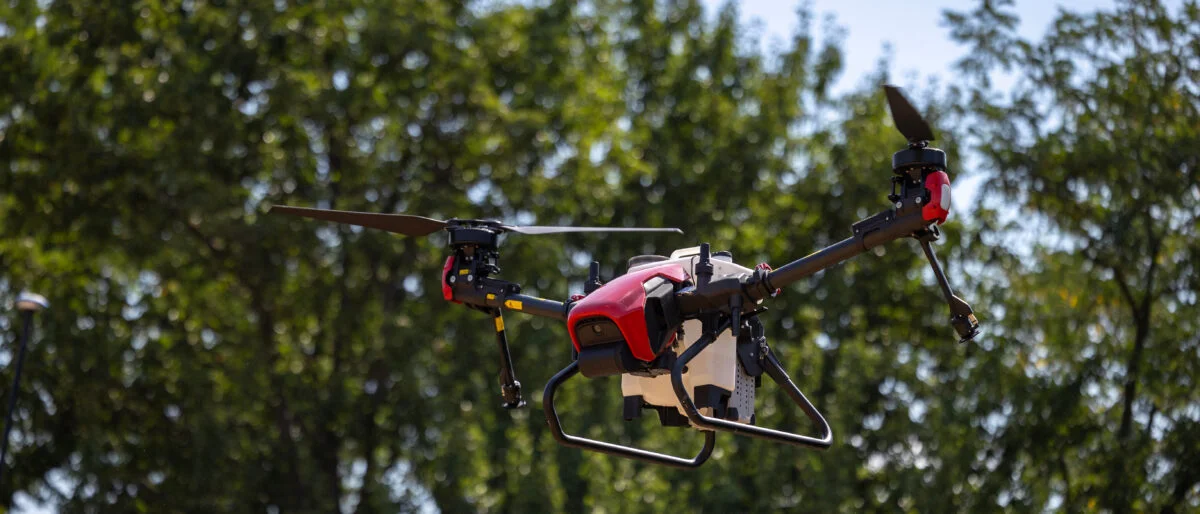
In brief
On a drone, failures often happen at the moment of release, during a hard landing, or at the brackets that carry the payload into the airframe. Strain gages on the parts themselves, or miniature and custom load cells in the load path, measure these forces without changing the geometry or adding unnecessary mass.
- 25 × 25 × 13 mm
- size of the TR3D-B-1K three-axis load cell (1 × 1 × 0.5 in)
Why measure payload and landing loads
Every payload interaction puts a force path through the aircraft. When these loads are unknown or poorly measured, they show up as real failures: cracked brackets, bent landing gear, payloads that detach too early, release mechanisms that jam under load.
- The force the payload bracket sees in flight.
- The forces when the release mechanism opens.
- How hard the landing gear strikes the ground.
- Side loads and off-axis forces on the mounts.
- The fatigue from repeated drops and landings.
In the payload path
A payload sees static, dynamic and transient forces. Custom load cells or strain gage based transducers go directly into the payload path, in the brackets, hooks, rails or release mechanisms, and measure the forces that travel through them. The measurement shows whether the payload system is over-designed, under-designed or misunderstood.
| Vertical load | From the payload weight and from maneuvering. |
|---|---|
| Side loads | From wind, acceleration or an uneven release. |
| Shock loads | During a drop or a deployment. |
| Fatigue cycles | From repeated missions. |
At the moment of release
Payload release is one of the most failure-prone events on a heavy-lift drone. A release mechanism fitted with miniature load cells, or built from strain gaged production parts, gives the force needed to trigger the release, shows whether the mechanism binds under load or releases only in part under off-axis forces, and records how the aircraft reacts when the payload separates.
The data is used to refine the release timing, reduce friction in the mechanism and check that it works the same way across temperature, vibration and payload.
At touchdown
The landing gear carries some of the highest loads on the aircraft. Hard landings, uneven ground and side impacts can exceed what the design assumed. Strain gages or custom load cells on the legs, skids or feet measure the peak touchdown force, the side and torsional loads, the duration and shape of the impact, and the fatigue built up over repeated landings.
On a test fixture, a three-axis load cell under each landing contact point measures the forces during touchdown. The results validate the gear strength and guide the damping.
What you get
The forces in the payload path, at release and at touchdown, measured in the original parts or with load cells that fit compact drone structures, to design the brackets, the release mechanism and the landing gear on data rather than assumptions.
Frequent questions
How are landing gear loads measured on a drone?
Strain gages or custom load cells are fitted to the legs, skids or feet. On a test fixture, a three-axis load cell under each landing contact point measures the forces during touchdown.
What is measured on a drone's payload release mechanism?
The force needed to trigger the release, whether the mechanism binds under load, whether off-axis forces cause partial or failed releases, and how the aircraft reacts when the payload separates.
Does instrumenting a drone part change its geometry or mass?
Strain gaging the production part, or fitting a miniature or custom load cell in the payload path, keeps the original geometry and avoids unnecessary mass.
Similar applications
All applications-
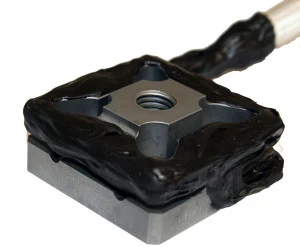 Component Robotics and prosthetics Forces in three directions, and moments, on a robot arm or a prosthetic foot, from a load cell small enough to fit in the assembly.
 -
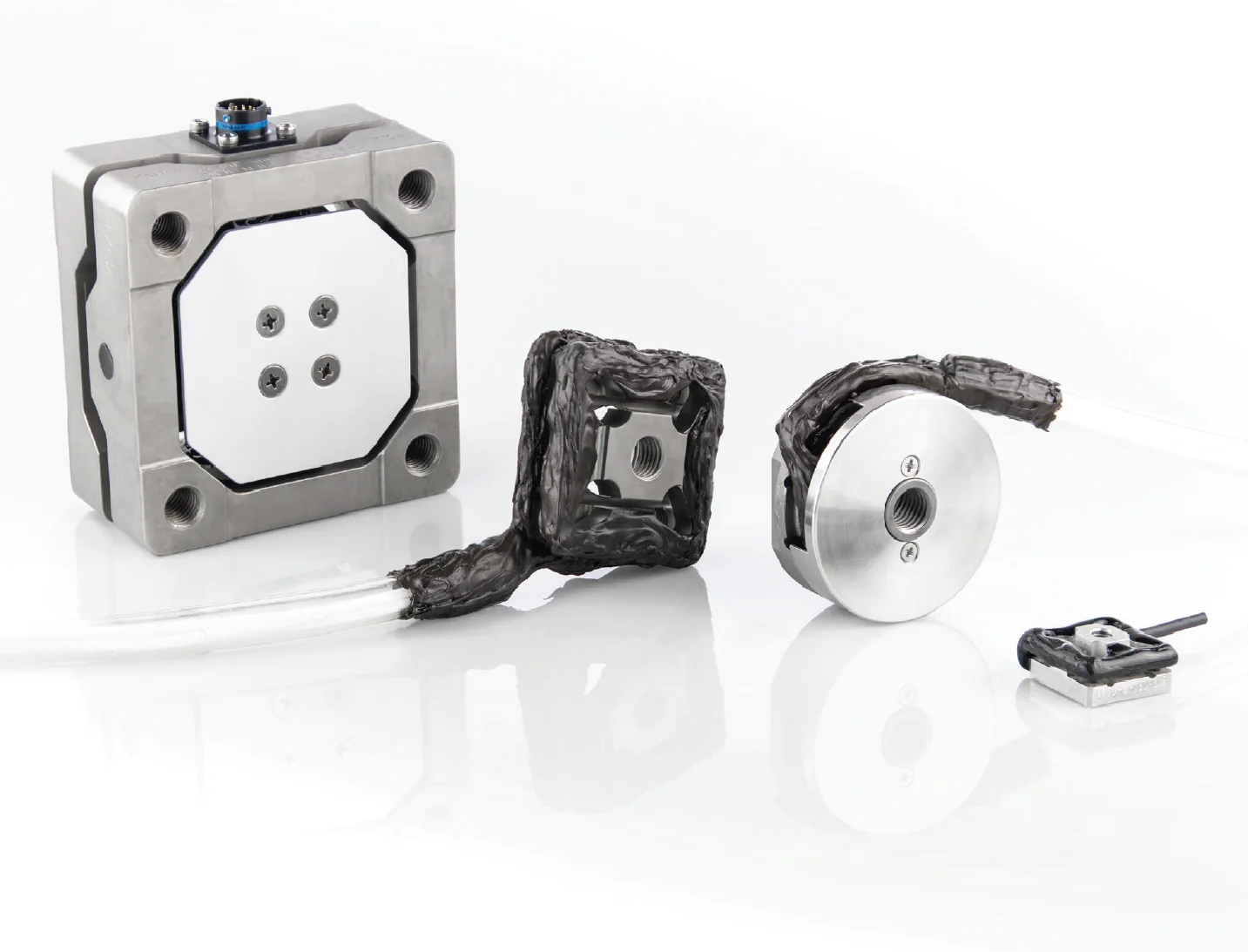 Lifting Crane load monitoring The force at each point of a crane's rope and rigging, so that no part is loaded beyond its capacity.
 -
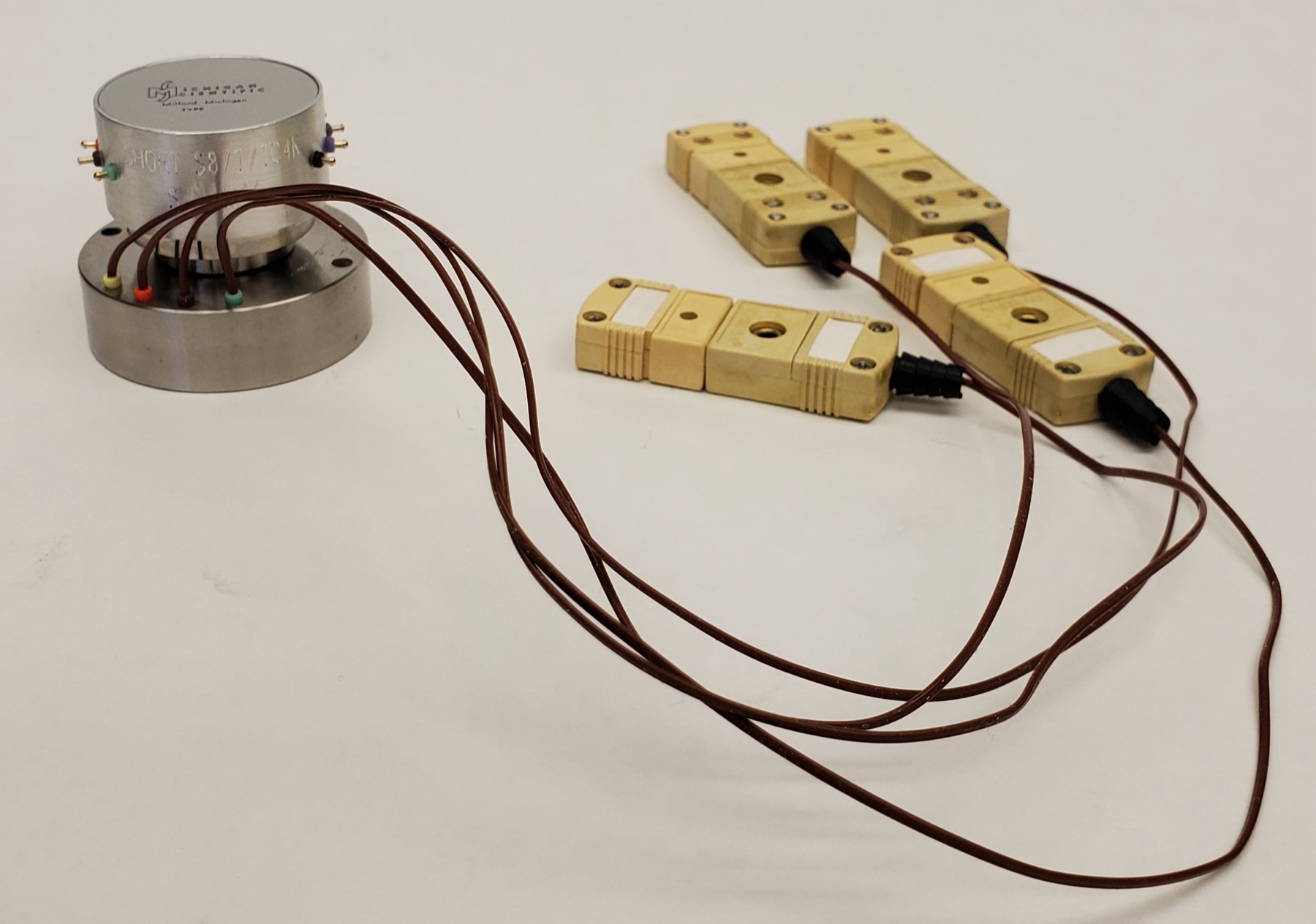 Test rig Measurements in limited space Strain or temperature off a rotating part where there is no room for a slip ring and a separate amplifier.