
Application · Powertrain
Measuring the torque of an accessory belt pulley with an end-of-shaft slip ring
In brief
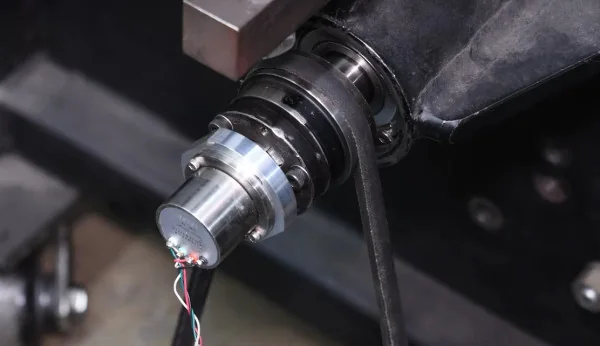
The torque of an accessory belt pulley is measured with strain gages placed on the rotating pulley. An end-of-shaft slip ring on the pulley carries the signal to the data acquisition system. The method applies to the alternator, the air compressor and the other components driven by the belt. The S-Series slip ring mounts with two screws and turns at up to 12 000 rpm.
- 12 000 rpm
- standard maximum speed, S-Series and Short S-Series
- 0.1 Ω
- maximum peak noise of the slip ring
- 22 mm
- shortest Short S-Series slip ring
One belt drives every accessory
An accessory drive belt, also called a serpentine belt, drives one or several devices of an engine at the same time. It replaces the earlier layout of one belt per component.
If that belt fails, every component it drives stops. Belt tension also affects the mechanical efficiency of the drive. The torque on each pulley is measured for both reasons.
Where the method applies
The test applies to any product with an engine or a belt-driven system. Typical test objects:
- Vehicle alternators
- Air compressors
- Tractors
- Air conditioners
Gages on the pulley, slip ring on the shaft end
A slip ring assembly has a rotating side and a stationary side. The rotating side connects to the strain gages. The stationary side connects to the data acquisition system.
- 01
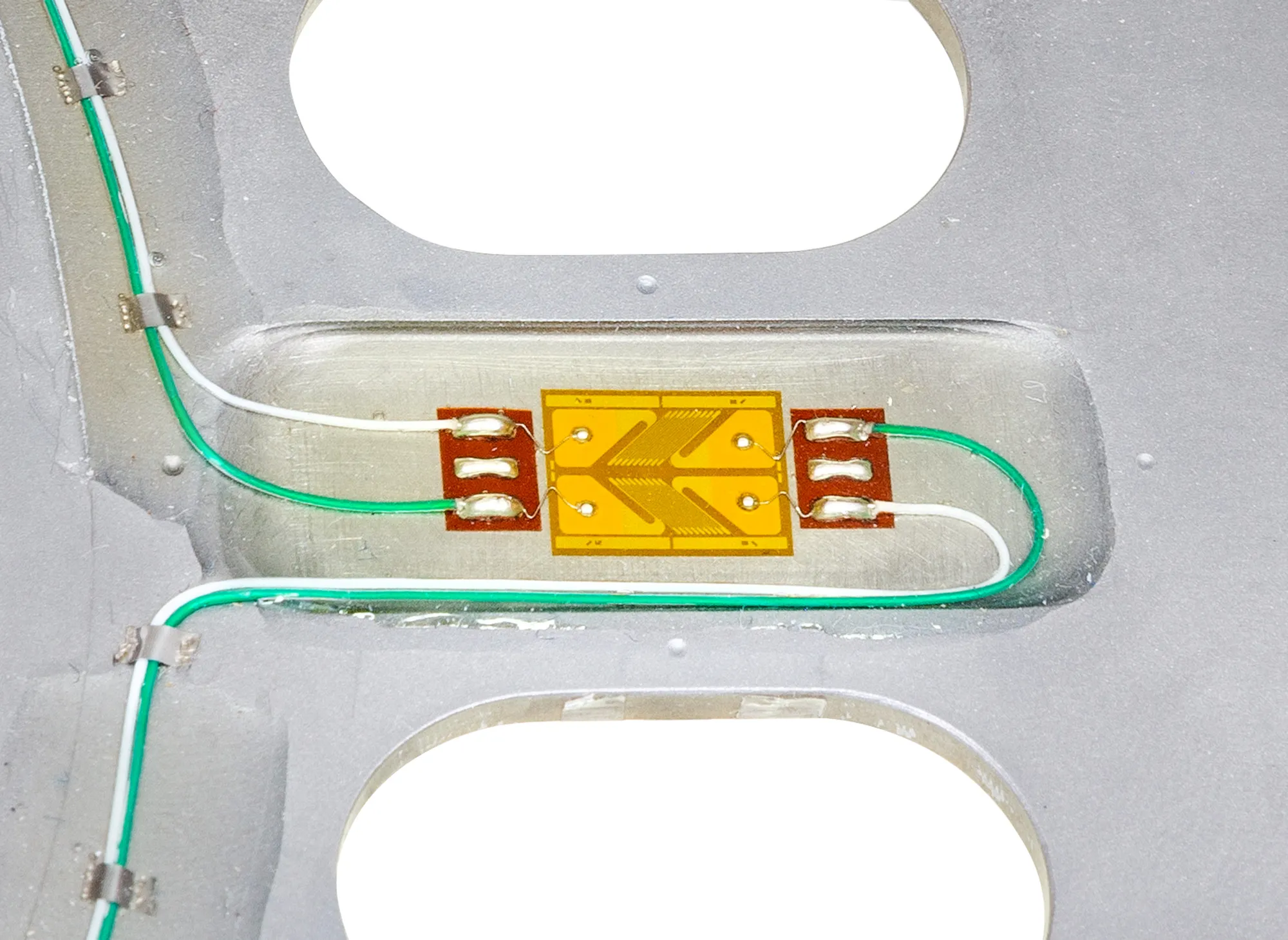
Place strain gages on the rotating pulley
The strain gages go on the pulley itself. Michigan Scientific applies strain gages to production parts.
Custom strain gage transducers - 02
Mount the slip ring on the end of the shaft
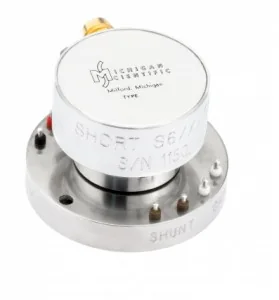
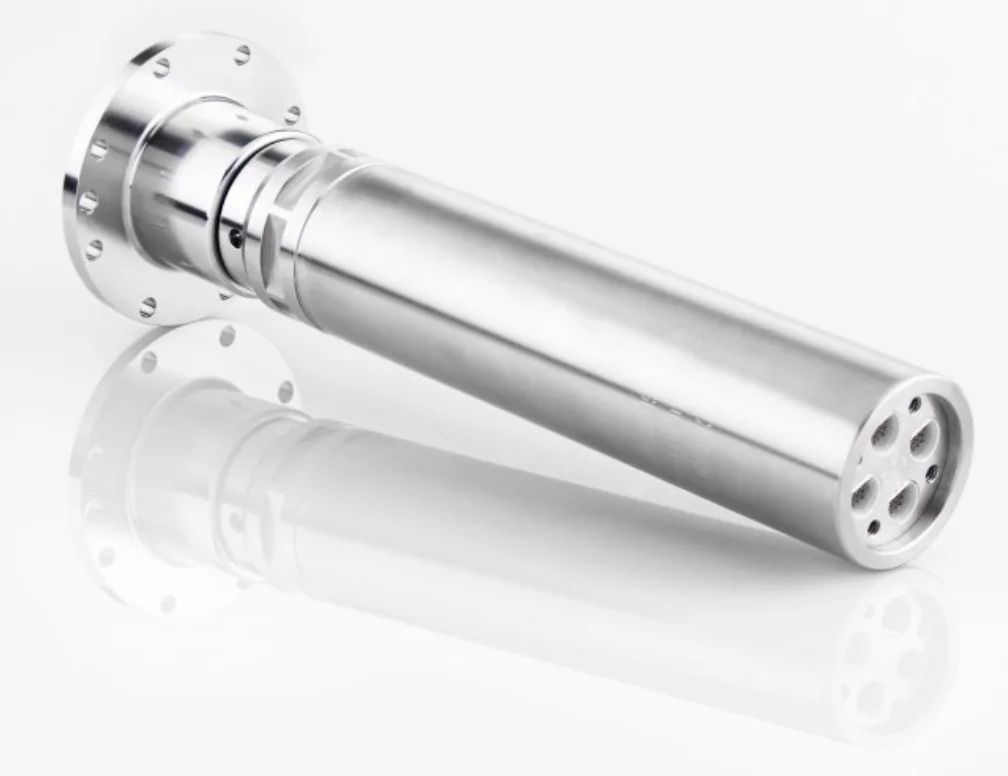
The S-Series mounts with two screws and needs 33 mm of length. The sensor wires run on the surface of the shaft or inside it, through a groove milled across the shaft end or an adapter.
S-Series end-of-shaft slip rings - 03
Amplify the bridge on the rotating side, if needed
A miniature amplifier between the gages and the slip ring reduces the errors from long lead wires, connector resistance variations and electromagnetic interference. It holds the bridge excitation supply and a shunt calibration resistor, switched remotely.
AMP-SG-M1 strain gage amplifier - 04
Route the stationary wires to the recorder
The wires from the stationary side go to the data acquisition system.
Choosing the slip ring for the pulley
The choice depends on the length available in front of the pulley and on whether speed and angle are recorded with the torque.
| S-Series | 4, 6, 8 or 10 circuits. 12 000 rpm standard. Rotor diameter 41.28 mm. Mounts with two screws. |
|---|---|
| Short S-Series | 4, 6, 8 or 10 circuits. 12 000 rpm. 22 to 37 mm long, 55 to 120 g. Some models carry an embedded amplifier. |
| SR/ERT Series | 10, 20 or 36 circuits, with an optional encoder or resolver. 10 000 rpm with 10 circuits. 80 to 115 mm long. |
A low-level bridge signal through the rings
A strain gage bridge gives a low-level signal. The brushes and the rings of the S-Series and the Short S-Series are in precious metals, which keeps the resistance variation low enough for these signals. The maximum peak noise is 0.1 Ω.
The AMP-SG-M1 amplifier weighs 14 g and mounts on the rotating part. It serves one bridge, with ± 2.5 V or ± 5 V excitation, a ± 10 V output and a 20 kHz frequency response (−3 dB).
With the rotation sensor of the SR/ERT Series, rotational velocity, angular position and direction of rotation are recorded with the torque. The sensor uses none of the slip ring circuits.
What you get
The torque on the pulley, measured on the rotating part while the accessory drive runs. The slip ring sits on the shaft end and needs no routine cleaning or maintenance on the S-Series. With a rotation sensor, speed and angle are recorded with the torque.
Frequent questions
How is torque measured on a serpentine belt pulley?
Strain gages are placed on the rotating pulley and an end-of-shaft slip ring carries their signal to the data acquisition system.
Which slip ring fits on the end of an accessory pulley?
An end-of-shaft slip ring such as the S-Series or the Short S-Series. Both have 4 to 10 circuits and turn at 12 000 rpm. The Short S-Series is 22 to 37 mm long.
Is an amplifier needed between the strain gages and the slip ring?
Not always. The precious-metal rings and brushes keep resistance variation low enough for a bridge signal. An amplifier on the rotating side, such as the AMP-SG-M1, reduces the errors from long lead wires, connector resistance variations and electromagnetic interference.
Can pulley speed be recorded with the torque?
Yes, with a slip ring that has a rotation sensor. The SR/ERT Series measures rotational velocity, angular position and direction of rotation without using any of its slip ring circuits.
Similar applications
All applications-
 Engine Crankshaft measurements Torque, bending and strain on your own crankshaft with the engine running, in the vehicle or on the dyno.
 -
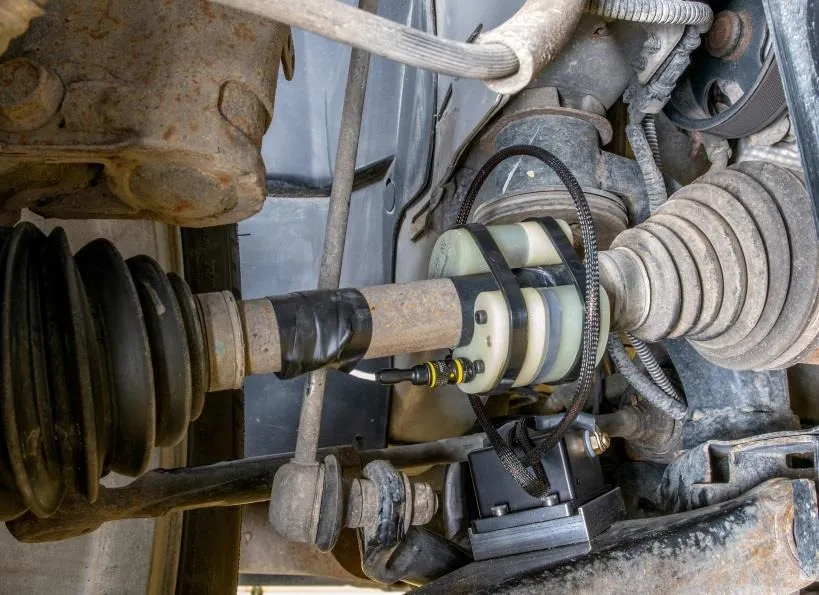 Powertrain Axle and half-shaft torque Drive torque measured on the production shaft, with a slip ring or telemetry to bring the signal out.
 -
 Turbines Fan and turbine blades Strain and temperature from many points on the blades, recorded together while the rotor turns.