
Application · Electric
Measuring battery and motor temperatures on an electric vehicle
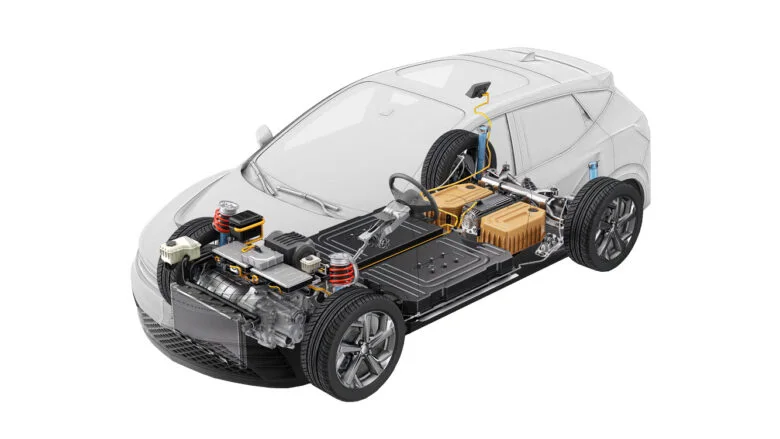
In brief
The Li-ion battery is up to 30 % of the cost of an electric vehicle and its heaviest part. Its temperature has to be watched for performance and for safety: a short circuit can start thermal runaway, which spreads from cell to cell. On the vehicle, a 3.9 g thermocouple connector with a built-in amplifier and cold junction compensation reads type K thermocouples where there is very little room.
- 5 mV/°C
- linear output of the MicroTC, from −25 to 400 °C
- −200 to 970 °C
- measurable range with post-processing polynomials
- Up to 30 %
- share of the battery in the cost of the vehicle
Why battery temperature is measured
Higher capacity, longer range and faster charging all push the battery harder. Thermal runaway can occur when a cell short circuits and overheats uncontrollably; it then spreads to other cells, is hard to contain and can cause a fire.
Mechanical and thermal tests reduce this risk: puncture tests on the materials, and climate chambers that test the battery at controlled temperatures. On the vehicle, the thermal management system is monitored in use.
A thermocouple amplifier in the connector
The MicroTC is a miniature type K thermocouple connector with a built-in amplifier: the measurement needs no other amplifying equipment. It provides cold junction compensation and a linear output of 5 mV/°C from −25 to 400 °C, and up to −200 to 970 °C with post-processing polynomials. It runs on 7 to 16 V DC.
It weighs 3.9 g and has a through hole in its center, so it is glued, screwed or tied to the mating connector in the hard-to-reach areas of the vehicle, inside the battery included.

Temperatures on rotating parts
Thermocouple amplifiers also work with slip ring assemblies, to measure temperatures on rotating parts. The temperature of the electric motors shows whether energy is being lost as heat; reducing these losses raises the efficiency of the vehicle.
| Slip ring with amplifier | Thermocouple signals amplified on the rotor, then passed through the rings. The AMP-TCN-X2 mounts on an SR Series rotor, up to nine channels per module at 10 mV/°C. |
|---|---|
| Wireless telemetry | When space is limited: single or multiple channels, clamping or high-speed versions, for hard-to-reach parts such as transmissions and compressors. |
Why the amplifier sits at the thermocouple
An unamplified thermocouple signal is in the millivolt range. In a measured example at 25 °C, about 1 mV of type K signal sat in about 30 mV of noise. Amplified at the sensor, the same measurement gave about 125 mV for about 25 mV of noise.
What you get
Temperatures from the battery, the motors and the rotating parts of the driveline, as high-level voltages with cold junction compensation, for the development and the monitoring of the thermal management system.
Frequent questions
What temperature range does a thermocouple amplifier cover on an EV battery?
The MicroTC has a linear output of 5 mV/°C from −25 to 400 °C. With post-processing polynomials, the measurable range is −200 to 970 °C.
Does a thermocouple in a battery pack need a separate amplifier?
No. The MicroTC is a thermocouple connector with a built-in amplifier and cold junction compensation, so the measurement needs no other amplifying equipment. It weighs 3.9 g, which lets it be used in hard-to-reach areas of the vehicle.
How is the temperature of rotating parts in an electric motor measured?
Thermocouple signals are amplified on the rotor and passed through a slip ring assembly. When space is limited, a wireless telemetry system is used.
Similar applications
All applications-
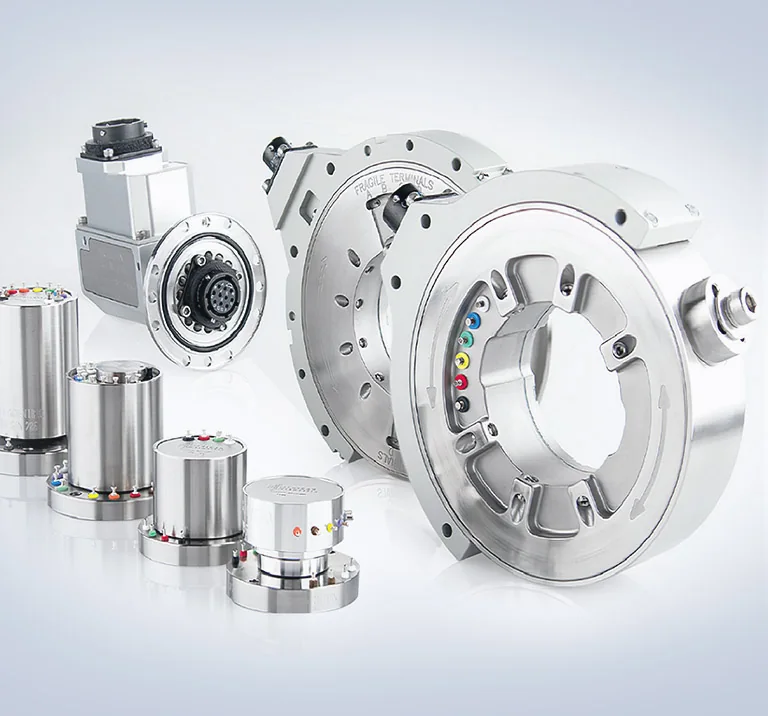 Electric Temperature in electric vehicles Temperatures on the rotating parts of an electric motor, brought out by a slip ring with amplifiers in its rotor.
 -
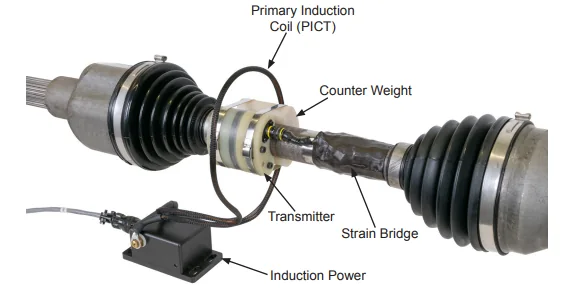 Electric EV powertrain torque Torque at each stage of the electric drivetrain, from gearbox shafts to the wheel, to see where power is lost.
 -
 Temperature Temperature on rotating parts The temperature of a bearing, a compressor or a brake rotor, read while the part rotates under load.