
Application · Dynamics
Measuring side slip angle with an optical sensor on the wheel or the body
In brief
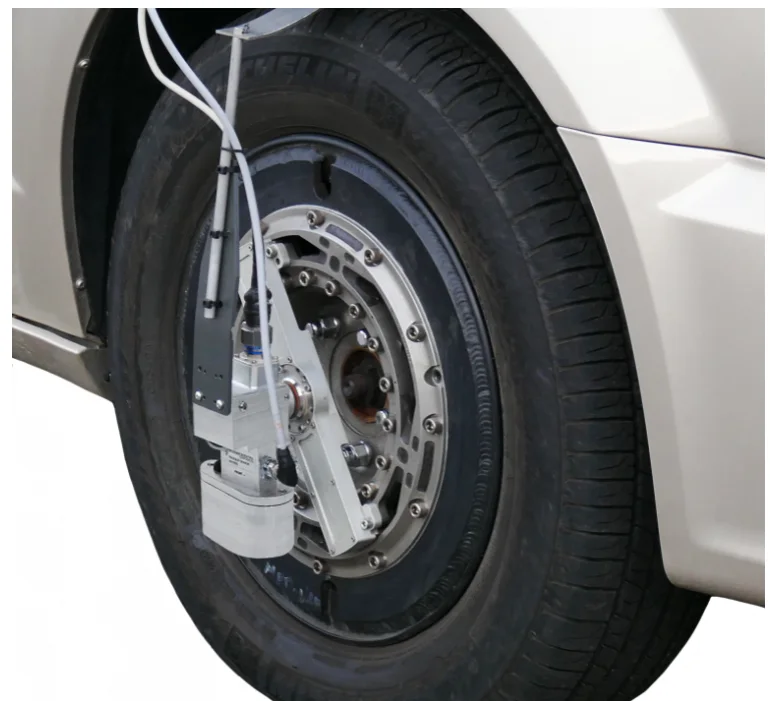
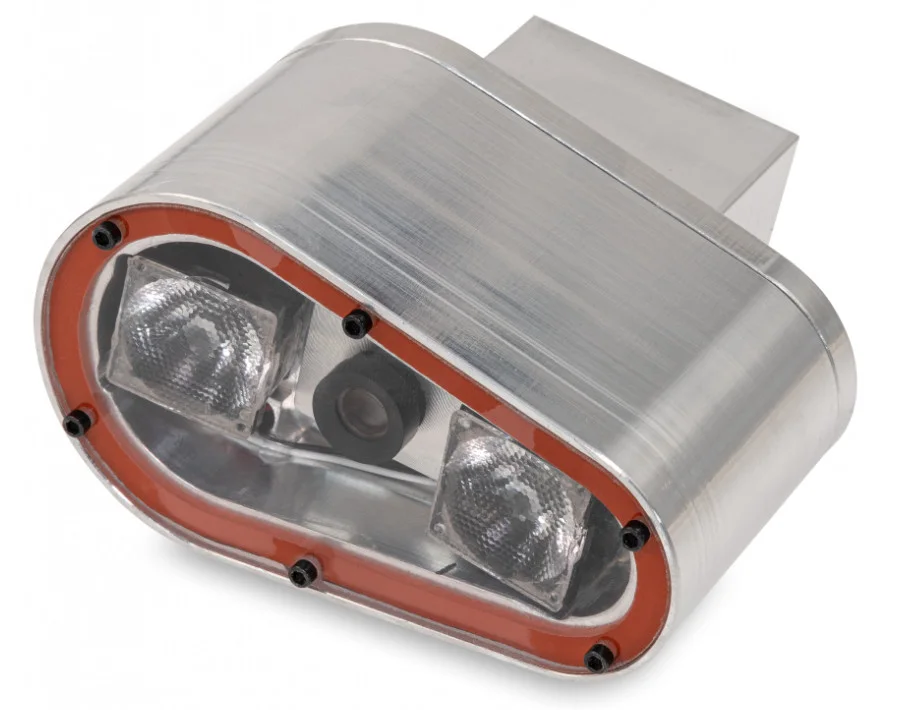
Side slip angle is measured on a test vehicle with an optical sensor that looks at the road without touching it. The TrueSlip sensor measures the longitudinal and the lateral velocity and calculates the slip angle internally, as SAE defines it. It mounts on a wheel or on the vehicle body, lights the road with its own infrared source and sends the angle and the velocities on CAN.
- ± 45°
- angle range
- ≤ 0.1°
- slip angle resolution above 32 km/h
- 1.6 to 320 km/h
- speed range
What the side slip angle is used for
Lateral forces and motions, across the vehicle, are used to study cornering, handling and stability. The side slip angle is recorded with them during the maneuver.
The measurement serves three kinds of work: side slip in vehicle dynamics testing, tire slip angle on varying road surfaces, and the checking of ADAS and autonomous vehicle sensors against the true heading.
Two velocities read from the road surface
The sensor measures X and Y velocity optically, without contact. It calculates the side slip angle from the two, inside the sensor. No wheel or arm touches the road.
Internal infrared lighting keeps the road surface lit whatever the sunlight, so the sensor works in all lighting conditions.
Mounting the sensor and recording the angle
The sensor mounts on a wheel, with mounting fixtures, or on the vehicle body. It faces the road at a set working distance.
- 01
Choose the wheel or the body
On a wheel, the sensor goes on mounting fixtures or within a wheel force transducer assembly. On the body, it is fixed to the vehicle.
TrueSlip side slip sensor - 02
Set the working distance
The sensor works at 200 mm from the road surface, within ± 50 mm.
- 03
Power the sensor and connect the CAN bus
The sensor takes a supply of 8 to 18 V DC and outputs its signals on CAN 2.0.
- 04
Record the three signals
The CAN output gives the side slip angle and the filtered longitudinal (X) and lateral (Y) velocities, with a fixed delay of about 44 ms.
Road surfaces, water and speed
The sensor operates on dry roads, wet roads and dry icy roads. It does not operate with standing water or snow on the surface. It is rated IP67.
The resolution and the accuracy of the angle are given above 32 km/h. Both are preliminary specifications.
| Speed range | 1.6 to 320 km/h |
|---|---|
| Angle range | ± 45° |
| Slip angle resolution | ≤ 0.1° above 32 km/h (preliminary) |
| Measured angle accuracy | ≤ 0.2° above 32 km/h (preliminary) |
| Measurement frequency | ≤ 40 Hz |
| Working distance | 200 mm ± 50 mm |
| Signal output | CAN 2.0 |
| Supply voltage | 8 to 18 V DC |
| Environmental rating | IP67 |
Slip angle and wheel forces on the same wheel
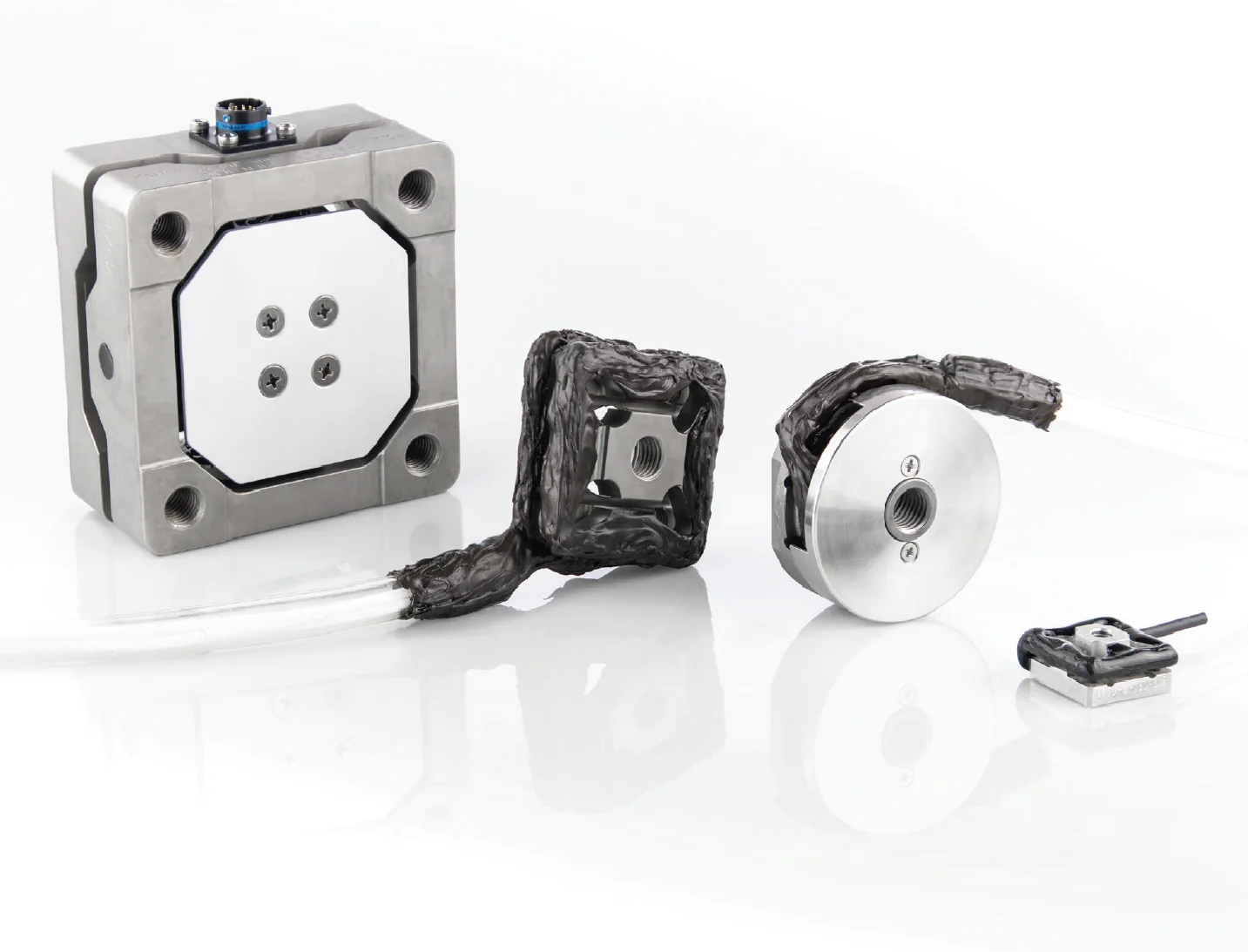
The sensor is designed to work with Michigan Scientific wheel force transducers and can be mounted within the wheel force transducer assembly. The slip angle is then recorded at the wheel where the forces are measured.
The wheel force transducer measures the longitudinal, lateral and vertical force, the camber moment, the wheel torque and the steer torque, with wheel position and speed. A brake test, a lane change or a sharp turn is read wheel by wheel.
What you get
The side slip angle, the longitudinal velocity and the lateral velocity on CAN, measured without contact on a wheel or on the body. Mounted with a wheel force transducer, the sensor gives the slip angle next to the lateral force at the same wheel.
Frequent questions
How is side slip angle measured without touching the road?
With an optical sensor. The TrueSlip sensor measures the longitudinal and lateral velocity of the road surface without contact and calculates the slip angle internally, as SAE defines it.
Does an optical slip angle sensor work on a wet or icy road?
The TrueSlip sensor operates on dry roads, wet roads and dry icy roads. It does not operate with standing water or snow.
What signals does the side slip sensor output?
Three signals on CAN 2.0: the side slip angle and the filtered longitudinal (X) and lateral (Y) velocities, with a fixed delay of about 44 ms.
Can side slip angle be measured at the wheel together with wheel forces?
Yes. The TrueSlip sensor is designed to work with Michigan Scientific wheel force transducers and can be mounted within the wheel force transducer assembly.
Similar applications
All applications-
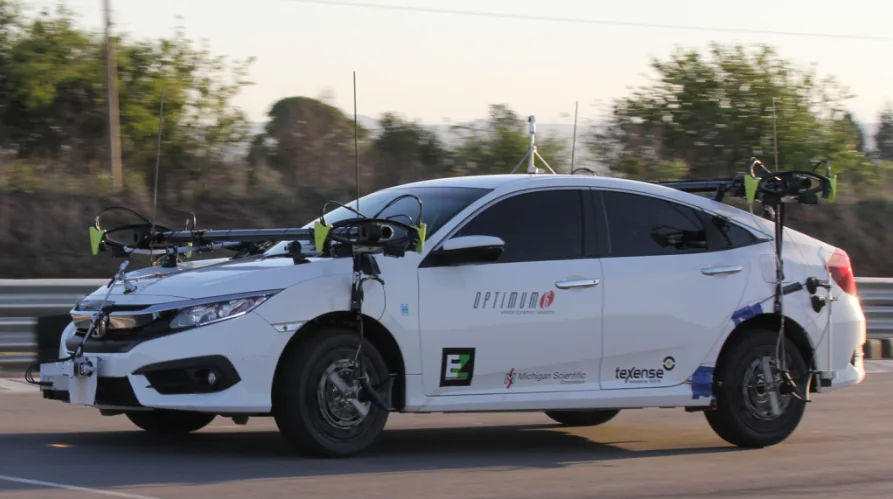 Dynamics Vehicle dynamics The forces and moments at each wheel while the vehicle brakes, turns and changes lane.
 -
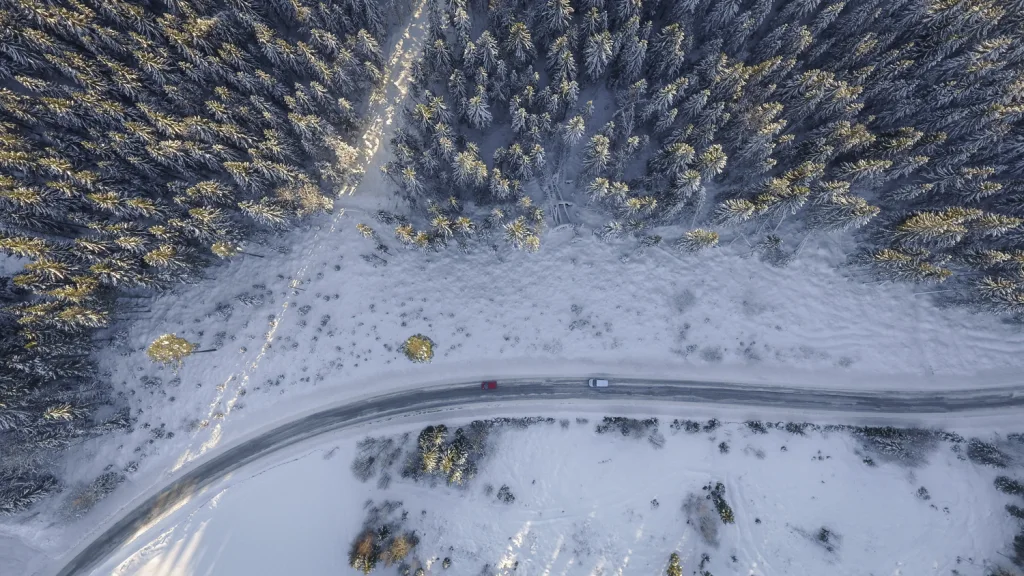 Winter Winter testing Wheel forces and wheel speed measured on snow and ice, to see the moment a tire starts to slip.
 -
 Tires Tire-road friction Tire and road surface forces measured in three directions on a traction fixture, to find the coefficient of friction.