
Road load data acquisition
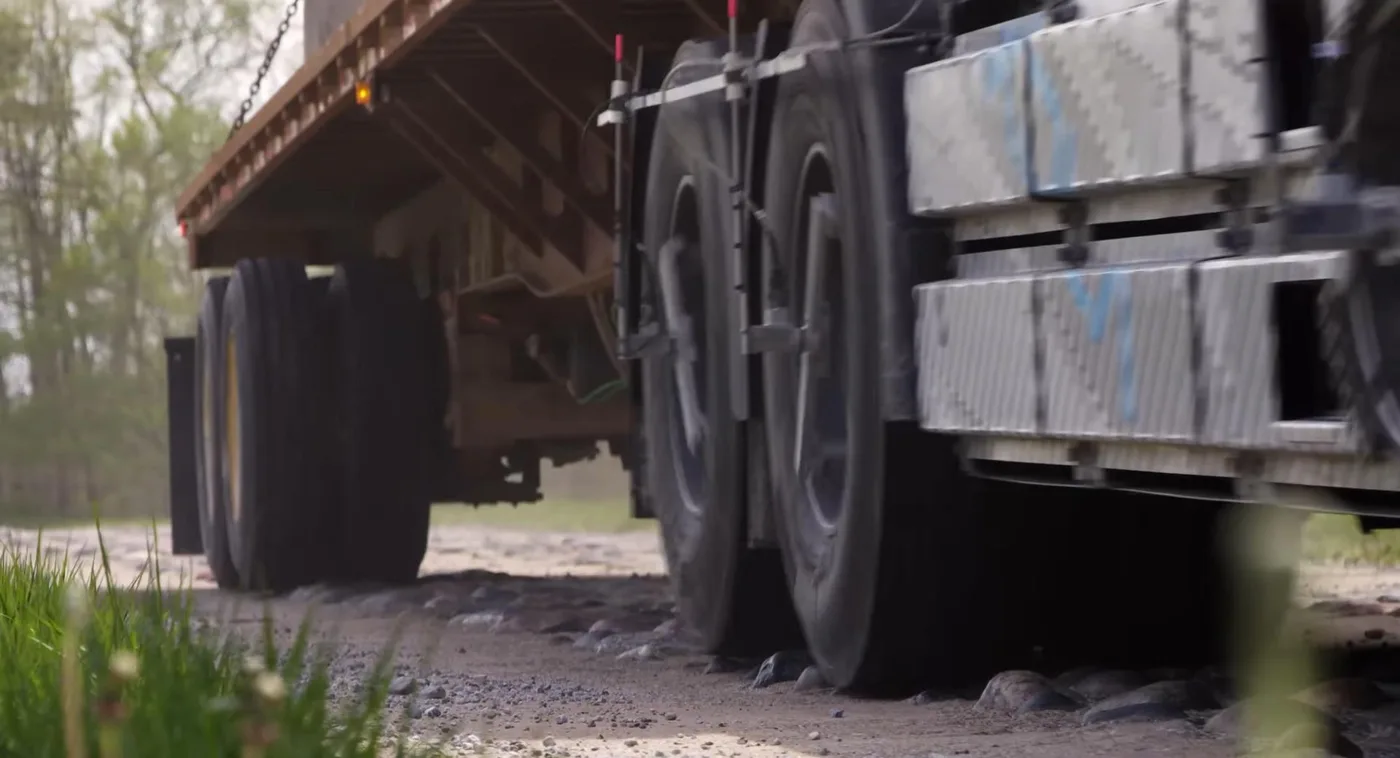
Forces, strains, accelerations, displacements, temperatures, pressures and GPS speed recorded on the vehicle in operation, on public roads, proving grounds and simulators.
In brief
Road load data acquisition (RLDA) records the forces, motions, accelerations and torsion a vehicle experiences in operation. The data is used to specify product requirements, for computer analysis, lab testing, efficiency work and road testing. Michigan Scientific instruments the vehicle, records the data on site or remotely, and processes, analyses and reports it on request.
- 2 years
- longest collection with actual users, to capture seasonal effects
Measured quantities
| Wheel forces and moments | Wheel force transducers |
|---|---|
| Component loads | Custom transducers made from production parts, such as three-directional ball joint transducers |
| Strain and stress | Strain gages on the components of interest; chassis twist measurement |
| Accelerations, displacements, pressure | Accelerometers, displacement and pressure sensors |
| Temperature | Component temperatures |
| Vehicle data | CAN channels from the onboard computers: speed, GPS location, accessory usage, door usage |
Where the data is collected
On public roads, on proving grounds and on simulators. Michigan Scientific has collected RLDA data at proving grounds in the USA and knows Millbrook Proving Ground in England.
With actual users, during normal use of the product, for a few days to two years, to capture seasonal effects. The instruments are out of sight, do not affect the use of the product, and can send the data automatically.
Internal combustion and electric vehicles.
Instrumentation and recording
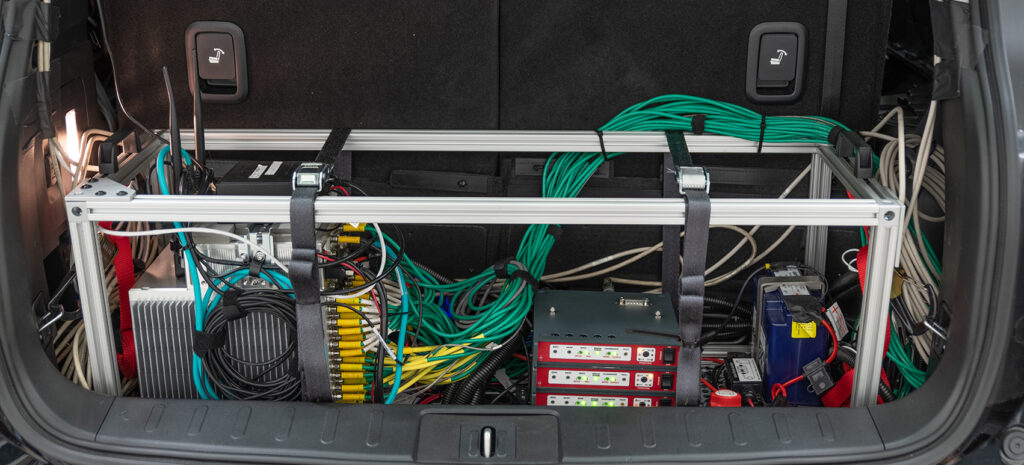
Michigan Scientific designs and builds the custom transducers for each product, gages OEM components and sources the data recording devices. Where needed, it designs custom data acquisition systems and data transfer solutions. Data acquisition is carried out on site or remotely.
From the data to a test
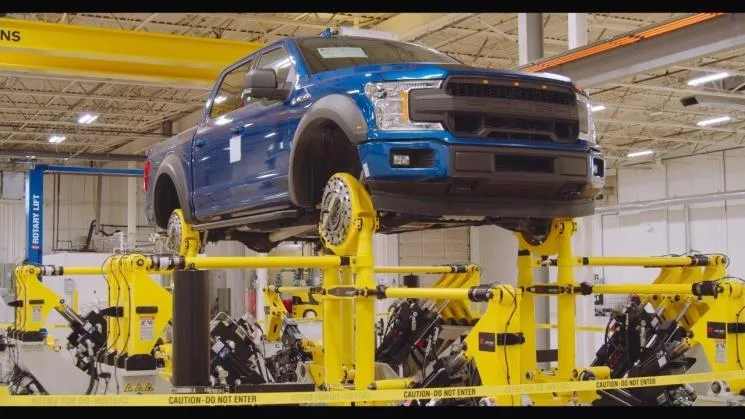
Forces recorded on test or durability tracks can be reproduced on simulation rigs. Strain and temperature data from gaged components can be used to confirm finite element analysis.
Michigan Scientific helps define which data to collect, and develops product tests from the recorded usage: from a simple lab test to a road test that includes the usage and environmental effects seen in service.
How a project runs
- 01
Define
You describe the vehicle, the goal of the test, where the vehicle will run and for how long. We propose the quantities to measure and the instrumentation.
- 02
Instrument
Transducers, strain gages, sensors and the data acquisition system are fitted to the vehicle.
- 03
Record
Data is recorded during the test or in normal use, on site or remotely.
- 04
Process and report
The data is processed and analysed on request, and delivered with a report.