
Measuring steering torque and angle at the steering wheel, with the driver at the wheel
In brief
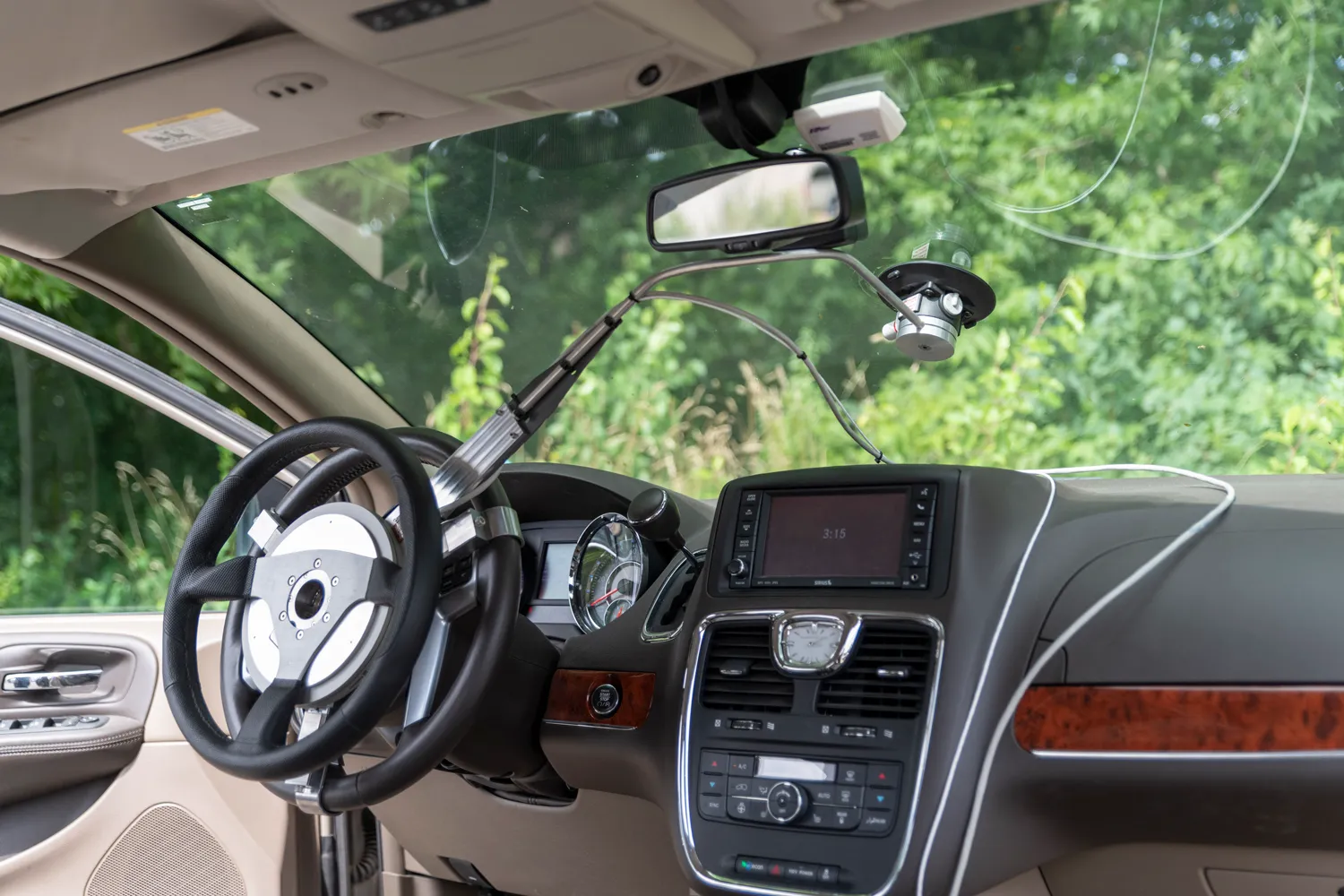
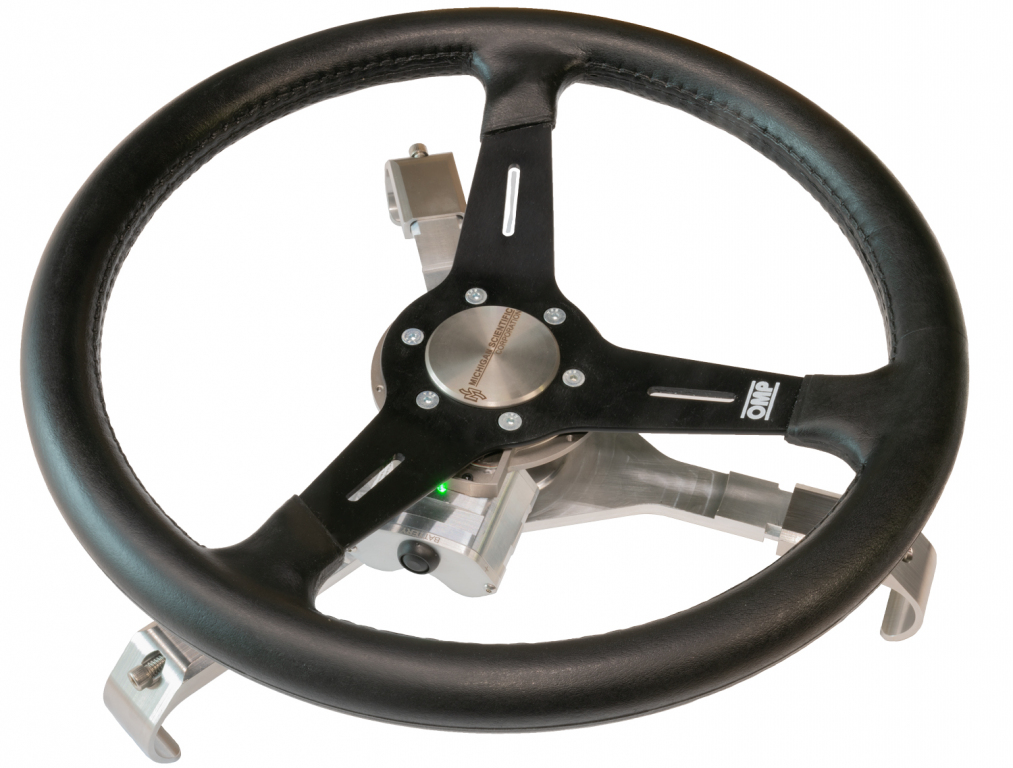
A steering wheel transducer clamps onto the production steering wheel, or replaces it on the splined steering shaft; the driver turns an aftermarket wheel bolted on top of it. The SW-SR2 measures the steering torque with a full-bridge strain gage sensor, 100, 200 or 300 N·m, and the steering angle with a multi-turn inductive encoder, ± 1 440° at 0.04°; its signals leave through a slip ring to the DIGI-STEER unit, ± 10 V and CAN 2.0. The SW-TEL measures torque only, 135 N·m, and sends it by battery-powered telemetry. Tests run in the laboratory and in normal driving.
- 100 to 300 N·m
- torque ranges of the SW-SR2
- ± 1 440°
- steering angle, multi-turn encoder, 0.04° resolution
- ± 10 V and CAN 2.0
- outputs of the DIGI-STEER unit
Mounting
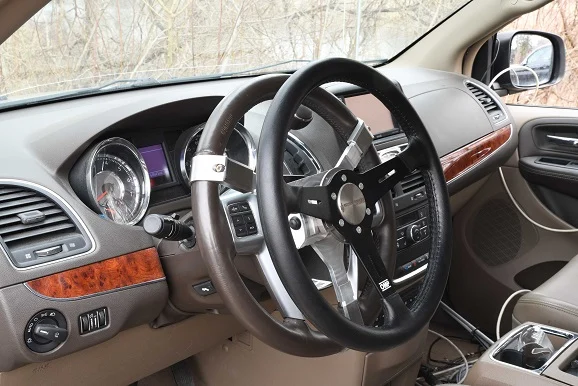
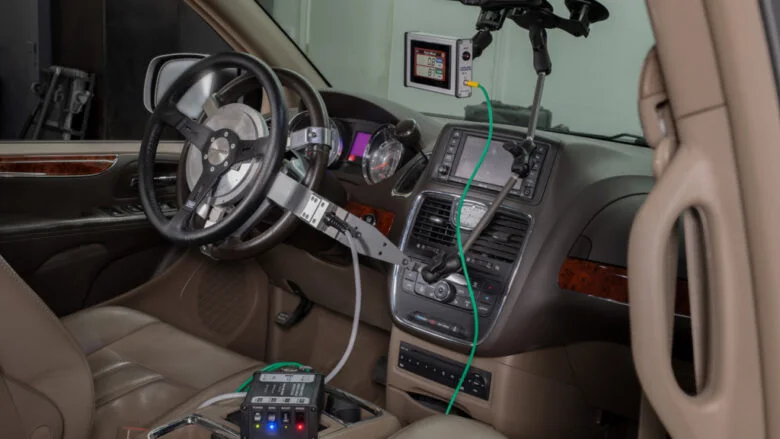
The base of the transducer either clamps onto the production steering wheel, with three clamp hooks on a Y adapter sized for wheels of 13 to 21 in, or bolts to a spline adapter on the steering shaft once the production wheel is removed. The airbag is disabled while the transducer is fitted, and the mounting bracket may cover some steering wheel buttons. On the SW-SR2, the encoder stator is held by an anti-rotation bracket on a suction cup on the windshield; the SW-TEL has no position restraint.
Instrumentation
| SW-SR2, torque | full-bridge strain gage sensor in high-strength stainless steel, 100, 200 or 300 N·m, non-linearity below 0.25 % FS, compensated from 24 to 85 °C |
|---|---|
| SW-SR2, angle | inductive encoder, ± 1 440° multi-turn, 0.04° resolution, 0.18° accuracy; steering rate on CAN |
| SW-SR2, signal | Michigan Scientific slip ring to the DIGI-STEER unit, 10 to 36 V DC; ± 10 V and CAN 2.0 outputs; 4.0 kg with the slip ring electronics; −40 to 85 °C |
| SW-TEL, torque | strain gage sensor in stainless steel, 135 N·m with 300 % overload, non-linearity and hysteresis below 0.5 % FS, compensated from 24 to 85 °C |
| SW-TEL, signal | battery-powered telemetry package, ± 10 V analog output; no position restraint; IP54; −40 to 125 °C; steering wheels of 13 to 15 in |
| Loads | 440 N axial at the wheel edge; SW-TEL 4.4 kN axial at the wheel center |
Signal path
On the SW-SR2, the torque bridge and the encoder are powered and read through the slip ring by the DIGI-STEER unit. It outputs torque and angle at ± 10 V and on CAN 2.0, and steering rate on CAN only; a .dbc file scales the CAN outputs. Its switches set the torque zero, the shunt calibration and the encoder zero.
On the SW-TEL, the torque signal leaves by telemetry from the battery-powered package on the wheel; the receiver gives a ± 10 V analog output. When the steering angle is needed as well, the slip ring version is used.
Procedure
- 01
Disable the airbag
Before fitting either transducer.
- 02
Mount the base
Clamp hooks on the Y adapter over the production wheel, or spline adapter on the steering shaft with the production wheel removed. Bolt the aftermarket wheel on top.
SW-SR2 steering wheel transducer - 03
Hold the encoder stator
SW-SR2 only, with the anti-rotation bracket on its suction cup on the windshield.
- 04
Zero and calibrate
Torque zero, shunt calibration and encoder zero on the DIGI-STEER switches, then record at ± 10 V or on CAN.
Result
The torque the driver applies at the steering wheel and, with the SW-SR2, the steering angle and rate, recorded on the vehicle in normal driving or in the laboratory. The data serves the development and the verification of the steering system.
Frequent questions
Can steering torque be measured without removing the original steering wheel?
Yes. The base clamps onto the production steering wheel with three clamp hooks on a Y adapter, for wheels of 13 to 21 in. It can also bolt to a spline adapter on the steering shaft.
How is the steering angle measured over several turns of the steering wheel?
With the multi-turn inductive encoder of the SW-SR2, ± 1 440° at 0.04° resolution and 0.18° accuracy. The SW-TEL measures torque only.
Can steering wheel torque be measured wirelessly?
Yes. The SW-TEL, 135 N·m, sends the torque by battery-powered telemetry and has no position restraint.
What outputs does the SW-SR2 give?
Torque and angle at ± 10 V and on CAN 2.0, steering rate on CAN, from the DIGI-STEER unit.
Similar applications
All applications-
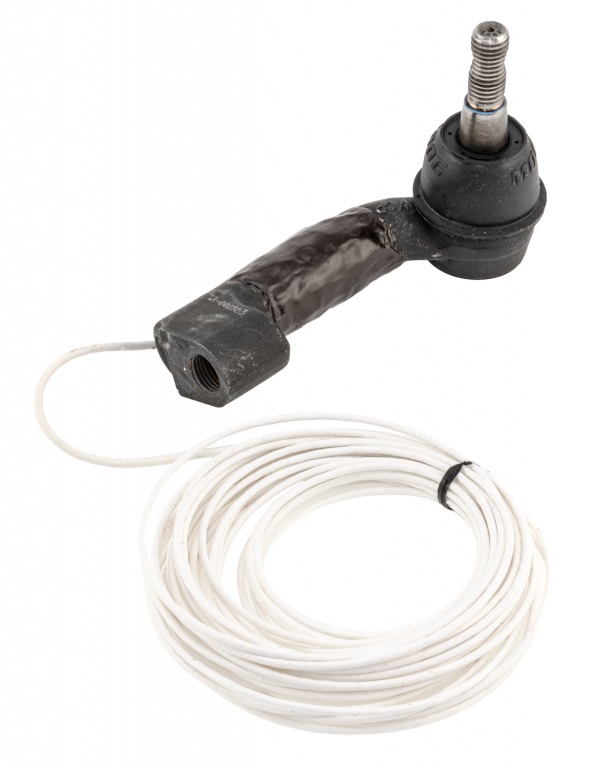 Steering Tie rod loads The tension and compression force in each tie rod while the vehicle is steered and driven.
-
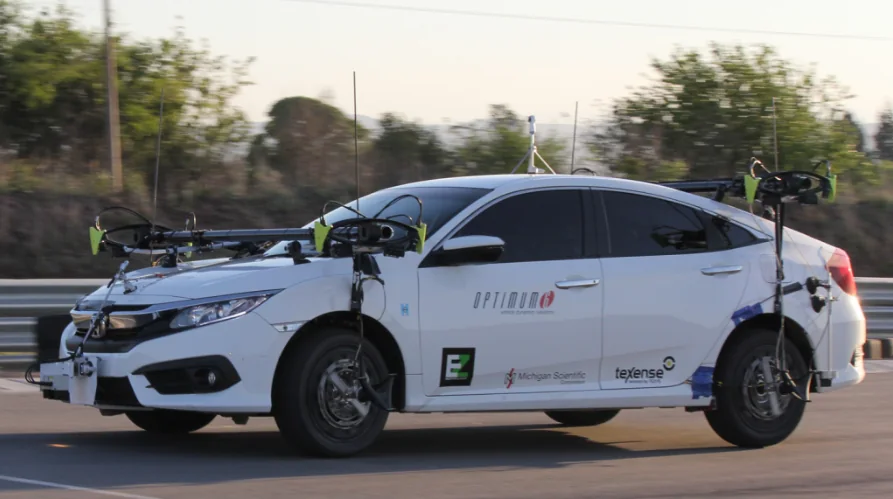 Dynamics Vehicle dynamics The forces and moments at each wheel while the vehicle brakes, turns and changes lane.
-
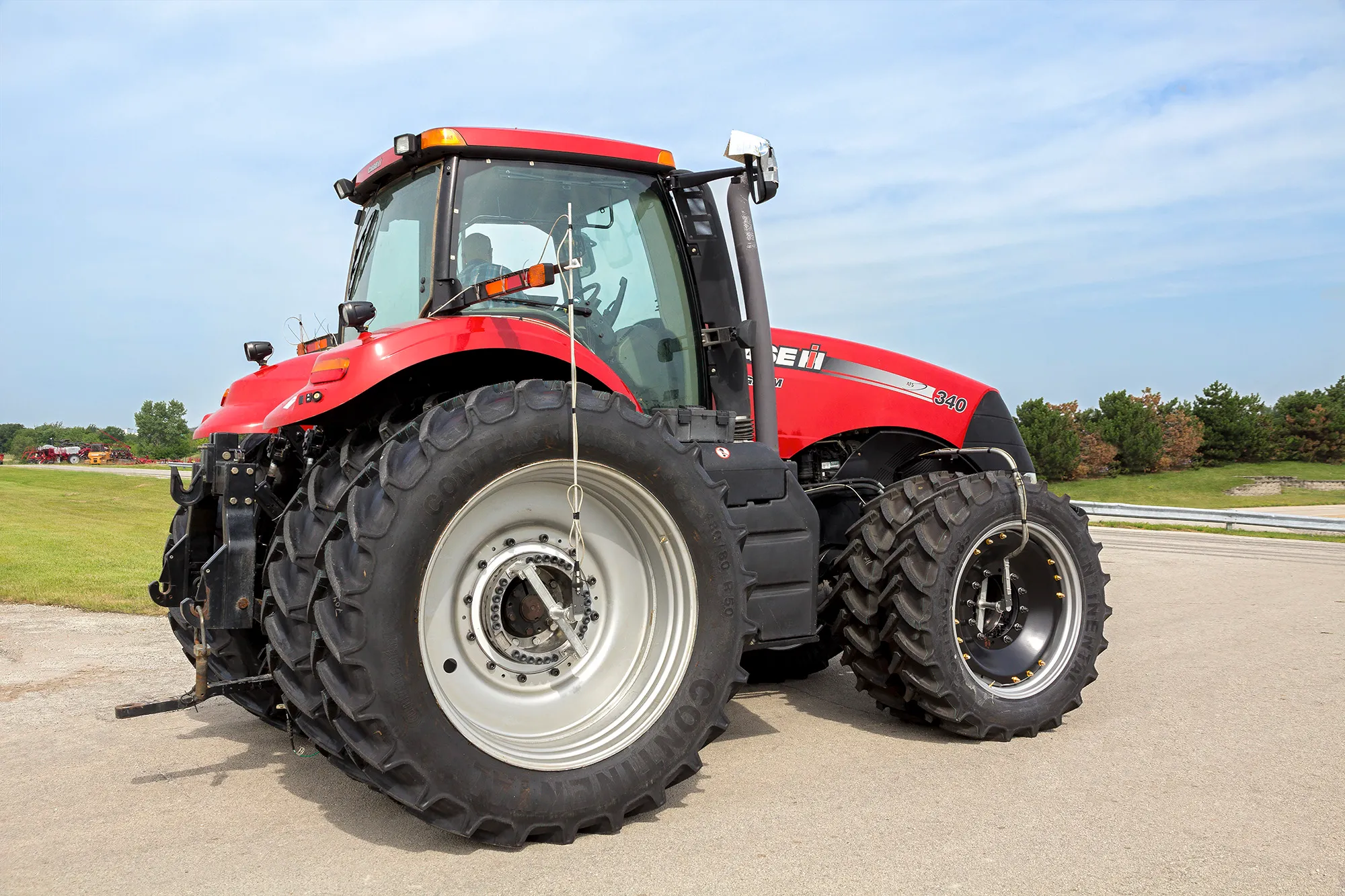 Agriculture Agricultural machinery Wheel loads, wheel torque, PTO power and forces on working parts, measured on the machine at work.