
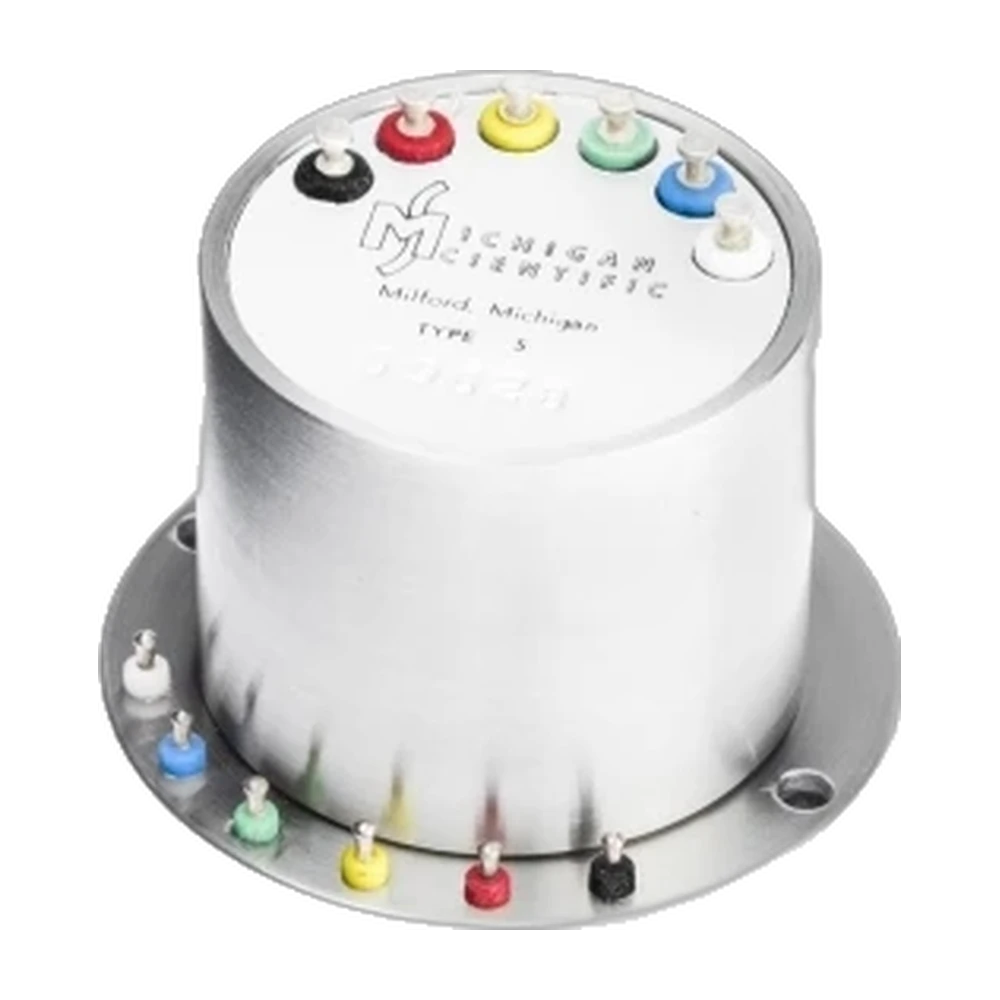
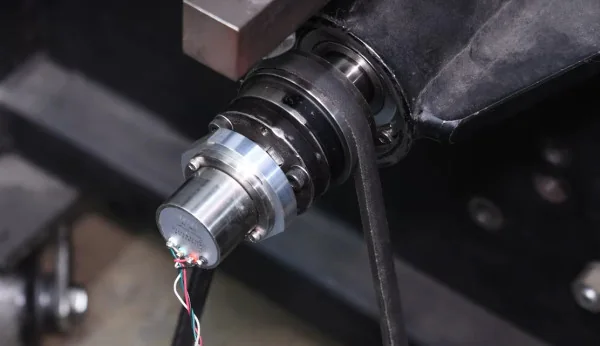
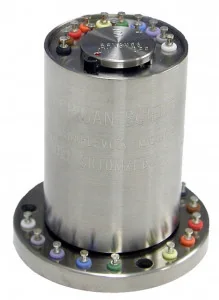
S6 end-of-shaft slip ring
Six-circuit end-of-shaft slip ring for low-level signals: strain gages, thermocouples, RTDs, accelerometers and low voltages.
Six-circuit end-of-shaft slip ring with a precision strain gage amplifier built into the rotor.
Six-circuit end-of-shaft slip ring with three thermocouple amplifiers built into the rotor.
Six-circuit end-of-shaft slip ring with a 50.8 mm rotor, for low-level signals: strain gages, thermocouples, RTDs, accelerometers and low voltages.
Six-circuit end-of-shaft slip ring with specialized rings and a lubrication hole: a longer life, with regular lubrication.
Six-circuit LHV end-of-shaft slip ring with a strain gage amplifier built into the rotor: a longer life, with regular lubrication.
Six-circuit LHV end-of-shaft slip ring with three thermocouple amplifiers built into the rotor: a longer life, with regular lubrication.
A special version of the S6. Excites and amplifies 1 strain gage bridge in the rotor. Excitation: 5 V (G5) or 10 V (G10).
A special version of the S6. Amplifies 3 thermocouples in the rotor, type K (TC3K) or type T (TC3T). Specifications: AMP-TC-M1.
A special version of the S6. 50.8 mm rotor instead of 41.28 mm, for AMP-SG-U2 and AMP-TCN-X2 spinning amplifiers.
A special version of the S6. Specialized rings and a lubrication hole: lasts longer, lubricate regularly. Final T (TC3KT, TC3TT): thermocouple terminals on the rotor.
- 6
- Circuits
- 12 000 rpm
- Max speed
- 41.28 mm
- Rotor diameter
- 33 mm · 113 g
- Length · weight
- 6
- Circuits
- 12 000 rpm
- Max speed
- 41.28 mm
- Rotor diameter
- 36 mm · 130 g
- Length · weight
- 6
- Circuits
- 12 000 rpm
- Max speed
- 41.28 mm
- Rotor diameter
- 36 mm · 130 g
- Length · weight
- 6
- Circuits
- 12 000 rpm
- Max speed
- 41.28 mm
- Rotor diameter
- 28 mm · 75 g
- Length · weight
- 6
- Circuits
- 12 000 rpm
- Max speed
- 41.28 mm
- Rotor diameter
- 28 mm · 75 g
- Length · weight
- 6
- Circuits
- 12 000 rpm
- Max speed
- 50.8 mm
- Rotor diameter
- 36 mm
- Length
- 6
- Circuits
- 41.28 mm
- Rotor diameter
- 6
- Circuits
- 41.28 mm
- Rotor diameter
- 6
- Circuits
- 41.28 mm
- Rotor diameter
- 6
- Circuits
- 41.28 mm
- Rotor diameter
- 6
- Circuits
- 41.28 mm
- Rotor diameter
- 6
- Circuits
- 41.28 mm
- Rotor diameter
- 6
- Circuits
- 41.28 mm
- Rotor diameter
- Operating temperature−40 to 121 °C
- Max current per circuit500 mA
- Length33 mm
- Operating temperature−40 to 121 °C
- Max current per circuit500 mA
- Length36 mm
- Operating temperature−40 to 121 °C
- Max current per circuit500 mA
- Length36 mm
- Operating temperature−40 to 121 °C
- Max current per circuit500 mA
- Length28 mm
- Operating temperature−40 to 121 °C
- Max current per circuit500 mA
- Length28 mm
- Operating temperature−40 to 121 °C
- Max current per circuit500 mA
- Operating temperature−40 to 121 °C
- Max current per circuit500 mA
- Operating temperature−40 to 121 °C
- Max current per circuit500 mA
- Operating temperature−40 to 121 °C
- Max current per circuit500 mA
- Operating temperature−40 to 121 °C
- Max current per circuit500 mA
- Operating temperature−40 to 121 °C
- Max current per circuit500 mA
- Operating temperature−40 to 121 °C
- Max current per circuit500 mA
- Operating temperature−40 to 121 °C
- Max current per circuit500 mA
S6: six-circuit end-of-shaft slip ring
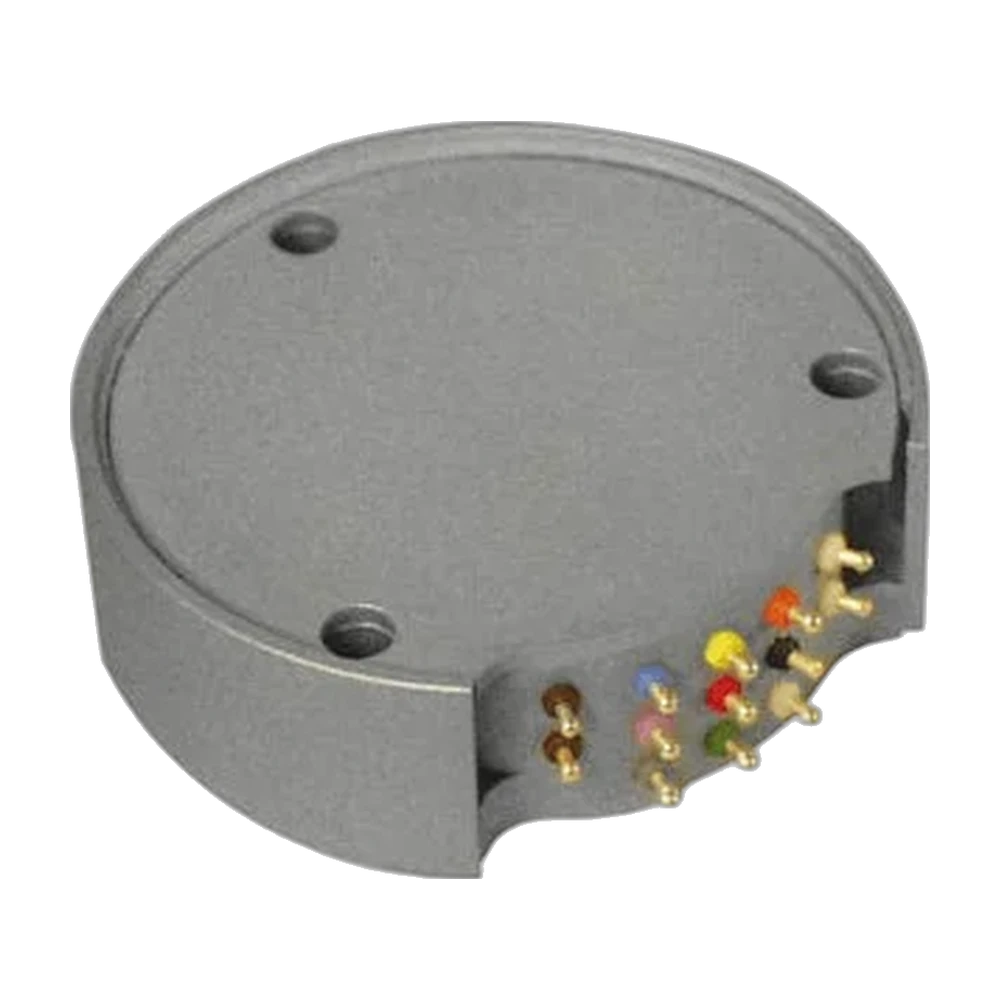
The S6 is an end-of-shaft slip ring with six circuits rated at 500 mA. It mounts on the free end of a rotating shaft and carries strain gages, thermocouples, RTDs, accelerometers and low voltages from rotor to stator. Precious metal rings and brushes limit the contact resistance variation to 0.1 Ω peak. The stainless steel case is sealed against dust, the bearings are lubricated for life, and color-coded solder terminals sit on both rotor and stator. With a 41.28 mm rotor, it is 33 mm long and weighs 113 g; it runs up to 12 000 rpm, from −40 to 121 °C, and a low-temperature lubricant is available below −18 °C. It is also the base of the S6/G5, S6/G10, S6/TC3K and S6/TC3T, which add amplifiers in the rotor.
The rotor flange is mounted concentric and perpendicular to the shaft, on a machined shaft end or a rotor adapter, within 0.025 mm (0.001 in) of axial and radial runout. The stator is held by a flexible restraint, the S-Series restraint kit (up to 112 °C) or a worm gear clamp with a spring, never by its wires. Stranded wires, 28 or 30 AWG (24 AWG at most), run along or through the shaft and are secured to it before being soldered to the rotor terminals.
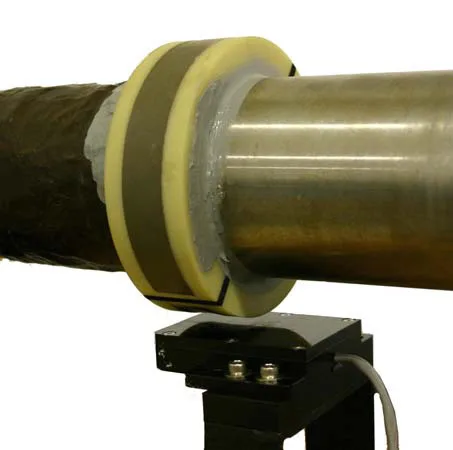
The S-Series is used, for example, to measure brake disc temperature while driving, electric motor rotor temperature at the end of the motor shaft, or the torque of gaged pulleys and gears.
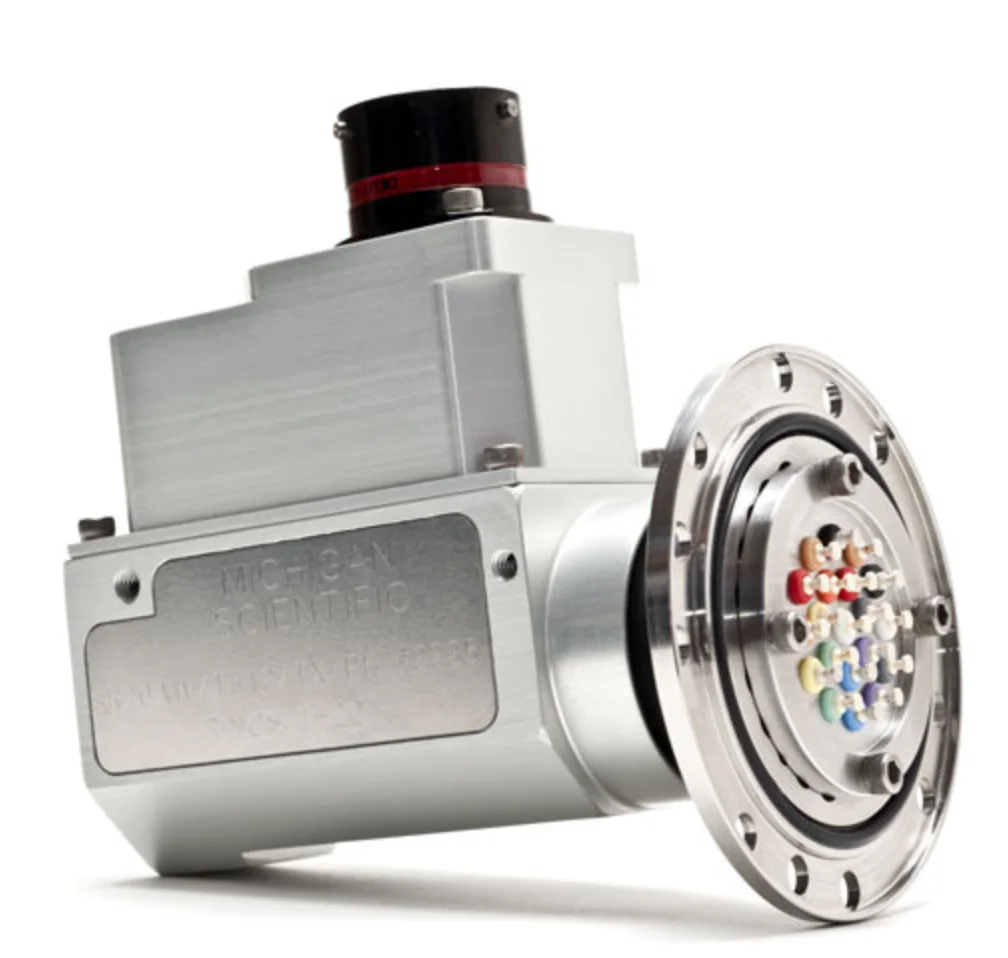
End-of-shaft slip ring with rotor-mounted strain gage amplifier
The S6/G combines the S6 slip ring with a precision strain gage amplifier built into its rotor, so the bridge is excited and its signal amplified on the rotating side, close to the gages. The amplifier provides a low-drift 5 or 10 V bridge excitation for bridges of 350 Ω and above, a gain of 100 to 2 000 V/V set externally, and a 10 V full-scale output, with a bandwidth of 40 kHz as standard and up to 200 kHz at a gain of 100.
The rotor flange is mounted concentric and perpendicular to the shaft, on a machined shaft end or a rotor adapter, within 0.025 mm (0.001 in) of axial and radial runout. The stator is held by a flexible restraint, the S-Series restraint kit (up to 112 °C) or a worm gear clamp with a spring, never by its wires. Stranded wires, 28 or 30 AWG (24 AWG at most), run along or through the shaft and are secured to it before being soldered to the rotor terminals. The amplifier takes ±15 V through the slip ring; +15 V on the calibration pin switches in the shunt calibration resistor (100 kΩ to 1 MΩ), and the bridge excitation can be switched on and off remotely.
It is used on one strain gage channel, for example to measure the torque of a gaged shaft, pulley or gear.
End-of-shaft slip ring with rotor-mounted thermocouple amplifiers
The S6/TC3 combines a six-circuit S-Series slip ring with three thermocouple amplifiers built into its rotor, so three thermocouple signals are amplified on the rotating side, before the rings. With a 41.28 mm rotor, it is 28 mm long, weighs 75 g and runs up to 12 000 rpm, from −40 to 121 °C.
The rotor flange is mounted concentric and perpendicular to the shaft, on a machined shaft end or a rotor adapter, within 0.025 mm (0.001 in) of axial and radial runout. The stator is held by a flexible restraint, the S-Series restraint kit (up to 112 °C) or a worm gear clamp with a spring, never by its wires. Stranded wires, 28 or 30 AWG (24 AWG at most), run along or through the shaft and are secured to it before being soldered to the rotor terminals. Amplified on the rotor, the thermocouples are not affected by the temperature difference between rotor and stator terminals.
It is used, for example, to measure brake disc temperature while driving, or electric motor rotor temperature at the end of the motor shaft.
S6M: six-circuit end-of-shaft slip ring, 50.8 mm rotor
The S6M is the six-circuit S-Series end-of-shaft slip ring built on a 50.8 mm rotor instead of 41.28 mm. It carries six circuits rated at 500 mA from rotor to stator. Precious metal rings and brushes limit the contact resistance variation to 0.1 Ω peak. The stainless steel case is sealed against dust, the bearings are lubricated for life, and color-coded solder terminals sit on both rotor and stator. It is 36 mm long and runs up to 12 000 rpm, from −40 to 121 °C.
The rotor flange is mounted concentric and perpendicular to the shaft, on a machined shaft end or a rotor adapter, within 0.025 mm (0.001 in) of axial and radial runout. The stator is held by a flexible restraint, the S-Series restraint kit (up to 112 °C) or a worm gear clamp with a spring, never by its wires. Stranded wires, 28 or 30 AWG (24 AWG at most), run along or through the shaft and are secured to it before being soldered to the rotor terminals.
The S-Series is used, for example, to measure brake disc temperature while driving, electric motor rotor temperature at the end of the motor shaft, or the torque of gaged pulleys and gears.
S6/LHV: six-circuit end-of-shaft slip ring, LHV version
The S6/LHV is the S6 end-of-shaft slip ring with specialized rings and a lubrication hole: it lasts longer than the standard version, in exchange for regular lubrication. It carries six circuits rated at 500 mA from rotor to stator, on a 41.28 mm rotor, for strain gages, thermocouples, RTDs, accelerometers and low voltages. Precious metal rings and brushes, a stainless steel case and color-coded solder terminals on rotor and stator, as on the whole S-Series.
The rotor flange is mounted concentric and perpendicular to the shaft, on a machined shaft end or a rotor adapter, within 0.025 mm (0.001 in) of axial and radial runout. The stator is held by a flexible restraint, the S-Series restraint kit (up to 112 °C) or a worm gear clamp with a spring, never by its wires. Stranded wires, 28 or 30 AWG (24 AWG at most), run along or through the shaft and are secured to it before being soldered to the rotor terminals.
The LHV versions are chosen when the life of the slip ring matters more than maintenance-free operation.
LHV slip ring with rotor-mounted strain gage amplifier
The S6/LHV/G5 and S6/LHV/G10 combine the S6/LHV, with its specialized rings and lubrication hole, and a strain gage amplifier built into the rotor: the bridge is excited and its signal amplified on the rotating side, close to the gages. The G5 gives the bridge a 5 V excitation, the G10 a 10 V excitation. Like every LHV version, it lasts longer than the standard version, in exchange for regular lubrication.
The rotor flange is mounted concentric and perpendicular to the shaft, on a machined shaft end or a rotor adapter, within 0.025 mm (0.001 in) of axial and radial runout. The stator is held by a flexible restraint, the S-Series restraint kit (up to 112 °C) or a worm gear clamp with a spring, never by its wires. Stranded wires, 28 or 30 AWG (24 AWG at most), run along or through the shaft and are secured to it before being soldered to the rotor terminals.
It is used on one strain gage channel, for example to measure the torque of a gaged shaft, pulley or gear, when the life of the slip ring matters more than maintenance-free operation.
LHV slip ring with three rotor-mounted thermocouple amplifiers
The S6/LHV/TC3 versions combine the S6/LHV, with its specialized rings and lubrication hole, and three thermocouple amplifiers built into the rotor: three thermocouple signals are amplified on the rotating side, before the rings. The amplifiers are made for type K (TC3K, TC3KT) or type T (TC3T, TC3TT) thermocouples; their specifications are those of the AMP-TC-M1. Like every LHV version, it lasts longer than the standard version, in exchange for regular lubrication.
The rotor flange is mounted concentric and perpendicular to the shaft, on a machined shaft end or a rotor adapter, within 0.025 mm (0.001 in) of axial and radial runout. The stator is held by a flexible restraint, the S-Series restraint kit (up to 112 °C) or a worm gear clamp with a spring, never by its wires. Stranded wires, 28 or 30 AWG (24 AWG at most), run along or through the shaft and are secured to it before being soldered to the rotor terminals.
On the S6/LHV/TC3KT and S6/LHV/TC3TT, the rotor terminals are made of thermocouple material; the stator keeps conventional terminals.
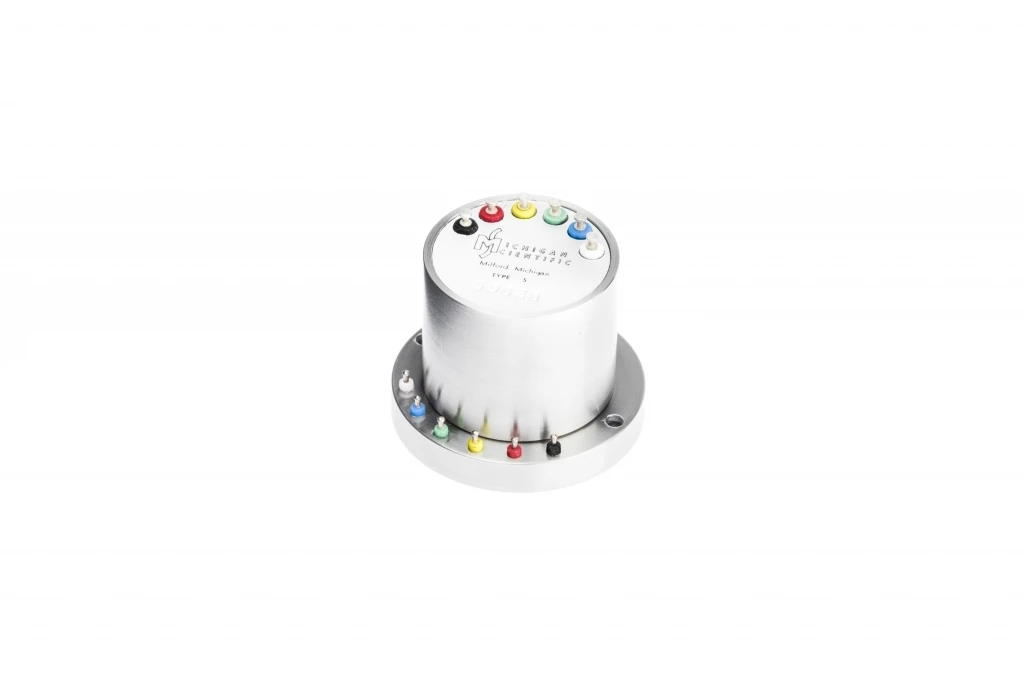
Specifications
| Circuits | 6 |
|---|---|
| Rotation sensor | None |
| Embedded amplifier | None |
| Current per circuit | 500 mA |
| Mounting | End of shaft |
| Max speed | 12 000 rpm |
| Rotor diameter | 41.28 mm |
| Dimensions | length 33 mm |
| Weight | 113 g |
| Operating temperature | −40 to 121 °C |
| Connections | Solder terminals (rotor and stator: solder terminals) |
| Circuits | 6 |
|---|---|
| Rotation sensor | None |
| Embedded amplifier | Strain gage (1 amplifier) |
| Current per circuit | 500 mA |
| Mounting | End of shaft |
| Max speed | 12 000 rpm |
| Rotor diameter | 41.28 mm |
| Dimensions | length 36 mm |
| Weight | 130 g |
| Operating temperature | −40 to 121 °C |
| Connections | Solder terminals (rotor and stator: solder terminals) |
| Circuits | 6 |
|---|---|
| Rotation sensor | None |
| Embedded amplifier | Thermocouple (3 amplifiers) |
| Current per circuit | 500 mA |
| Mounting | End of shaft |
| Max speed | 12 000 rpm |
| Rotor diameter | 41.28 mm |
| Dimensions | length 28 mm |
| Weight | 75 g |
| Operating temperature | −40 to 121 °C |
| Connections | Solder terminals (rotor and stator: solder terminals) |
| Circuits | 6 |
|---|---|
| Rotation sensor | None |
| Embedded amplifier | None |
| Current per circuit | 500 mA |
| Mounting | End of shaft |
| Max speed | 12 000 rpm |
| Rotor diameter | 50.8 mm |
| Dimensions | length 36 mm |
| Operating temperature | −40 to 121 °C |
| Connections | Solder terminals (rotor and stator: solder terminals) |
| Circuits | 6 |
|---|---|
| Rotation sensor | None |
| Embedded amplifier | None |
| Current per circuit | 500 mA |
| Mounting | End of shaft |
| Rotor diameter | 41.28 mm |
| Lubrication | Lubrication hole, regular lubrication |
| Operating temperature | −40 to 121 °C |
| Connections | Solder terminals (rotor and stator: solder terminals) |
| Circuits | 6 |
|---|---|
| Rotation sensor | None |
| Embedded amplifier | Strain gage (1 amplifier) |
| Current per circuit | 500 mA |
| Mounting | End of shaft |
| Rotor diameter | 41.28 mm |
| Lubrication | Lubrication hole, regular lubrication |
| Operating temperature | −40 to 121 °C |
| Connections | Solder terminals (rotor and stator: solder terminals) |
| Circuits | 6 |
|---|---|
| Rotation sensor | None |
| Embedded amplifier | Thermocouple (3 amplifiers) |
| Current per circuit | 500 mA |
| Mounting | End of shaft |
| Rotor diameter | 41.28 mm |
| Lubrication | Lubrication hole, regular lubrication |
| Operating temperature | −40 to 121 °C |
| Connections | Solder terminals (rotor and stator: solder terminals) |
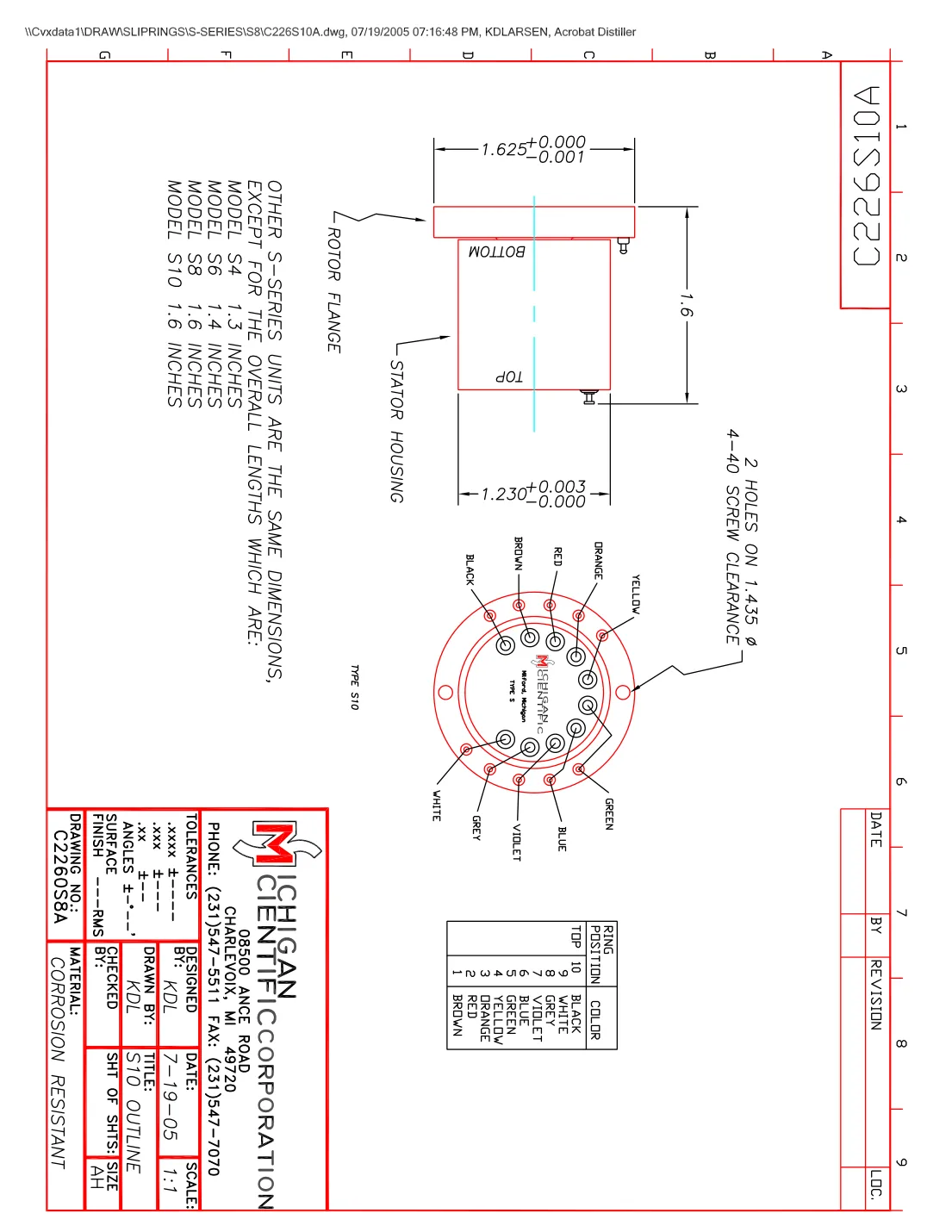
Used with the S6
What you add here goes into the same quote request.
-
Amplify strain gage bridges on the shaft
AMP-SG-U2
Modules for one, two or three bridges, stacked on the rotor, with a ± 10 V output.
On the 50.8 mm rotor of the S6M.
-
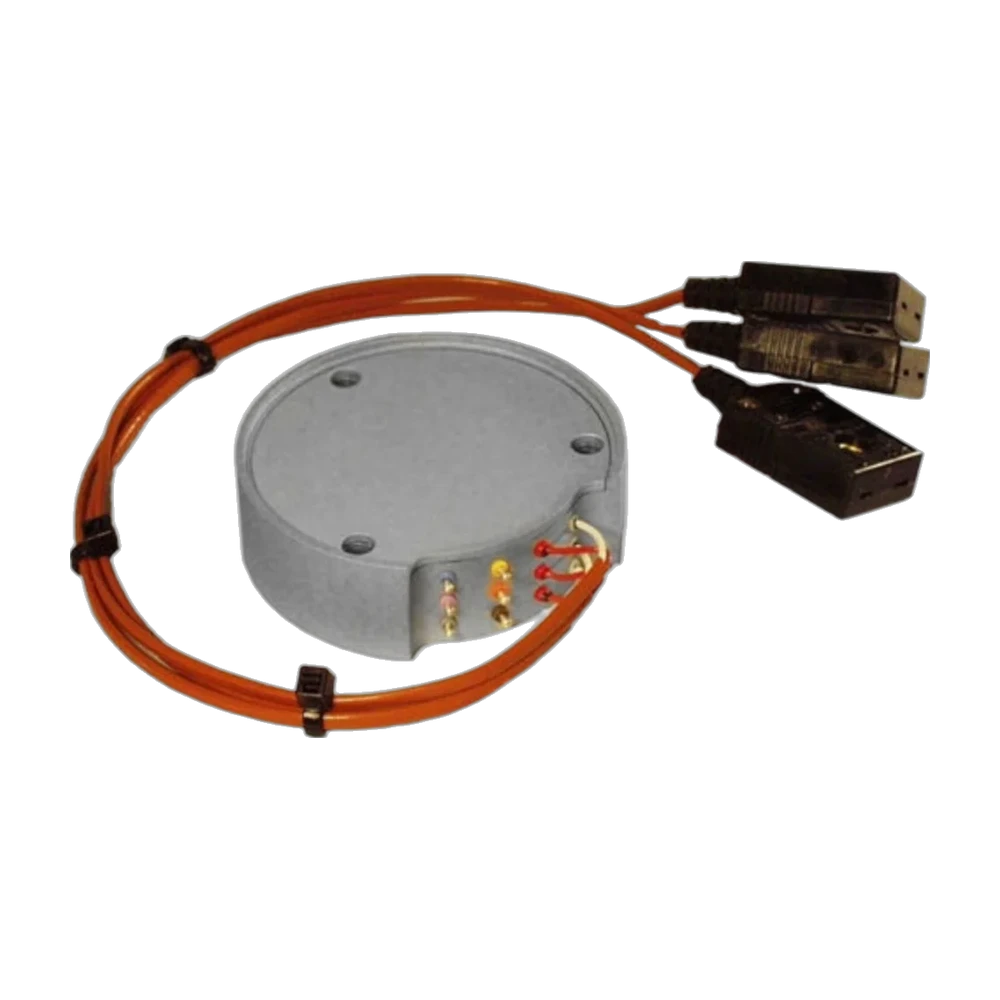
Amplify thermocouples on the shaft
AMP-TCN-X2
One to nine cold junction compensated channels in one module, 10 mV/°C output.
On the 50.8 mm rotor of the S6M.
Resources
Datasheets and manuals
Drawings
CAD models
Datasheets and manuals
Drawings
CAD models
Datasheets and manuals
Drawings
CAD models
Datasheets and manuals
Drawings
CAD models
Datasheets and manuals
Drawings
CAD models
Datasheets and manuals
Drawings
CAD models
Datasheets and manuals
Drawings
CAD models
Datasheets and manuals
Drawings
CAD models
Datasheets and manuals
Drawings
CAD models
Datasheets and manuals
Drawings
CAD models
Datasheets and manuals
Drawings
CAD models
Datasheets and manuals
Drawings
CAD models
Datasheets and manuals
Drawings
CAD models
Special versions
- Embedded strain gage amplifier Excites and amplifies 1 strain gage bridge in the rotor. Excitation: 5 V (G5) or 10 V (G10).
- Embedded thermocouple amplifiers Amplifies 3 thermocouples in the rotor, type K (TC3K) or type T (TC3T). Specifications: AMP-TC-M1.
- 50.8 mm rotor 50.8 mm rotor instead of 41.28 mm, for AMP-SG-U2 and AMP-TCN-X2 spinning amplifiers.
- S6M50.8 mm rotor, no amplifier.
- Long life (LHV) Specialized rings and a lubrication hole: lasts longer, lubricate regularly. Final T (TC3KT, TC3TT): thermocouple terminals on the rotor.
- S6/LHVLHV rings, no amplifier.
- S6/LHV/G5LHV rings, 1 strain gage amplifier, 5 V excitation.
- S6/LHV/G10LHV rings, 1 strain gage amplifier, 10 V excitation.
- S6/LHV/TC3KLHV rings, 3 type K thermocouple amplifiers.
- S6/LHV/TC3KTLHV rings, 3 type K thermocouple amplifiers, thermocouple terminals on the rotor.
- S6/LHV/TC3TLHV rings, 3 type T thermocouple amplifiers.
- S6/LHV/TC3TTLHV rings, 3 type T thermocouple amplifiers, thermocouple terminals on the rotor.
Related applications

If the S6 is not the one
- Shorter and lighter Short S-Series
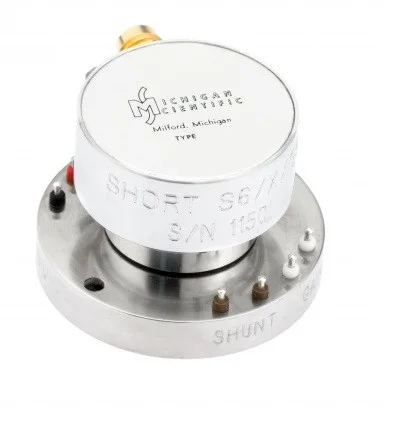
4 to 10 circuits at 12 000 rpm in a stainless steel and aluminum case from 22.15 mm long and 56 g, rated from −1 to 138 °C, some with amplifiers in the rotor.
- Wheel angle as well SR Series
4 to 36 circuits, with a 60 ppr encoder on the /E60 versions.
- More circuits SR/ERT Series
Modular, 10 to 36 circuits, with encoder.
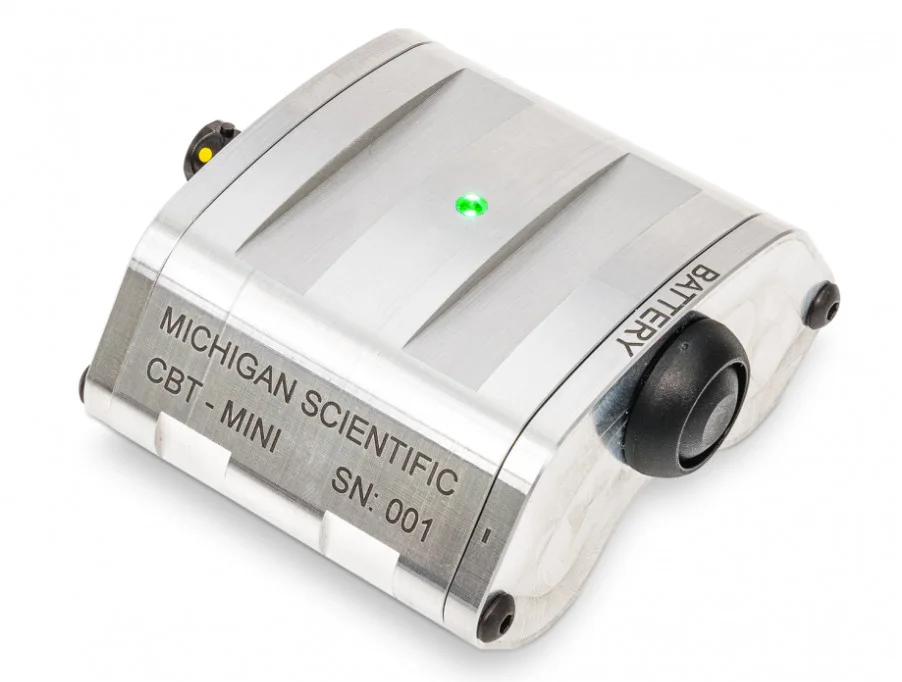
- No free shaft end CBT-mini clamp-on battery telemetry
A clamp-on transmitter, no contact.
A question on this product?
Shaft end, speed, circuits, signals. An application engineer answers.
More details to give? Use the full contact form.