
Measuring torque on a truck solid axle, with strain gages inside the axle shaft
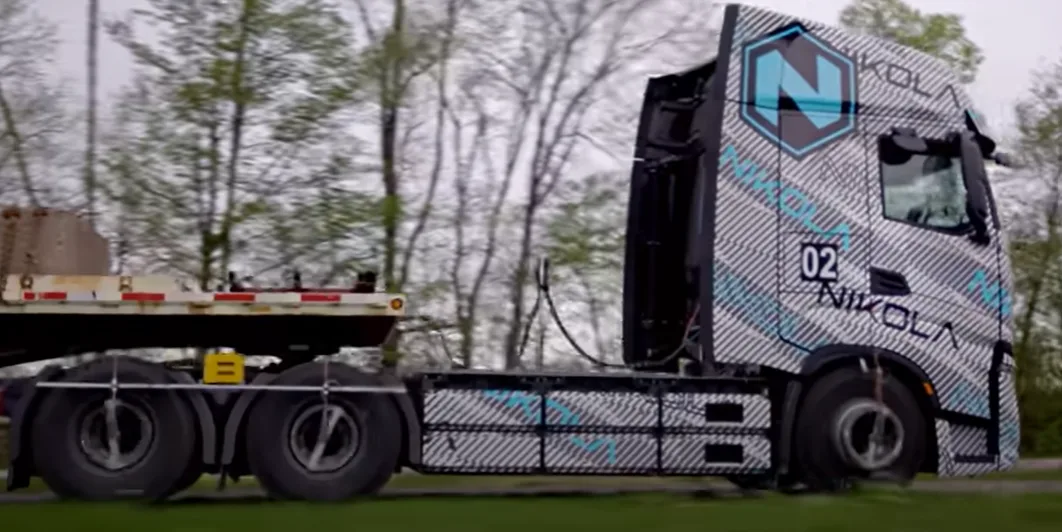
In brief
The axle housing of a truck leaves no room for a slip ring or a telemetry transmitter around the shaft, so the gages go inside it. A hole is drilled through the center of the production axle shaft, past the hub bearings, and strain gages are applied to its wall. The wires come out through the center of the hub to a sealed connector, and a slip ring or a telemetry package bolted to the standard wheel carries the signal to the recorder.
- 152 mm
- deep-bore gaging depth, in a bore of 12.7 mm or more
- 4 to 36
- circuits on the Wheel Instrumentation System
- 1 024 ppr
- optional encoder for wheel speed, up to
Load path
On a half-shaft, a tubular slip ring or a clamp-on transmitter is mounted around the shaft. On a solid axle, the housing encloses the shaft from the differential to the hub and leaves no room for either. The torque is measured from inside the shaft instead, still on the production part.
The bore runs from the hub end past the hub bearings, and the gages sit on its wall, inboard of the bearings. The torque between the differential and the hub is read directly, without any interaction with bearings or seals, and the bore has a minimal effect on the torsional stiffness of the axle.
Instrumentation
| Deep-bore gaging | strain gages applied inside the bore of the production axle shaft, up to 152 mm deep in a bore of 12.7 mm or more, then calibration in torque |
|---|---|
| Hub connector | sealed connector at the center of the hub, to which the slip ring or the telemetry package is plugged |
| Wheel Instrumentation System | slip ring bolted to the vehicle's own wheel through a plate and collet lug nuts machined for the vehicle · 4 to 36 circuits · 2 000 rpm · 500 mA per circuit · optional encoder up to 1 024 ppr · waterproof for on-road and off-road driving · −40 to 100 °C · 80 mm long |
| Telemetry package | mounted to the standard wheel with the wheel hardware, outboard of the wheel, with no contact between rotating and stationary side |
| TWHR2000 | wheel torque transducer for rims of 22.5 in and larger, 2 700 N·m, 1.5 N·m resolution, non-linearity 0.15 % FS, to compare the torque at the wheel with the torque into the axle |
Signal path
The gage wires run through the bore to the hub center and end in the sealed connector. On the road, the Wheel Instrumentation System takes the bridge signal in analog form through its low-resistance slip ring, with no pre-amplifier stage, and its encoder adds wheel speed and position on the same assembly; a wheel instrumentation package with strain gage and thermocouple amplifiers can be added. The alternative is a telemetry package on the wheel, whose digital link has no contact.
The same gaged axles run on a dynamometer that measures the torque and the speed of the axle. Telemetry is used there: nothing wears during long runs.
Procedure
- 01
Gage the production axle shaft
The shaft is drilled through its center past the hub bearings, the gages are applied inside the bore, and the shaft is calibrated.
Strain gage services - 02
Seal the wires at the hub
The wires come out through the center of the hub to a sealed connector.
- 03
Mount the slip ring or the telemetry package on the wheel
The Wheel Instrumentation System through its plate and collet lug nuts, with the wheel mounting hardware.
Wheel Instrumentation System - 04
Record torque with wheel speed
The encoder on the slip ring gives wheel speed and position on the same time base as the torque.
Result
The torque between the differential and the hub of a truck solid axle, measured on the production shaft with no effect from bearings or seals. The signal is taken at the wheel, by a slip ring or by telemetry, on the road or on a dynamometer.
Frequent questions
What is deep-bore gaging?
Strain gages applied inside a deep bore in a component, up to 152 mm deep in a bore of 12.7 mm or more. On a solid axle, the bore is drilled through the center of the shaft, past the hub bearings, and the gages go on its wall.
Does drilling the axle shaft change its stiffness?
The bore has a minimal effect on the torsional stiffness of the axle.
Why not use a tubular slip ring or clamp-on telemetry on a truck axle?
There is no room. The axle housing restricts the space around the drive axle, so nothing can be mounted around the shaft.
Can a deep-bore gaged axle be used on a dynamometer?
Yes, with a telemetry package. Its digital link has no contact, so nothing wears during long dynamometer runs.
Similar applications
All applications-
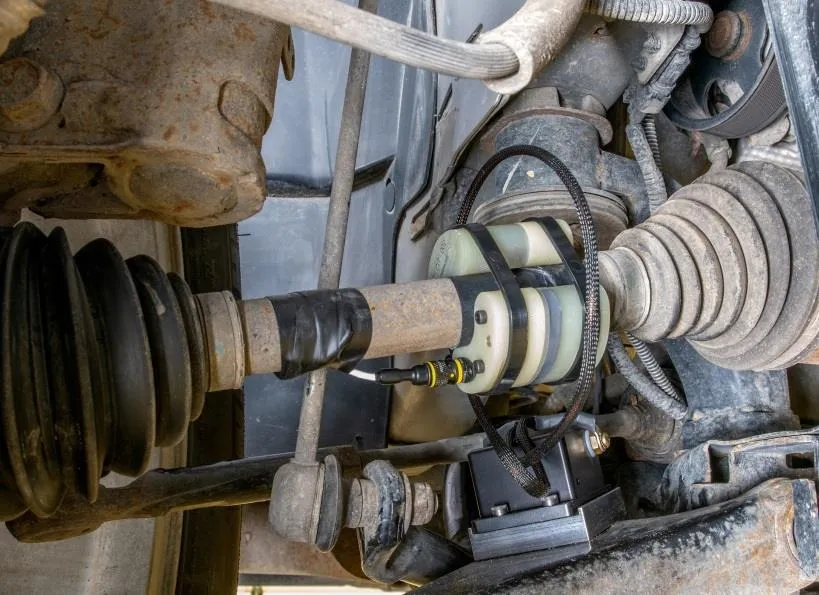 Powertrain Axle and half-shaft torque Drive torque measured on the production shaft, with a slip ring or telemetry to bring the signal out.
-
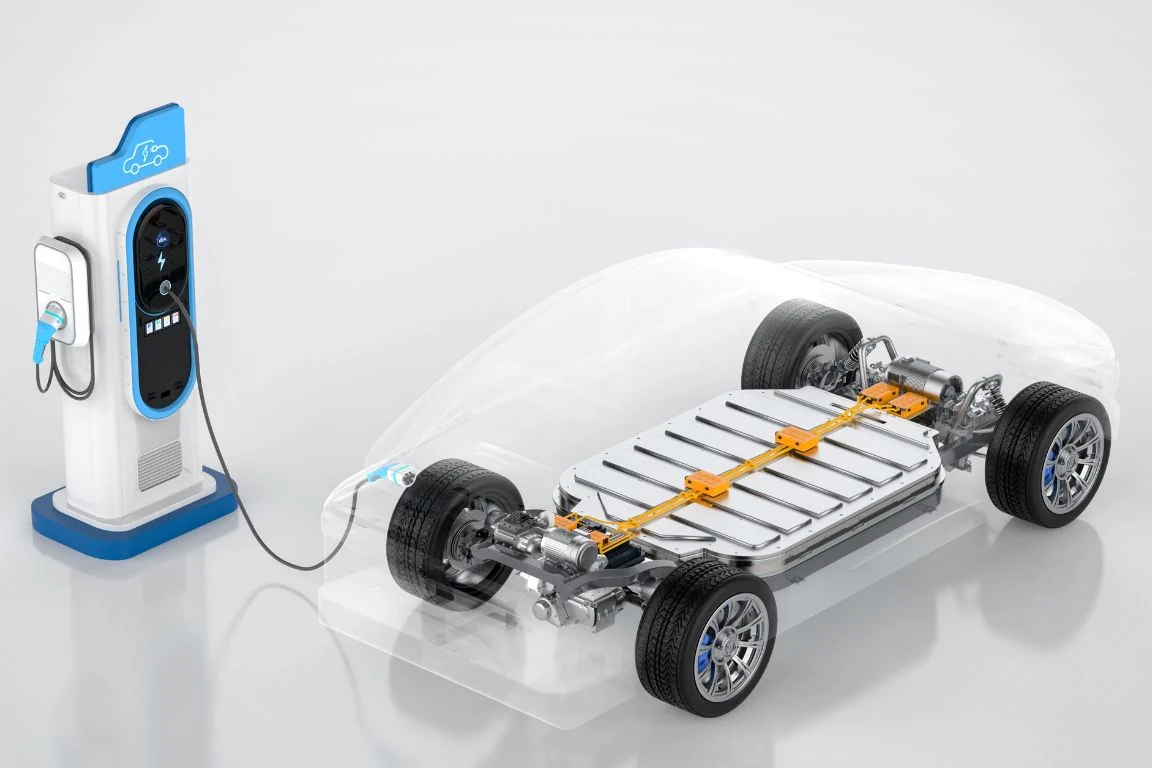 Electric EV powertrain torque Torque at each stage of the electric drivetrain, from gearbox shafts to the wheel, to see where power is lost.
-
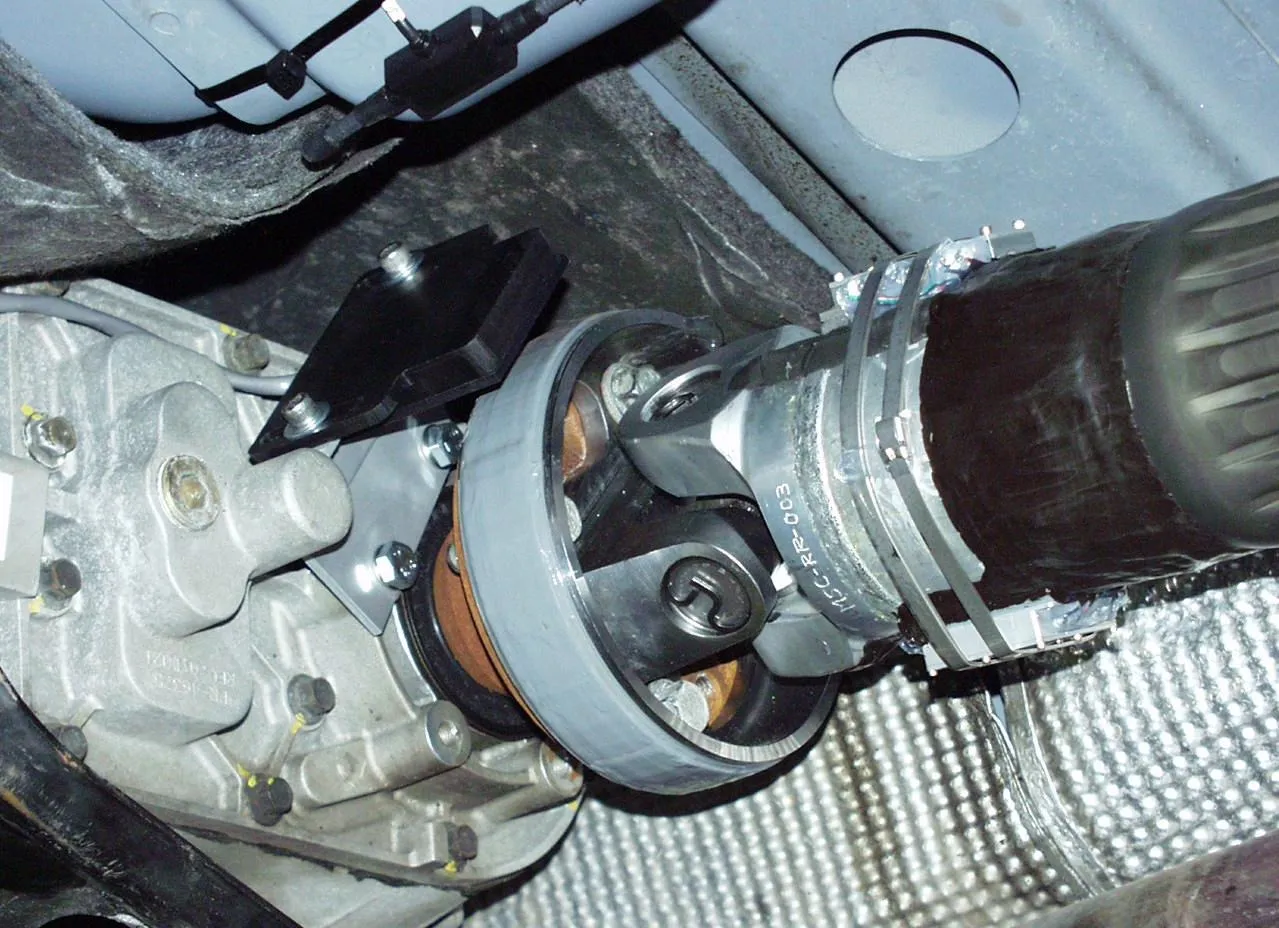 Powertrain Drive shaft measurements Torque, strain and temperature from a drive shaft with no free end, through a slip ring that slides over the shaft.